German based energy company, Uniper, is leveraging point cloud data and deep learning to drive fact-based decision making across multiple lines of business. Uniper is using these tools to get a more detailed understanding of the terrain, land cover, and vegetation of their sites under development. Sustainability and digital transformation are core to Uniper’s mission — so it’s no wonder that they would seek to leverage the power of remote sensing and deep learning to drive sustainable development.
From Data to Insight
 Uniper is leveraging high resolution Lidar or photogrammetric point clouds to detect, measure and map individual trees. They are leveraging tree extraction deep learning tools in ArcGIS Pro to extract information about individual trees. This workflow advances spatial planning, supports environmental compliance, and creates long-term operational efficiencies in solar and wind energy development. The value does not end with Uniper’s renewable energy business. By putting this work in action, Uniper has identified the potential for value creation in three other lines of business:
Renewables
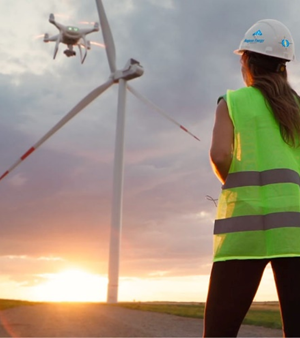
Uniper’s renewables business line can leverage Lidar datasets to support project development. Project designers are able to detect tree height and crown size to avoid shading on solar panels which contributes to site optimization. Similarly, wind developers are able to analyze vegetation-induced surface roughness near wind turbines giving a more accurate and hyper-local wind resource analysis. Overall, the Lidar datasets help Uniper optimize wind and solar layouts for better yield and fewer environmental disruptions.
Conventional Power Generation
 There are three main use cases for extracting trees from Lidar datasets that support asset operations in Uniper’s Conventional Power Generation business line. The data allows Uniper to remotely monitor vegetation around power plants and assess distances for safety clearances. It also allows for better planning of tree removal and/or cutting during construction and maintenance operations. Now Uniper can incorporate tree data into digital twins for environmental simulation and a more complete representation of assets in their environmental context
Gas Transmission and Distribution
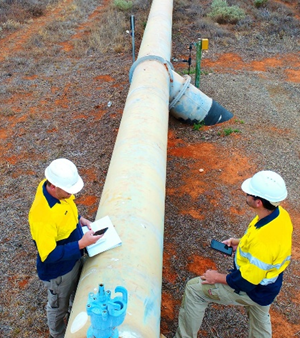
Similarly to the Conventional Power Generation business line, Uniper has identified use cases supporting operations and maintenance of their Gas Transmission and Distribution Assets. Using this data they can now identify tree encroachment risks along gas pipeline corridors and model clearances and plan safe access for maintenance crews. Uniper can also use the data to support permitting and vegetation impact assessments for transmission projects that are under development.
Construction, Engineering and Asset Development
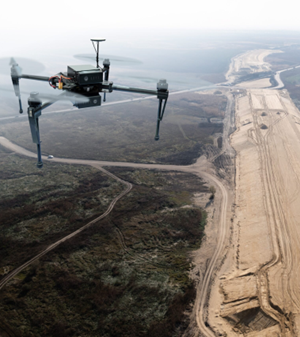
In addition to leveraging Lidar and tree extraction throughout early project development and permitting as well as asset operations, Uniper’s Construction, Engineering and Asset Development business line can implement the workflow to support various activities. It is suggested that the data can more accurately estimate tree removal costs and timelines as well as help design infrastructure layouts (roads, substations, etc.) with minimal trees disturbance. The data could also be used to comply with land use regulations and biodiversity net gain initiatives.
Learn More by Engaging with the Companion StoryMap
Esri’s Natural Resources Team has helped Uniper document this workflow utilizing ArcGIS StoryMaps. Please explore the StoryMap for a more interactive experience showcasing an end-to-end workflow at a prospective solar facility in Germany.
