Esri Tutorials Blog - Page 7

cancel
Showing results for 
Show  only  | Search instead for 
Did you mean: 

Latest Activity

(100 Posts)
AngelaDuran
Esri Contributor

Learn ArcGIS provides story-driven exercises and activities to solve real-world problems using ArcGIS. From early adopters to university students and faculty, GIS professionals to data scientists, government workers to individuals contributing to their local communities.

Since Spring 2022, the Learn ArcGIS team released 16 new lessons and updated over 150 existing lessons.


climate-change-mitigation-st-bg.jpg


These new lessons cover a range of topics, such as Identify infrastructure at risk of landslides, Geolocate a 3D digital building model, Get started with ArcGIS for SharePointVisualize an ocean canyon in 2D and 3D, and Get started with Map Viewer Classic. For additional lessons, check out the Learn ArcGIS content library.


New Features!

  1. Learn ArcGIS will update lessons to include a feature on the level of difficulty for beginner, intermediate, or advanced.
  2. For all educational purposes, you are free to use, share, and adapt the Learn ArcGIS content with our creative commons. Please refer to our Terms of Use.

Coming Soon!

  1. Learn ArcGIS is in the process of working on an optional button to print the lesson in PDF format.
  2. Teach with GIS is undergoing a refresher as we work on building the content library.

To view our monthly Learn ArcGIS lesson releases, subscribe to our Learn ArcGIS Community.

If you have additional ideas for the Learn ArcGIS team, please share them in the Learn ArcGIS Community.


more
2 0 591
Nerrissa
Esri Contributor

Nerrissa_8-1654790845157.gif


World Oceans Day


June 8 marks World Ocean Day. Join us in celebrating our oceans by using GIS to map and visualize ocean data.  


Nerrissa_5-1654790004768.pngNo dumping - Drains to ocean 

In this lesson, you'll learn how to trace water flows from land-locked areas to salt water, in order to understand ways to prevent waste in the ocean.  


Nerrissa_6-1654790063610.png

Find fish in the Bering Sea 

In this lesson, you’ll use different interpolation methods to predict ocean temperatures. 


Nerrissa_7-1654790117404.png

Visualize an ocean canyon in 2D and 3D 

In this lesson, you'll take measurements of bathymetric terrain in both 2D and 3D.  


View all oceanography lessons: See all of the lessons that work with ocean data and conservation.  


Enjoy these Learn ArcGIS lessons, and let us know of any workflows you have for protecting our oceans by contacting us at  LearnArcGISSupport@esri.com 

more
0 0 606
AdenaSchutzberg1
Esri Regular Contributor

New Learn Lessons
 
A Learn Lesson is a step-by-step tutorial that uses a real-world scenario to introduce key ArcGIS tools and workflows. Here's a roundup of new lessons in the Learn ArcGIS Gallery that have appeared in the last month.
 
Import and incorporate 3D models in a scene (ArcGIS Pro)
import_3D.png

In this lesson, as the construction manager working you will go through the process of importing 3D content such as Khronos Group’s Graphics Language Transmission Format models (.gltf or .glb) into feature classes and placing them in a scene, as well as importing CAD files (.rvt) into ArcGIS Pro as a data source and 3D georeferencing them into 3D scenes.


Geolocate a 3D digital building model (ArcGIS Pro)
geolocate_building.png

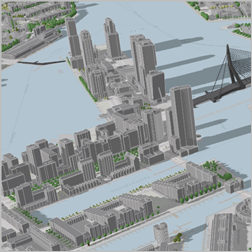
In this lesson, as the construction manager working on the De Zalmhaven complex project in Rotterdam, Netherlands, you will geolocate a digital model representing a high-rise building and integrate it into a 3D scene representing the city center of Rotterdam.


Select and extract a subset of features (ArcGIS Pro)
extract_subset.png

You are making a map of South Africa. You found two layers that are useful to this project: one representing provinces and another representing urban areas. However, both layers are global in extent: they cover the entire world. You need to extract a subset of each layer that contains features only within South Africa. You'll accomplish this with three tools: Select by Attributes, Select by Location, and Export Features.


Merge multiple layers into one (ArcGIS Pro)
merge_multiple.png

A common data management task in GIS is to merge a set of separate layers into one. In this lesson, you have two polygon layers representing land areas in Norway. One is a general land layer, while the other maps only minor islands. You'll use the Merge geoprocessing tool to combine these two layers into a new dataset.

The Merge tool can be used with only a few clicks. However, in this case, some extra care is needed to ensure that the fields of the two input layers are merged correctly in the output layer. You'll learn how to configure a field map and resolve field mapping errors.


Get started with ArcGIS for SharePoint (ArcGIS Online, Microsoft SharePoint Online
ArcGIS for SharePoint)
start_sharepoint.pngIn this lesson, you'll first upload residential zoning files to your SharePoint site and add spatial data about zoning using ArcGIS for SharePoint. Then, you'll geotag files to their related spatial features and use geosearch to find the files on the map. You'll also create infographics and perform analysis using the data. Lastly, you'll share the results to collaborate with others in your organization.


New Learn Paths

A Learn Path is sequenced set of resources for learning about a particular topic. Here's a roundup of some new paths in the Learn ArcGIS Gallery that have appeared in the last month. 

 
Spatio-temporal analysis of COVID-19 daily confirmed cases 
spatio_temp_COVID.pngThese presentations were originally given at a workshop in partnership with University Consortium for Geographic Information Science (ucgis.org).


BIM and GIS 
BIM_CAD.pngCombine 3D BIM models used in the architecture, engineering, and construction (AEC) industry with the power of GIS and location intelligence technologies.
 

more
3 0 856
Nerrissa
Esri Contributor

Endangered Species Day


Today marks Endangered Species Day. Join us in bringing awareness to solutions to protect endangered species around the world.

What are endangered species? Any animal or organism that is threatened by extinction. Species can become endangered for many reasons including the loss of habitat, poaching, climate change, and invasive species.

Check out the following Learn ArcGIS lessons that use location analysis to study endangered species:

Nerrissa_2-1653069077577.png

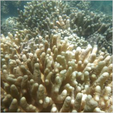
Predict coral bleaching events

In this Learn lesson, you will determine which reefs are in danger of coral bleaching due to increased water temperatures.


Nerrissa_1-1653068584408.png

Build a model to connect mountain lion habitat

In this Learn lesson, you will determine where to build bridges over highways to decrease the risk of injury to mountain lions who need to cross these busy roads.


Enjoy these Learn ArcGIS lessons, and let us know any workflows you have for protecting endangered species by contacting us at  LearnArcGISSupport@esri.com


more
0 0 471
AdenaSchutzberg1
Esri Regular Contributor

New Learn Lessons
 
A Learn Lesson is a step-by-step tutorial that uses a real-world scenario to introduce key ArcGIS tools and workflows. Here's a roundup of new lessons in the Learn ArcGIS Gallery that have appeared in the last month.
 
Create a web scene to support construction planning (ArcGIS Pro, ArcGIS Online)
create_scene.png

In this lesson, as the GIS data manager for the city of Rotterdam, Netherlands, you will build a 3D scene representing the Rotterdam city center. First, you'll create an empty local scene in the Netherlands national coordinate system in ArcGIS Pro. Then, you'll add a basemap, elevation information, and features, such as buildings, bridges, trees, and street lamps. Finally, you'll publish the scene to ArcGIS Online. By the end of the lesson, the scene will be ready to use as a web-browser accessible backdrop to visualize any newly planned construction project.


Find ocean bathymetry data (ArcGIS Pro, ArcGIS Online)
find_ocean.png

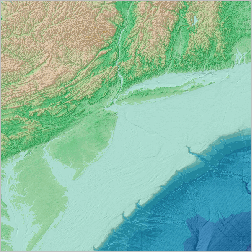
In this lesson you are a student at the beginning stages of a research project studying the ocean floor off the East Coast of the United States. Before you can begin your analysis, you need to compile data. You'll visit a variety of online data portals to find different bathymetric datasets. You'll add this data to an ArcGIS Pro project both as services and as downloaded files.

When you're done you'll have an ArcGIS Pro project set up with useful datasets for the rest of your research. Along the way, you'll learn where and how to acquire bathymetry data, different data types used in oceanography, and how to add them to maps in ArcGIS Pro.

 
Get started with notebooks in ArcGIS Pro (ArcGIS Pro)
python_agpro.png

Python scripting can be used to automate workflows in ArcGIS Pro. Notebooks, included with ArcGIS Pro, are a good environment for writing Python code. In this lesson, you will write code to find areas with low access to fire department services. You will learn some of the basics of Python syntax. Code written in a notebook can be exported to a Python script, which be opened, modified, and run outside of ArcGIS Pro.


Visualize an ocean canyon in 2D and 3D (ArcGIS Pro)
visualize_canyon.pngBeing able to map, measure, and visualize bathymetric data is vital to managing resources in the ocean and coastal environment, where myriad activities occur with potential for conflict, including offshore energy (fossil fuels as well as harnessing sustainable wind, tide, and wave energy resources), seabed mining, national security, maritime transportation and fishing activities. In this lesson, you'll gain skills creating maps and making measurements of bathymetric terrain in both 2D and 3D. You'll also create and export a short animation of the canyon.


Build an interactive dashboard (ArcGIS Online, ArcGIS Dashboards)
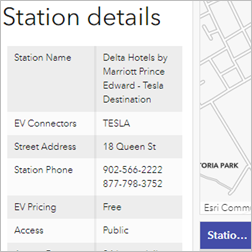
build_dashboard.pngIn this lesson, you'll build an interactive dashboard that allows users to find charging stations for electric vehicles in Canada. As electric vehicles become more popular, knowing where charging stations are is important. Having sufficient access to stations can help make the decision to shift to an electric vehicle easier. It's also important to know that you can rely on access to stations when traveling. When it comes to finding charging stations, you don't need to see every location, only the ones that are relevant to your location and your vehicle. You'll configure the dashboard so users can filter the data to the province, city, and connector type that they need.


New Learn Paths

A Learn Path is sequenced set of resources for learning about a particular topic. Here's a roundup of some new paths in the Learn ArcGIS Gallery that have appeared in the last month. 

 
Try ArcGIS Image for ArcGIS Online (ArcGIS Online, ArcGIS Image for ArcGIS Online)
imagery_agol.pngUse ArcGIS Image for ArcGIS Online to host, analyze, and stream imagery and raster collections in the cloud.


more
2 0 1,069
Nerrissa
Esri Contributor

Happy World Aquatic Animal Day!


This Sunday, April 3rd, join us to celebrate World Aquatic Animal Day. Let’s spread awareness among the people around us on how critical aquatic animals are for society and ecosystems.

What are aquatic animals? Any animal that lives in water for most of or all its life is an aquatic animal—for example, fish, amphibians, reptiles, and coral. In recent years, the need to protect these valuable animals has generated important changes, including formulating new policies, planning outreach programs, and finding solutions for preserving aquatic animals.

Here is a list of Learn ArcGIS lessons that focus on aquatic animals. These lessons show you how to use GIS to assist in spatial planning efforts and aid in the overall preservation of aquatic animals:

Please enjoy these Learn ArcGIS lessons and let us know how you plan to celebrate World Aquatic Animal Day!

more
0 0 843
HeatherSmith
Esri Alum

Are you a professor or instructor in a university or college?

We want to learn more about how Learn ArcGIS lessons are currently used in higher education, and how they can be improved to better meet your needs as educators. You can help us by taking a few minutes to answer some of our questions and provide some feedback.

Learn ArcGIS lessons are hands-on tutorials ranging from 20 minutes to 4 hours in length. They teach GIS skills using real-world scenarios. All data is provided and lessons are kept up-to-date with current software. Lessons are published by Esri under a Creative Commons license. Reuse and adaptation for educational purposes is permitted.

You can find the survey here: https://survey123.arcgis.com/share/3413a9258bb44587975a1dd3beb92a67 

more
0 0 609
AdenaSchutzberg1
Esri Regular Contributor

New Learn Lessons
 
A Learn Lesson is a step-by-step tutorial that uses a real-world scenario to introduce key ArcGIS tools and workflows. Here's a roundup of new lessons in the Learn ArcGIS Gallery that have appeared in the last month.
 
Inspect assets with oriented images (ArcGIS Online, ArcGIS Experience Builder, ArcGIS Quick Capture, smartphone or tablet)
inspect.png

When performing any kind of property or infrastructure inspection, photos are necessary for data capture and decision making, while GIS is integral for mapping and analysis. However, it can be difficult to incorporate photos taken from many different angles into GIS. Oriented Imagery, a widget compatible with multiple ArcGIS products, solves this problem by allowing you to manage and visualize imagery taken from any angle or vantage point. Oriented Imagery can also be used in damage assessments, environmental studies, asset inventories, or any GIS workflow that uses photo imagery.

In this lesson, you'll perform a photographic site inspection using GIS. First, you'll create a feature layer to contain images collected in the field. Then, you'll make an ArcGIS QuickCapture project and enable Oriented Imagery so field workers can take photos of your site using their mobile devices. After capturing a few photos, you'll display them in an ArcGIS Experience Builder web app so you can explore the results from your computer.


Get started with Map Viewer Classic (ArcGIS Online)
volcano.pngMap Viewer Classic allows you to create and interact with online maps. First, you'll explore an existing web map that shows Hawaii's volcanoes, volcano shelters, and volcano hazard zones. Next, you will reconstruct the web map you explored by searching for and adding layers to an empty web map. Once you add the necessary layers, you will modify symbology and customize other map properties, such as the organization of attributes that display when you click a feature on the map. Last, you'll share your map as a professional-looking web app so other users can explore it.


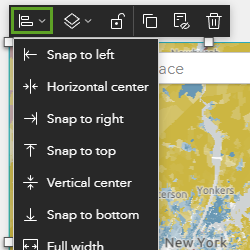
Get started with ArcGIS Experience Builder (ArcGIS Online, ArcGIS Experience Builder)
exp_build.png

You'll use ArcGIS Experience Builder, which allows you to build custom web layouts without writing any code. Your goal is to build a layout that meets the following criteria:

  • The map should be the main focus of the app.
  • The app should allow users to search for their own address or areas of interest.
  • The app should include dynamic text and charts to allow users to explore and interact with the data.
  • The map should be paired with a journalistic story.
  • The app should work on a mobile device as well as a desktop computer screen.


Identify infrastructure at risk of landslides (ArcGIS Online, ArcGIS Image for ArcGIS Online)
infra_ident.pngParts of the island of Grenada are susceptible to landslides due to high levels of rainfall, steeper slopes, and various soil types. Having recently acquired high-resolution aerial imagery and elevation data, the country wants to update its GIS buildings dataset and identify infrastructure in areas that are susceptible to landslides. To support this effort, you will upload aerial imagery for a portion of Grenada and use deep learning analysis in ArcGIS Image for ArcGIS Online to extract building footprints from the imagery. Then, you will use raster analysis tools in ArcGIS Image for ArcGIS Online to classify the island according to landslide susceptibility and identify at-risk buildings.


more
1 0 1,178
AngelaDuran
Esri Contributor

Learn ArcGIS provides story-driven exercises and activities to solve real-world problems using ArcGIS. From early adopters to university students and faculty, GIS professionals to data scientists, government workers to individuals contributing to their local communities.

Since last Fall 2021, the Learn ArcGIS team released 29 new lessons, updated over 160 existing lessons, and released 1 new curriculum package (Health information Systems Modernization).

Health_information_system.png


These new lessons cover a range of topics, such as How did COVID-19 impact traffic safety?, Investigate and share election results, Examine racial disparities in police stops, and Predict coral bleaching events in ArcGIS Online. For additional lessons, check out the Learn ArcGIS content library.

New Features!

  1. A request to add a new timestamp indicating the date each lesson was last reviewed and updated is now available.
  2. For all educational purposes, you are free to use, share, and adapt the Learn ArcGIS content with our creative commons. Please refer to our Terms of Use.

Coming Soon!

  1. The Learn ArcGIS team is in the process of working on the level of difficulty for lessons.
  2. Teach with GIS is undergoing a refresher as we work on building the content library.

To view our monthly Learn ArcGIS lesson releases, subscribe to our Learn ArcGIS Community.

If you have additional ideas for the Learn ArcGIS team, please share them in the Learn ArcGIS Community.

more
2 0 607
AdenaSchutzberg1
Esri Regular Contributor

New Learn Lessons
 
A Learn Lesson is a step-by-step tutorial that uses a real-world scenario to introduce key ArcGIS tools and workflows. Here's a roundup of new lessons in the Learn ArcGIS Gallery that have appeared in the last month.
 
Conduct a pre-enumeration survey (ArcGIS Online, Survey123 Connect)
conduct_pre.pngIn this lesson, you'll create and conduct a pre-enumeration survey for a national housing and population census in Zambia. First, you'll create a web map of current enumeration areas for use in the field. Then, you'll create a pre-enumeration survey form in ArcGIS Survey123 Connect and link the survey to your map. Using a mobile app, you'll test the survey by creating an enumeration area. Finally, you'll review your changes online to track the results.


Use geodatabase topology for ecomobility (ArcGIS Pro)
topology_eco.pngAs a GIS analyst working at Sydney, Australia's Metro Department, you've been assigned to support a sustainable transportation initiative for bikes and parking throughout the city. After learning about the project's requirements and reviewing your existing GIS data, you'll build geodatabase topology rules to ensure that your data meets these needs. These rules will help you find, review, and resolve errors to ensure data integrity for your project.


Investigate and share election results (ArcGIS Online)
inv_share_elec.png

In this lesson, you are a news reporter covering election results and have been tasked with producing maps in the run-up to the United States 2022 midterm election cycle. Your task is to objectively analyze relevant election history for the whole country, including the 2018 midterms and 2020 presidential election results.

You'll also analyze data for a single state and consider how the midterm and presidential election results might inform the redistricting process. Then, you'll use ArcGIS Instant Apps to create an interactive story to share the results of your findings as part of your news article.


How did COVID-19 impact traffic safety? (ArcGIS Insights, ArcGIS Online)
traffic_covid.pngThe COVID-19 pandemic has had a big impact on the world in many ways, such as stress on hospitals, the economy, and lifestyles, and it has also affected our traffic patterns. Intensity, modality, and frequency of transportation have all changed during the pandemic, especially in March of 2020, when COVID-19 spread quickly throughout the world. Fewer people were driving to work, and in general, but they may have been walking or riding bikes more often to get outside. Regardless of the transportation modality, the pandemic has affected how people get around. This lesson is useful for health and transportation professionals who are interested in the impact of COVID-19 lockdown measures on traffic safety to provide them with the necessary skills to explore and analyze data to determine trends and locate patterns.
 
 
Configure apps for hikers (ArcGIS Online, ArcGIS AppStudio, ArcGIS AppStudio Player)
config_app.png

In this lesson, you're a GIS professional working for the United States National Park Service and want to design apps for hikers visiting the Santa Monica Mountains near Los Angeles. These apps will help hikers plan their trips before they arrive and provide them with useful information even when they're exploring the trail, away from internet connectivity.

You'll first create an online web app using ArcGIS Instant Apps. This app is intended to be displayed on the park website and will enable visitors to search for nearby trails, see their elevation changes, and figure out how to reach the trailhead. Then, you'll use ArcGIS AppStudio to configure and create custom code for a native app, which visitors can install on their smartphone and use offline. This app will display the same information as the web app, but also make use of smartphone hardware capabilities to include text-to-speech functionality.


New Learn Paths

A Learn Path is sequenced set of resources for learning about a particular topic. Here's a roundup of some new paths in the Learn ArcGIS Gallery that have appeared in the last month. 

 
Using raster data and imagery in ArcGIS Pro (ArcGIS Pro)
raster_pro.pngDiscover ArcGIS Pro's capabilities for visualizing and analyzing raster data and satellite imagery.


Data management and editing in ArcGIS Pro (ArcGIS Pro)
DM_Pro.png

Organize, build, and edit data to facilitate project management in ArcGIS Pro.


more
2 0 762
149 Subscribers