Navigation: 2015 Scholar Project 2015Conference ReferenceProject CommunitiesPage ConservationGIS Scgis.org
Sara A. Goeking, US Forest Service, Rocky Mountain Rsrch Station . USA
xBird xSpecies xModel xHabitat xDistribution x2015Talk xTalk
SCGIS Profile
2015 Conference Paper: Presentation -pdf Video -mp4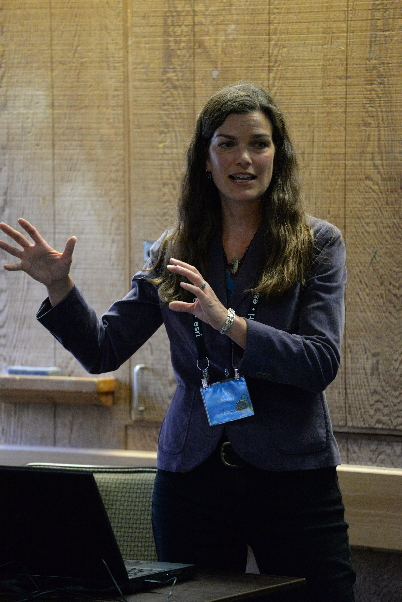
"Biophysical Characterization of an Iconic Pine from Landscape-level Forest Data "
Presenter: Sara A. Goeking, US Forest Service, Rocky Mountain Research Station
Session: Remote Sensing Methods for Critical Habitat Modelling II
 ABSTRACT "Whitebark pine (Pinus albicaulis, or WBP) is an ecologically important high-altitude species in the Western U.S. because it provides habitat and food for many wildlife species. Concerns about the long-term viability of WBP have arisen in the face of high mortality due to a combination of altered fire regimes, disease, drought, and insects. Most previous studies of WBP targeted pure stands, yet the U.S. Forest Service’s spatially representative Forest Inventory and Analysis (FIA) dataset shows that WBP is more widespread in mixed forest types. This study used FIA plot data to characterize WBP’s distribution relative to both local-scale and landscape-level biophysical variables. Multivariate models evaluated the relationship of WBP regenerat
 ion, growth and mortality to stand structure, stand composition, and PRISM climate data, which was used to quantify both mean climatic conditions and deviations from normal conditions. The results demonstrate that metrics of WBP viability are often comparable between mixed stands and pure stands; that the importance of precipitation and temperature may vary seasonally; and that climate variability may be more important than mean conditions. This study expands the characterization of WBP’s biophysical range and may be useful for ecological restoration objectives.
