- Home
- :
- All Communities
- :
- User Groups
- :
- Conservation GIS
- :
- Documents
- :
- Peter Potapov, Russia
- Subscribe to RSS Feed
- Mark as New
- Mark as Read
- Bookmark
- Printer Friendly Page
Peter Potapov, Russia
Peter Potapov, Russia
Peter Potapov, Greenpeace Russia 2001 Scgis Scholar (Finalist but was not able to attend and was awarded software in lieu)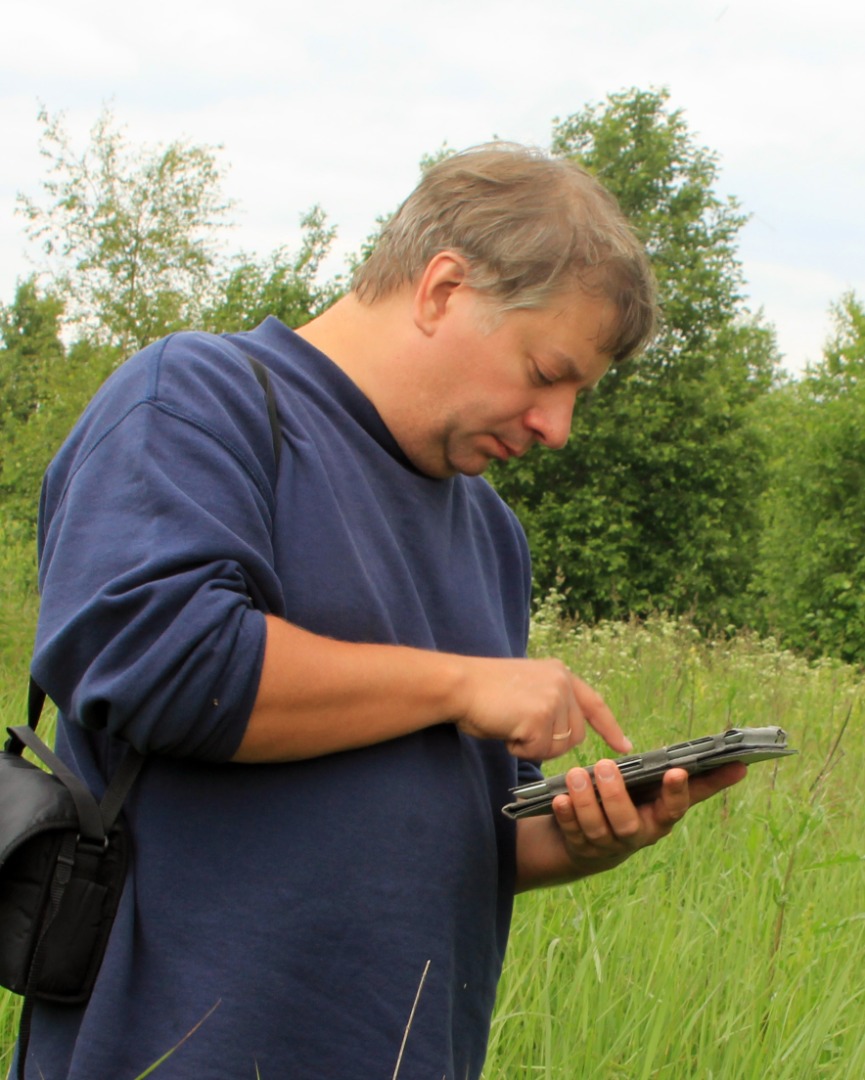
2001-c_p 2001-s_e
2001 Scgis Scholar Report
The Last Frontier Forests of the Russian European North: Current State, Problems, and Perspectives
Peter Potapov, Greenpeace Russia
The remaining frontier forests in the European North of Russia represent unique natural habitats with key significance in conservation terms. Most of these areas, in the hands of the Russian Federal Forest Service, are currently threatened by extensive timber exploitation by a number of logging companies. In response to these threats, Greenpeace Russia, in collaboration with the Biodiversity Conservation Center and with assistance of a number of other research organizations and experts, has produced a map of the area’s remaining frontier forests and also has made a list of major organizations whose activities led to the rapid destruction of these forests.
Frontier taiga is a forest area that is composed of forest and associated nonforest ecosystems (e.g., marshy, river, lake, rocky, mountain) that formed and has since developed without intense human influence and that complies with the following criteria:
¥ It has no permanent settlements or transport infrastructure.
¥ It exhibits no evidence of intense human activity (such as intensive cutting, mining, land clearance, industrial pollution, or plantation development).
¥ Its forest habitats are predominantly ancient forest as defined below.
¥ It maintains fundamental ecological processes that are manifest in terms of both forest dynamics and spatial structure. Such processes include those associated with natural forces, such as gap dynamic, as well as those associated with ancient, seminatural forces such as fires.
¥ It encompasses natural hydrological networks of minor and medium rivers or lakes and their watersheds.
¥ The area and configuration of the forest range are sufficient to conserve the biodiversity present including populations of large vertebrates that require a considerable area for their survival. The area and configuration should also provide for a high level of protection of central parts of the forest from human impact. At present, there is no single and sufficiently grounded expert opinion concerning the minimum size of a taiga range meeting all the requirements stated above. The overwhelming majority of data suggests that the minimum size ranges from 100 hectares up to several million hectares. However, it is clear that guaranteed conservation of natural taiga in a state that is as close as possible to the natural state is feasible only within very large areas of one million hectares and over.
Unfortunately, the last frontier taiga areas in European Russia are today at the edge of extinction. To prevent total extinction of plain European taiga it is necessary to map all of the frontier taiga areas and to protect them immediately. In response to these threats, Greenpeace Russia, in collaboration with the Biodiversity Conservation Center and with the assistance of some other environmental and scientific organizations and experts, has produced a map of the remaining frontier forests of Russian European North. Mapping of remnant frontier taiga has been carried out using satellite images (Resours-O-3, resolution 35 and 150m, 1997–1998 years and Resours-O-4, resolution 150m, 1998 year) and data from expeditions of Greenpeace Russia and other environmental and scientific organizations.
Another step necessary for creating an ecological frame of northern Russian regions is revealing and mapping small-sized fragments of ancient forests (from two to twenty thousand hectares). This work was executed by Greenpeace Russia and the Biodiversity Conservation Center for the Republic of Karelia, where the fastest destruction of ancient forests happened, between 1997 and 1998. On the following page is the scheme of all Karelian ancient forests areas exceeding 2,500 hectares (this map is accessible also in scale 1:1,000,000 as paper or electronic map).
The map that was prepared by Greenpeace Russia and the Biodiversity Conservation Center (next page) shows the state of almost undisturbed natural forests of Karelia proposed for conservation by January 1, 1998.
The map of “potential areas of almost-undisturbed natural forests of Karelia” reflects the present distribution of forest areas in Karelia, which provides current information on the condition of the forest cover in the Republic, and can refer to the natural almost-undisturbed forests with the highest degree of correlation. Potential massifs of almost undisturbed ancient forests of Karelia included the following categories of natural ecosystems:
¥ Natural forest ecosystems (growth of several generations of trees almost untouched by man).
¥ Ancient seminatural forest ecosystems (growth of several generations of trees indirectly affected by human influence, typical of the postindustrial period; e.g., regular forest fires).
¥ Sustainable disturbed forest ecosystems, which structure is close to the structure of natural or ancient seminatural forest ecosystems and ensures their stability in time.
¥ Areas of other mature forests, spotted in massifs of forest ecosystems of the three categories given above.
¥ Nonforest natural ecosystems (swamps, lakes, rivers, brooks, rock outcrops, etc.) with a low extent of disturbance, located inside massifs of forest ecosystems of the categories given above.
Potential massifs of almost undisturbed natural forests of Karelia include compact areas of natural ecosystems if their total area exceeded 2,500 hectares and if natural and ancient seminatural forest ecosystems prevailed on their territory in a rectilinear fashion. This map contains both areas of the researched potential massifs of almost undisturbed natural forests, which was confirmed during the field research, and areas documented by remote sensing and land capacity checks.
Russian World Heritage Protection
In 1994, the State Committee for the Environment of the Russian Federation and Greenpeace Russia concluded an agreement to nominate several Russian territories for inclusion in the World Natural Heritage List.
In 1994, Greenpeace prepared the documents necessary to nominate the “Virgin Komi Forests” for the World Heritage List. In December 1995, it became the first-ever Russian World Natural Heritage Area. The Virgin Komi Forests is the largest primary, or fully natural, forest of its size (3.2 million hectares) remaining in Europe. Due to its newly acquired international status, logging of the unique forests by the French company HUET Holding was prevented. A gold mining project in the northern part of the park was also suspended.
The Virgin Komi Forests is the largest primary forest of its kind remaining in Europe (3.2 million hectares), represented by almost undisturbed ecosystems that have not been affected by intensive human activities. The area counts more than 40 species of mammals, including the brown bear, the sable, and the highly migratory elk; 204 species of birds, including the white eagle and osprey, recorded in the Red Book; and 16 species of fish, the most valuable of which are glacial relics such as the lake char and arctic grayling. The forests consist of age-old fir, cedar, and spruce, with underwood of unique and rare slow-growth flora species. Mid and northern taiga change over to forest tundra.
The Golden Mountains in the Altai Mountains, at the juncture of Central Asia and Siberia, is a varied region of unbroken forests, steppes, glaciers, and mountain tundra. The site is world-renowned for its geological formations; swift, beautiful rivers cut from the rock; vast expanses of natural forest; and the many rare and endangered species that are protected across this Republic that is itself a natural wonder.
The genuine masterpiece of Altai is Mount Belukha, which, at 4,506 meters above sea level, is the highest point in Siberia, towering nearly 1,000 meters higher than the closest ranges. A remarkable part of the Altai are the river valleys, the most important of which are the Katun and Chulyshman. Flowing in deep, thin canyons, they are comparable in inspirational beauty to the famous Grand Canyon in America. The pearl of Altai is the Teletskoye Lake, often referred to as “Little Baikal,” with pure water, rich animal life, and a backdrop of mountain chains and thick taiga forest. The high density of endemic species in Altai exemplifies the diversity in landscapes and their characteristic types. A significant variation in elevations has created five distinct altitudinal zones, inhabited by 60 species of mammals, 11 species of amphibians and reptiles, and 20 species of fish. From the animal kingdom, it is necessary to single out the snow leopard as a reason for permanently protecting this territory. This is one of the world’s rarest animals, with only a few left in Altai and the surrounding regions.
The Central Sikhote–Alin range is located in an ecologically critical area at the juncture of Central and Southeastern Asia. This, combined with the relative intact nature of the large wilderness areas, has created a unique center for ancient relic floral and faunal species. The area is characterized by a deep penetration of both animal and plant species of different natural zones. The Sikhote–Alin protects more rare and endangered species than any other region of Russia. There are approximately 1,200 species of higher vascular plant species alone. The region also counts approximately 65 species of mammals and 342 species of birds. The Sikhote–Alin Nature Reserve and adjacent areas is one of the last refuges for the Siberian, or Amur, tiger. Population estimates range from 200 to more than 400 while human populations remain low. Many other rare, endangered, or otherwise valuable species inhabit the territory, such as the Himalayan bear, musk deer, Japanese and hooded cranes, Far Eastern and black storks, merganser, ginseng, and rosy rhodiola.
The nature of the nominated World Heritage area is highly valued for its aesthetic qualities. The area includes many natural phenomena of high aesthetic and recreational values: numerous mountains and rocks intermittent among the taiga; waterfalls and rapids such as the Kema rapids and the Big Amga Falls; as well as the peculiar rocks, rock formations, and sandy bays along the Sea of Japan.
-
 Anonymous User