- Home
- :
- All Communities
- :
- User Groups
- :
- Conservation GIS
- :
- Documents
- :
- Dr. David Squarre, Zambia
- Subscribe to RSS Feed
- Mark as New
- Mark as Read
- Bookmark
- Printer Friendly Page
Dr. David Squarre, Zambia
Dr. David Squarre, Zambia
Navigation: 2015 Scholar Project 2015Conference ReferenceProject CommunitiesPage ConservationGIS Scgis.org
Dr. David Squarre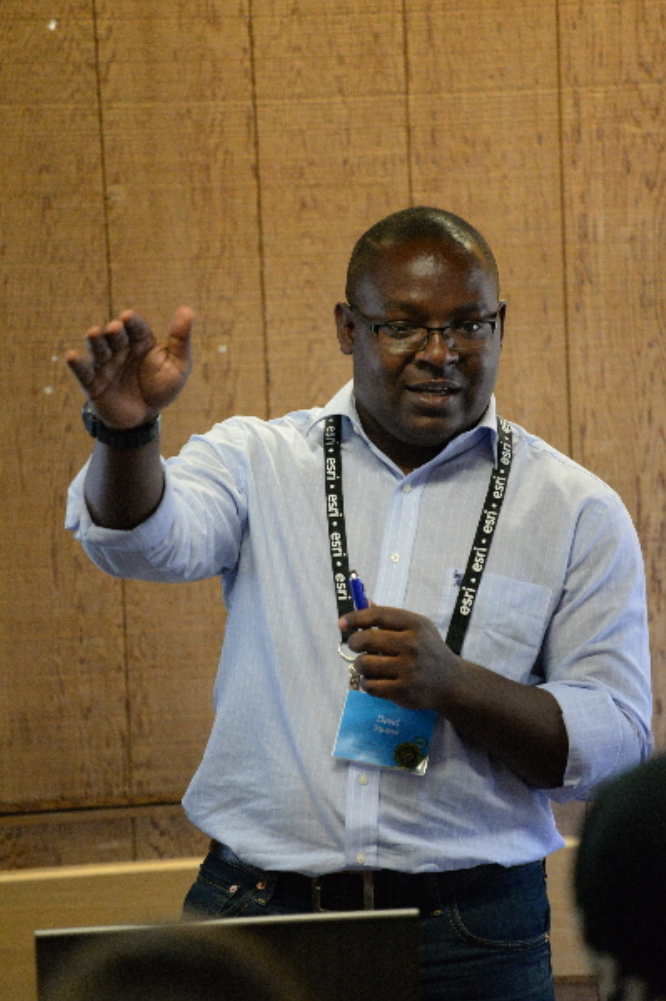
2019 Status: Researchgate Profile
Government of the Republic of Zambia · Dept of National Parks and Wildlife
2015 International Conference Paper:
"The Spread and Distribution of Anthrax in Lower-Zambezi National Park, Zambia"
* Presenter: David Squarre, Zambia Wildlife Authority (ZAWA)
The first ever outbreak of anthrax that affected wild animals in Lower Zambezi National Park occurred in 2012. This outbreak exclusively affected wild animals. It caused more mortalities of wild fauna as compared to poaching and other illegal/ legal anthropogenic activities. The animals affected included elephants, buffalo, hippo, impala and kudu. Initially the first cases of the disease were restricted in a defined location but with time the disease spread to a wider geographical space. The purpose of this paper is to use GIS to illustrate a step wise distribution and the rate of spread of the disease across this ecosystem. Furthermore this paper seeks to model and simulate the geographical dissemination of the disease. The use of GIS enabled mapping of hot spots and the direction of spread of the disease. As a result of the use of GIS, the plausible drivers in the spread of the disease were postulated.


2015 Scgis Scholar Profile:*-Organization name: Zambia Wildlife Authority (ZAWA)

*-Organization full street address: Plot 1271, Kafue Road, Chilanga.
*-Organization full mailing address: P/Bag 1, Kafue Road, Chilanga
*-Country: Zambia
*-Work phone with country and area code: +260 211 278 473
*-Work fax with country and area code: +260 211 278 517
*-Main email: [email protected]
*-Organization Web site URL if any: www.zawa.org.zm
*-Organization subject keywords (please see instructions):
Biodiversity, Conservation, Wildlife, Protected Area, Population, Ecology, Epidemiology,
describe the work that your current organization does:
The Zambia Wildlife Authority (ZAWA) is an autonomous government body established by an act of parliament (The Zambia Wildlife Act) to manage and regulate the wildlife estate for the conservation and enhancement of wildlife eco-systems, biodiversity, and of objects of aesthetic, pre-historic, historical, geological, archaeological and scientific interest. This wildlife estate in Zambia covers more than 30% the national landmass.
*Mission Statement
“Conserve Zambia’s wildlife resources for biodiversity and social-economic enhancement”
*Vision
“Achieve excellence in wildlife estate management by developing innovative approaches and partnerships that encompass best practice and complete transparence and integrity”
ZAWA is involved in working with local communities and traditional rulers by jointly managing the Game management areas (Buffer Zone) around the national parks by promoting the sustainable use of the wildlife resources through consumptive and non-consumptive tourism.
ZAWA through trans-frontier conservation initiatives also engages other countries to wholesomely conserve wildlife resources in ecosystems that span across international boundaries.

your personal role in the organization: I have been working for the Zambia Wildlife Authority for close to five years now as a Wildlife Veterinarian. My role in the organization is to provide scientific and veterinary support for the biological management of wild fauna. My duties include the capture and immobilization of wild animals for;
- the purpose of translocation as a tool to manage wildlife populations,
- Clinical interventions for injured and wounded or snared animals as a result of direct anthropogenic activities.
- To implement countrywide programs for the detection, control and management of diseases occurring in protected areas and in wildlife populations.
- Establish a programme for prevention, control, diagnosis and treatment of diseases affecting the health of wild animals and zoonosis.
- Facilitate wildlife breeding programmes.
- Establish and maintain a database on disease distribution and control, causes and origin.
- Initiate and support research/projects that involve wildlife and diseases and biological management of key wildlife species
I have been involved with research projects that have been studying the distribution of Lions, Cheetah, hyena and wild dogs in the Kafue North ecosystems and Liuwa plain of Zambia.
Being an IUCN- African Rhino Specialist Group (AfRSG) member I am involved in the North Luangwa Black Rhino Conservation Project where I support in the biological management of Black Rhino population. 
history of your personal work in conservation and GIS: My personal association of GIS in conservation started when I was engaged as a veterinarian in the Zambia Lion Project (ZLP) and the Zambia Carnivore Programme (ZCP). My role was to immobilize lions for the placement of GPS satellite and telemetry collars. The GPS satellite collars helped us collect a specific number of downloaded GPS points and the telemetry collars helped us track the lions and collect GPS points that were both used to Map the territories and extent of lion distribution in different ecosystem. Apart from the collars, camera traps and scat point collection were used. This study also estimated the number of lion that would likely be exposed to safari hunting by virtue of their territories extending into hunting areas. Apart from lions the same technique was used on cheetah, wild dogs and hyena. Of the interesting experience was the use of GIS in the rhino re-introduction project in North Luangwa National Park, an area where the earlier population was decimated. My job was to immobilize the rhinos and place the telemetry transmitters in the horn. This enabled us map up territories and social clusters of our black rhino population and also determine a directional threshold of the expanding and increasing number in the founder population. Currently we are about to start a project to map out important elephant corridors by collaring a few of the elephants in Sioma Ngwezi National park in collaboration with WWF-Zambia. These works have exposed me to the use of GIS as an important tool in the management and conservation of important wildlife populations.
Live Map Application created during the 2015 UC Davis-SCGIS Web GIS Training.
The map shows the spatial distribution of anthrax mortalities of wildlife population and the hot spot. It also demonstrate the public health threat and risk to the nearby villages and communities.
xWildlife xVeterinary xDisease xEndangered xPark x2015Scholar x2015Talk xTalk xScholar xZambia xAfrica xPOC
-
 Anonymous User