Artificial intelligence is advancing rapidly across industries, but agriculture approaches innovation differently. Technology is not adopted because it is new. It is adopted when it delivers tangible business outcomes.
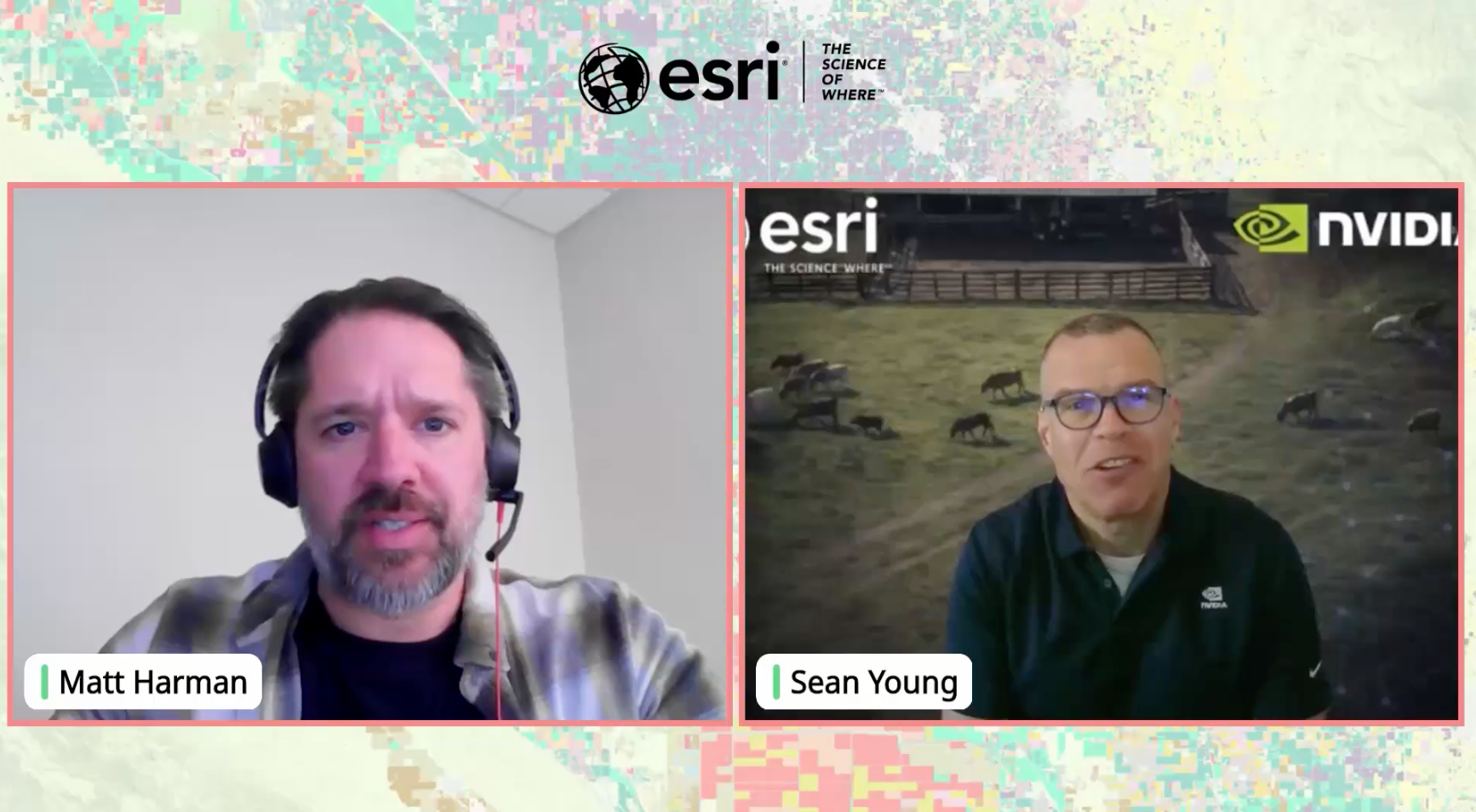
In our first agriculture webinar of 2026, Nick Short hosted a conversation with Yomi Olufowoshe from Esri and Sean Young from NVIDIA focused on operationalizing AI responsibly within the agricultural supply chain. Rather than discussing AI in abstract terms, the session introduced a practical framework: Agriculture Intelligence.
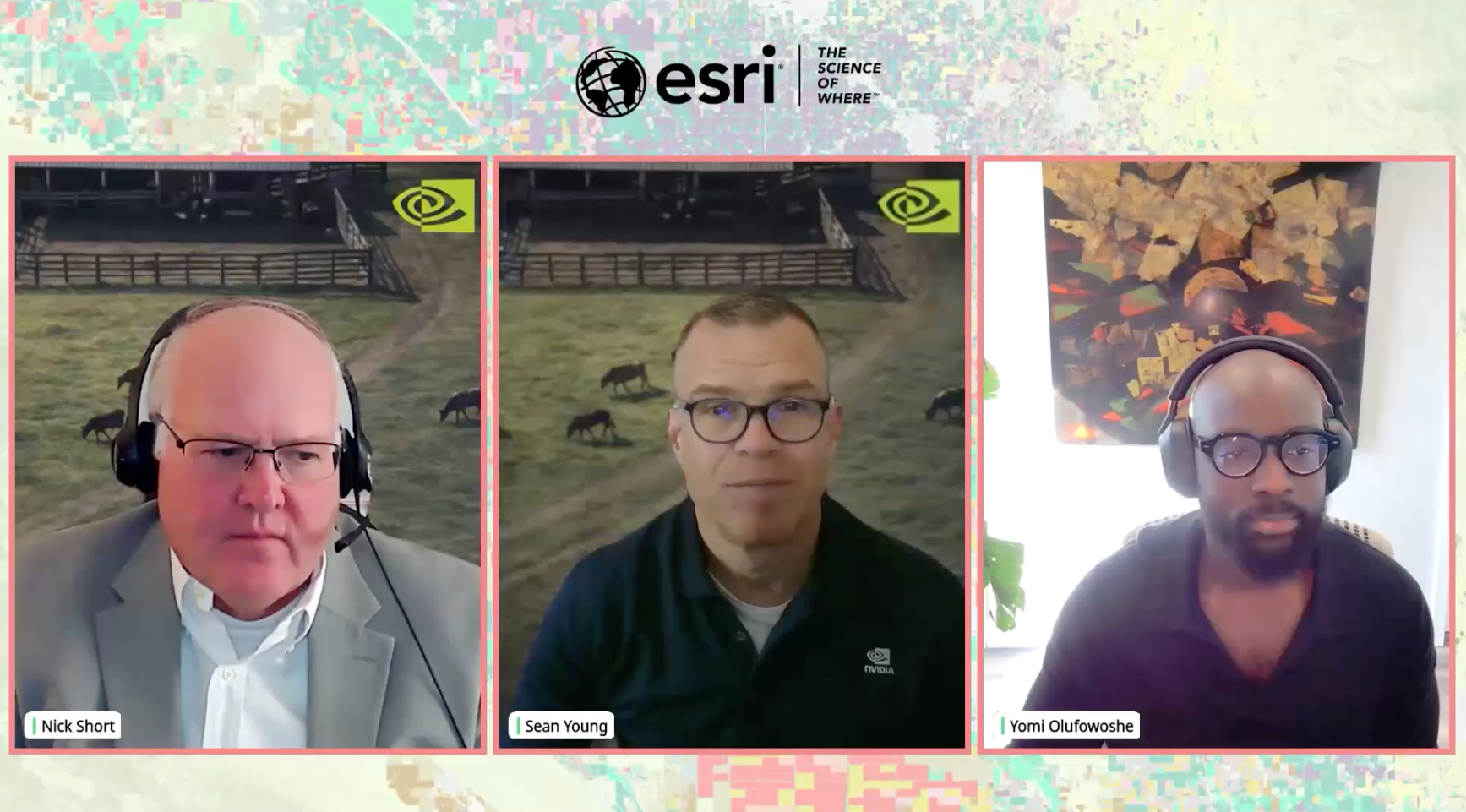
During the webinar, Agriculture Intelligence was defined as the conservative application of technology to inefficiencies in the agricultural supply chain. This framing acknowledges a central reality: agriculture operates under constant margin pressure. Any new capability must reduce cost, improve efficiency, enhance forecasting, or strengthen operational confidence before it is embraced.
This perspective shifts the AI conversation from theoretical possibility to measurable value.
Key Takeaways
1. GeoAI Grounds Artificial Intelligence in Spatial Context
A central theme of the webinar was the importance of location. Generic AI systems struggle when they do not understand where events are occurring. In agriculture, location is foundational.
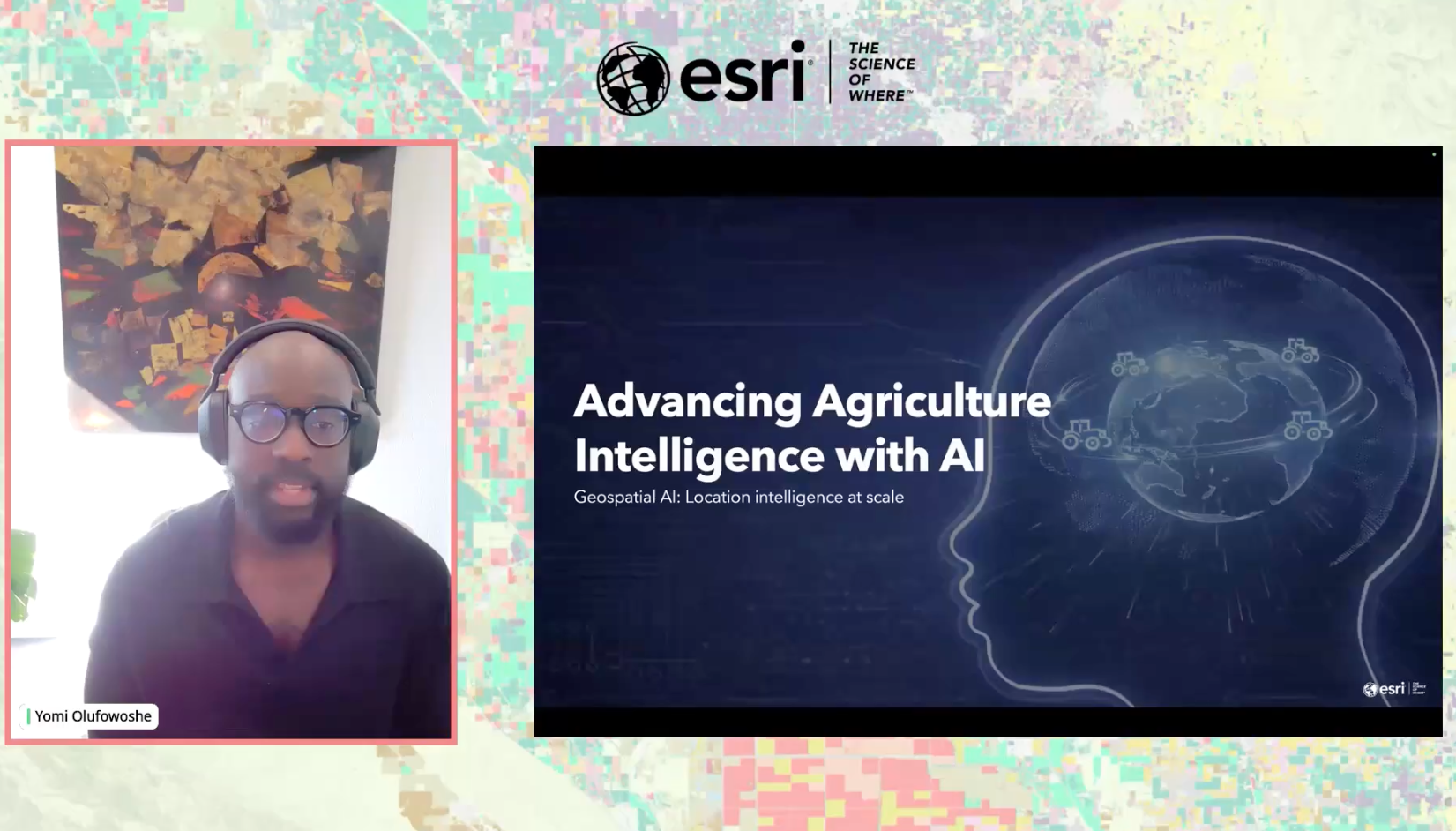
Yomi Olufowoshe demonstrated how ArcGIS has evolved into a geospatial AI platform capable of integrating imagery, field boundaries, crop classifications, and environmental conditions into spatially grounded insights. Using Living Atlas data and the USDA Cropland Data Layer, the session showed how organizations can perform in-season crop classification, generate acreage intelligence, and apply model confidence scoring to validate results.
The shift from post-harvest reporting to in-season intelligence enables more proactive decision-making.
2. Agentic Workflows Move from Insight to Action
Beyond analysis, the discussion explored how agentic AI can orchestrate workflows. Rather than simply identifying crop stress or anomalies, systems can trigger follow-up actions, generate shared maps, and support coordinated operational responses while keeping humans firmly in control.
This approach reinforces that AI augments professional expertise rather than replacing it.
3. Acceleration Enables Operational Scale
Sean Young explained how NVIDIA GPUs enable parallel processing, dramatically increasing computational speed for simulation, imagery analysis, and AI inference. When models run faster, workflows shift from retrospective analysis to real-time operational support.
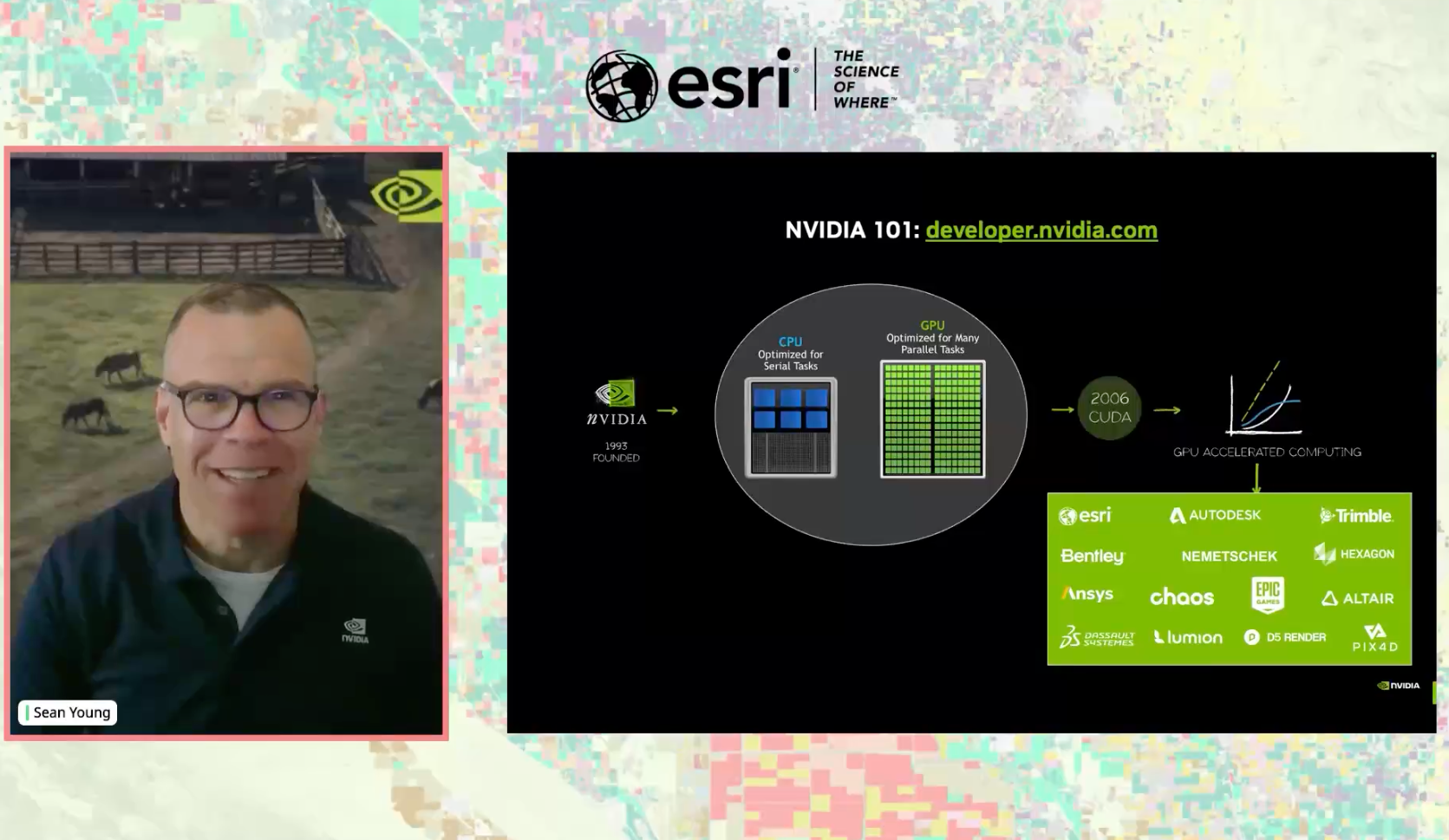
Acceleration transforms AI from an experimental capability into a production-ready system that supports timely decision-making across large geographies.
4. Trust Is Foundational to AI Adoption
Trust and governance were recurring themes throughout the webinar. In agriculture, AI must be transparent, explainable, and secure to gain enterprise adoption.
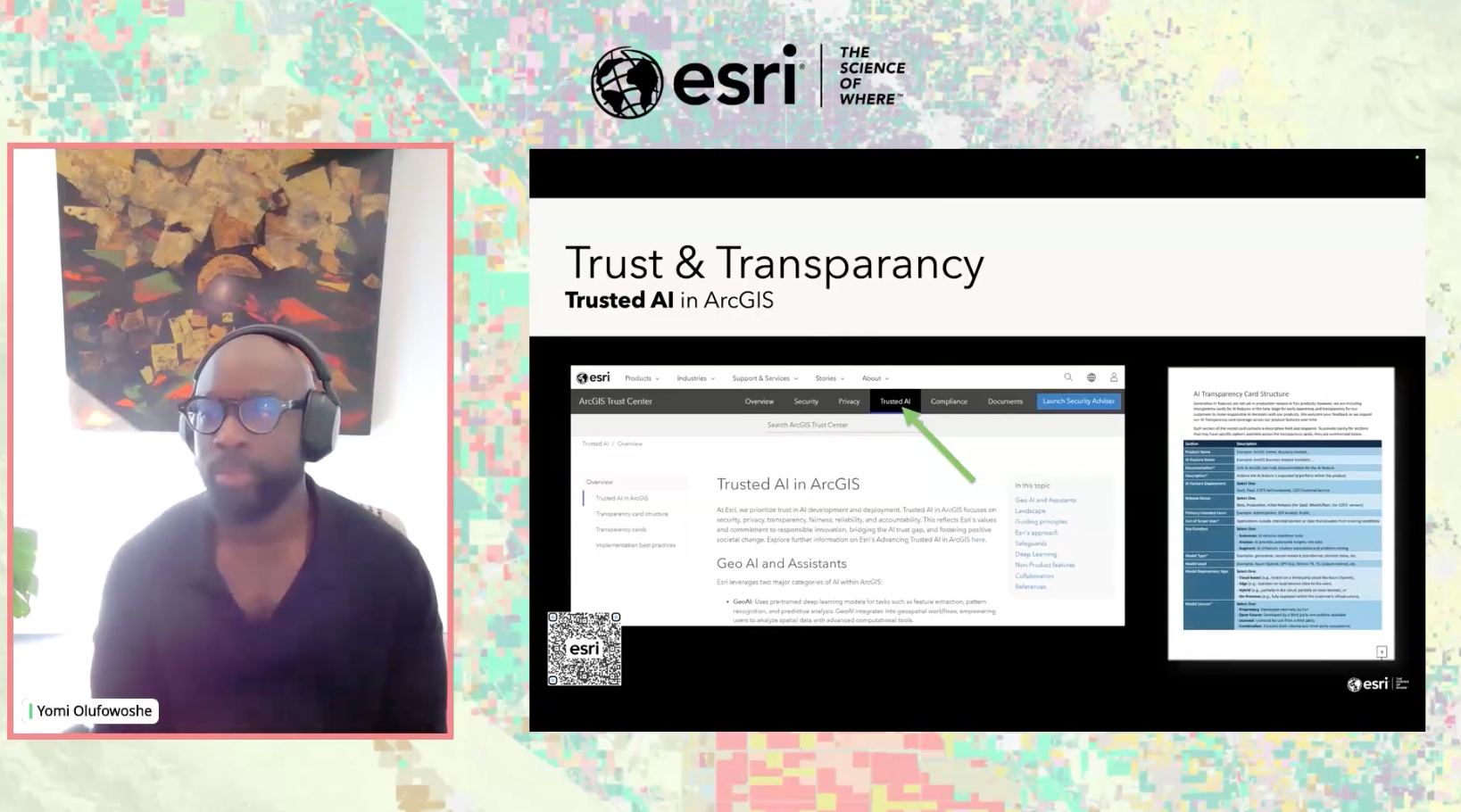
Esri’s Trust Center provides documentation outlining model training approaches, privacy safeguards, and transparency resources to support responsible deployment.
Audience Q&A Recap
The live Q&A session highlighted important practical concerns from the community.
Q: How can I feel confident that my data isn’t being used to train AI models externally to my organization?
The response clarified that Esri does not train its AI models or assistants on customer data. Transparency documentation is available through the Trust Center, and deep learning models include clear information about how they were trained and validated.
Q: How do we get started using AI in our organization, whether from scratch or within an existing third-party AI framework?
For organizations starting from scratch, the guidance was to begin with Living Atlas datasets and pre-trained deep learning models, supported by structured tutorials available at learn.arcgis.com. For organizations already leveraging third-party AI tools, integration pathways and professional services support can help align ArcGIS workflows with existing architectures.
The recommendation was to start with a focused workflow, validate results, and scale incrementally.
Q: What training resources are available to begin using AI?
The webinar highlighted available tutorials and guided learning resources within the ArcGIS ecosystem that support both introductory and more advanced workflows.
Q: If I train my own model, how can I ensure accuracy? What about pre-trained models?
The answer emphasized the importance of high-quality training data and proper quality control. Model performance depends on the data used to train it. Pre-trained models provide documentation, confidence scoring, and information about training methodologies so users can evaluate reliability before deployment.

Q: Where is AI headed in agriculture, especially in a margin-sensitive industry?
Sean Young noted that AI will likely be as transformative as the shift from pre-computer systems to computer-based workflows. Rather than replacing professionals, AI will expand productivity, enabling practitioners to focus on higher-value analysis and decision-making.
The webinar reinforced that Agriculture Intelligence is not about adopting AI for its own sake. It is about applying trusted, location-aware artificial intelligence to real supply chain inefficiencies.
By grounding AI in spatial context, accelerating workflows through GPU-enabled computation, and embedding governance and transparency into the process, organizations can move from experimentation to operational impact.
The path forward is deliberate, measurable, and built on trust.
Watch the recording of the webinar here: https://link.esri.com/ai_agwebinar/recording_lp
