Artificial intelligence is no longer experimental in the pipeline industry. It is becoming embedded directly into spatial workflows. During the webinar AI in Pipeline Operations: Unlocking the Next Generation of Insights, Esri experts discussed how AI capabilities within the ArcGIS platform are helping organizations unlock data context, automate monitoring, and accelerate decision-making.
This article summarizes the key themes discussed during the session and includes all audience questions and answers.
AI Embedded in GIS Workflows
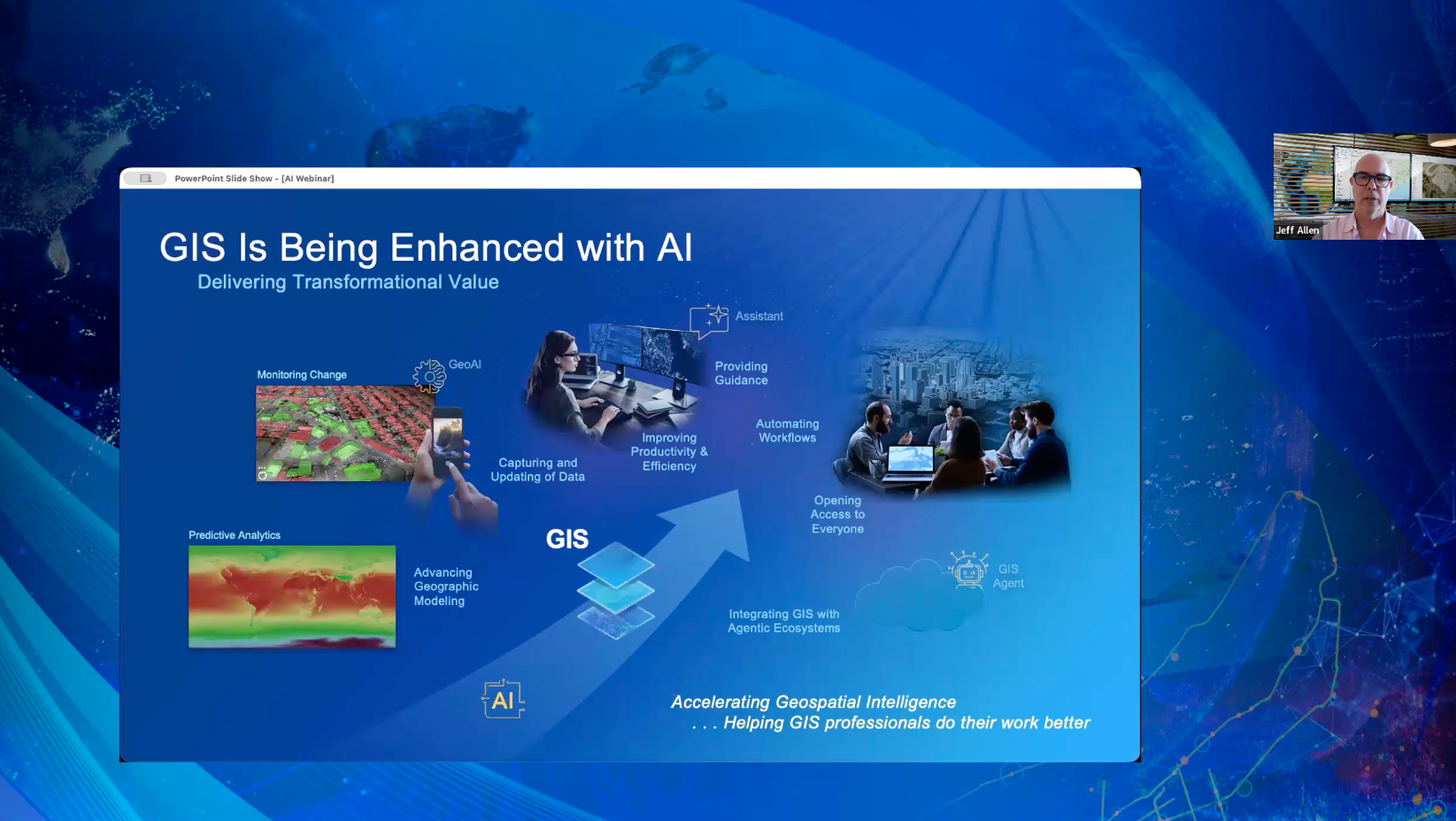
A central theme of the discussion was that AI within GIS is fundamentally about unlocking context. Pipeline organizations manage enormous volumes of spatial and operational data, yet data alone does not drive better outcomes. What matters is the ability to interpret patterns, understand relationships, and translate information into action.
AI enhances this process by surfacing hidden patterns within large datasets, supporting faster operational decisions, enabling real-time monitoring, and automating repetitive analysis. Rather than replacing existing workflows, AI strengthens them. It augments the intelligence already present in GIS systems, making spatial insights more accessible across operations, compliance, and executive teams.
Real-Time Data and Automation
Pipeline systems today ingest increasing amounts of real-time data from sensors, inspections, and operational systems. This growing data volume creates both opportunity and complexity. AI plays a critical role in managing that complexity.
Through automated anomaly detection, advanced analytics, and continuous monitoring workflows, AI allows organizations to proactively identify potential issues before they escalate. It can also trigger alerts that support faster response times and improved situational awareness. This shift moves pipeline operators from reactive oversight toward proactive operational intelligence, reducing manual effort while increasing precision.
Computer Vision and GeoAI
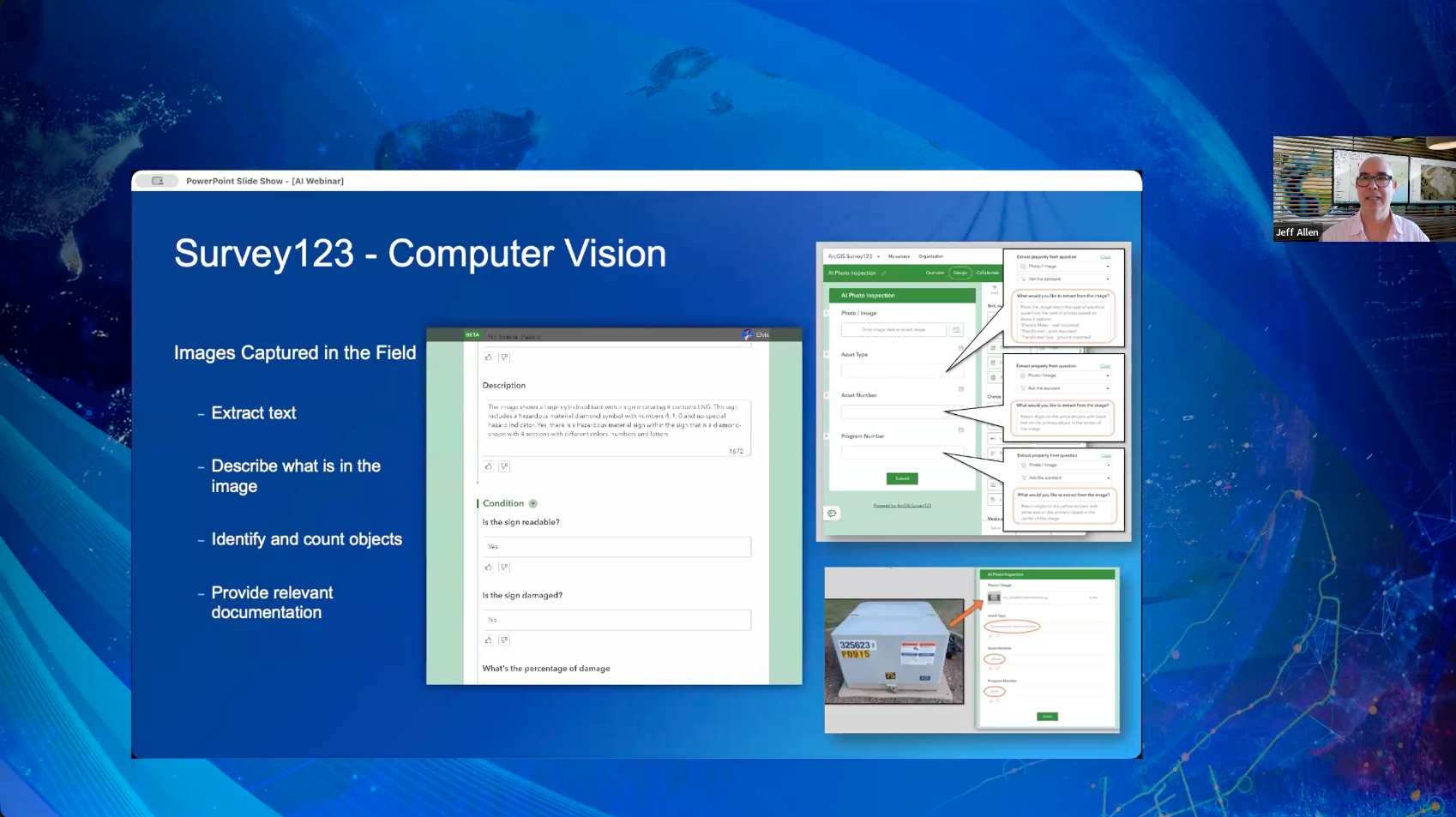
Another important topic covered in the session was the role of computer vision and GeoAI. These capabilities are already available and can be integrated into field workflows, including applications such as Survey123.
Computer vision enables teams to analyze imagery, automatically detect features, and enhance inspection processes. By embedding these capabilities into field data collection and inspection routines, organizations can improve consistency, reduce human error, and accelerate reporting. Additional field mobility integrations are in development, signaling continued investment in AI-driven workflows across the ArcGIS ecosystem.
Questions and Answers
Several thoughtful questions were raised during the webinar, reflecting both interest and practical considerations around implementation.
Are AI assistants available in ArcGIS Enterprise?
Currently, most AI assistant capabilities are available in ArcGIS Online. Beginning with version 12.1 of ArcGIS Enterprise, AI capabilities will start to be introduced, with updates expected later this summer.
Can computer vision be used in field applications?
Yes. Computer vision capabilities are available today and have been in beta. These tools can be leveraged in workflows such as Survey123, with additional enhancements and integrations underway.
How can organizations using Enterprise experiment with AI tools currently available in Online?
At present, assistant capabilities are primarily available in ArcGIS Online. Esri often introduces and tests new functionality in Online environments before bringing those capabilities into future Enterprise releases. Organizations interested in exploring AI can begin by evaluating these tools in Online as part of pilot efforts.
How should organizations get started with AI?
Many organizations are beginning with focused pilot projects. A practical approach includes selecting a small data sample, identifying clear operational questions, testing specific use cases, and iterating before scaling. AI adoption is evolving quickly, and experimentation allows teams to build internal confidence while measuring tangible value.
AI in pipeline operations is not a distant vision. It is already embedded in current workflows and continues to expand in capability and reach. As organizations explore pilot projects and new AI-driven features, GIS remains the foundation that provides spatial context, operational clarity, and decision support.
The next phase of pipeline innovation will not simply be about collecting more data. It will be about using AI within GIS to turn that data into actionable insight.
Watch the webinar on demand: https://link.esri.com/701f2000000hgneAAA/n8rtXhp
