Problem: I am developing a .pyt to perform automated geoprocessing, using ArcPro 2.7. The Polygon to Centerline tool is part of that pyt workflow and it is failing to output a complete dataset. It completes successfully, but gives a warning: WARNING 000072: Cannot process feature with OID 1. Reviewing error documentation reveials that OID such and such could not be processed, run repair geometry. It returns only centerlines from smaller disjointed polygons or segments and not the entire polyline for the polygon.
The buffer that is created around the multiple datasets passes the check geometry tool. When I run the repair geometry tool on the buffer featureclass, as the warning error suggests, it finds no errors and repairs nothing.
Here is a small quick snip image sample of the problem. The polygon to centerline output is in red 3pt. The polygon is in black. So it failed to draw the centerline in the polygon from rest of the polyline network.
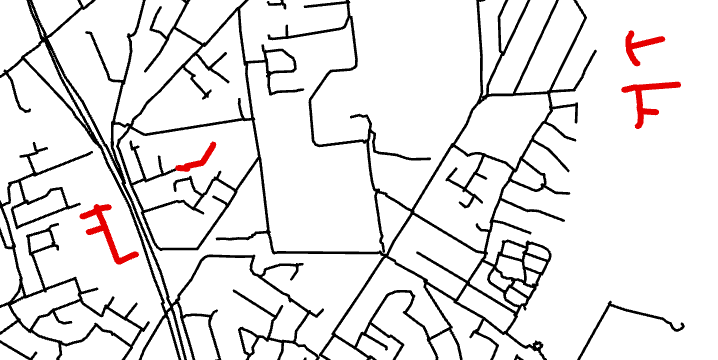
Questions:
Is there a limit to how large or complex the polygon can be for polygon to centerline to work completely? Seems like it is only drawing the centerline on smaller multipart features that are not part of the whole network polygon.
If polygon to centerline cannot handle very large complex polygons does anyone have any other suggestions for a automated way of creating a centerline from a polygon? Or another similar solution?
Problem Set Description: I have two similar near like polyline datasets. The polyline datasets that I have are very very large 500k+ features some in the millions. Easiest example to think of is two different road datasets of the same road network. Each dataset has been mapped slightly different from disparate sources. The idea is to merge them into a single dataset using merge. Then generate a 5-20meter buffer around the polylines using the dissolve all option. Dissolve all is important because ultimately i want to use the buffer created around them all to then generate a single centerline polyline (multipart) feature. A successful center polyline then replaces the two disparate datasets.
Thank you,
Any advice or assistance would be appreciated.
J