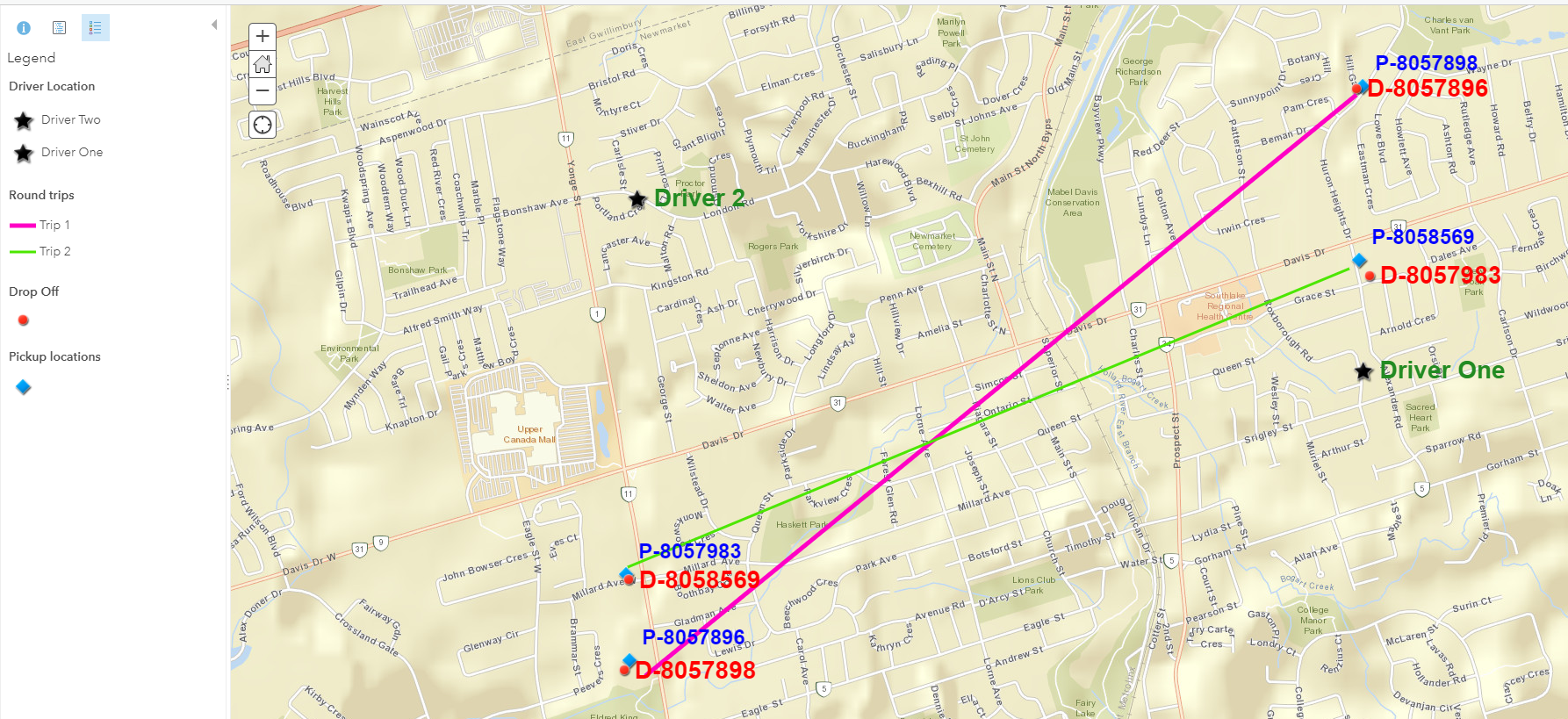
We are using the vrp solver to optimize a fleet at real time where the startDepotName of routes is used to model the current driver position. We would like to know the best way to model round trips. In the map below we have 8 stops with two “round trips”. The relative sequence of each four stops must be preserved. In this scenario order pairs cannot be used for stops D-8057896 and P-8057898 since the first order is a delivery. Similarly, D-8057983 and P8058569 cannot be an order pair. Assuming we have one driver to visit the four locations to fulfil the eight stops, the only way I can think of is to split this into two routes. Each route represents one of the two round trips. Each stop will have to be assigned to a route and have a relative sequence. Please confirm that this is the right approach. The real problem with using routes to model round trips is when we have more than one driver available in the area. Using routes means that we will have to assign the routes to stops upfront to the drivers instead of putting the onus on the vrp solver to do the assignment based on the capacities of the drivers and their location with respect to stops. Is there any other way to address this situation without pre assigning stops to routes?
The business mandates that the pickups at 17250 Yonge and 17360 Yonge Street are fulfilled before the drop offs and pickups at hill gate and alexander road .I do not see a setting in the api to preserve "actual sequence" on defined routes.
Please see the map below for your reference. I also attached a word document with the problem description for your reference
First Round Trip:
P-8057896 -17250 Yonge – Pickup
D-8057896 -789 Hill Gate - Drop Off
P-8057898 -789 Hill Gate – Pickup
D-8057898 17250 Yonge Street - Drop Off
Second Round Trip:
P-8057983 -17360 Yonge Street – Pickup
D-8057983 -31 Alexander Road - Drop Off
P-8058569 - 31 Alexander Road – Pickup
D-8058569 17360 Yonge Street – Drop Off