If you’re interested in pursuing a career in GIS, you might be wondering: What skills do I already have that would be valuable? What skills do I need to develop? Do I enjoy the technical side of GIS, or the storytelling and communication side?
As an Esri intern, I asked many of the same questions before starting my summer internship. My name is Ella Fitzpatrick, and I’m currently an Esri Marketing Intern on Industry Solutions Education Team and a student at the University of California, Riverside (UCR).
Marketing? Yes! When people think about GIS careers, they usually picture geographers and analysts. While these roles represent a large portion of the GIS community, they’re just a fraction of the GIS career opportunities available. This article will outline how I became an Esri Intern, what a typical day looks like, the skills that can help you succeed, and advice for anyone thinking about applying.
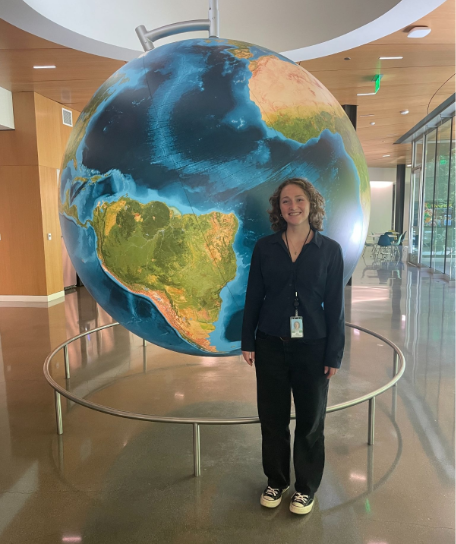
Where GIS Started for Me
Growing up in Redlands, California, Esri employees would often visit our classrooms, eager to share with us what GIS could do. They showed us maps of butterfly migrations and earthquakes along the Ring of Fire. As a fifth grader, I remember thinking, Maps? Isn’t that for finding the nearest McDonalds?
About one year ago, I was sitting in my Global Migrations and Movements class and my professor pulled up an animated map that visualized how America’s population demographic had transformed over the past 200 years. I wasn't just watching dots migrate from east to west, but two centuries of human movement unfold on a timescale map. That was the moment I truly understood the power and potential of GIS.
Soon after, I enrolled in the GIS Certificate Program through the Extension Program at California State University, Fullerton (CSUF) while continuing my bachelor’s at UCR. At the time, my university didn’t offer a wide range of GIS classes for public policy students, so I enrolled in geology courses to get my hands on ArcGIS Pro. As I continued my classes, I applied to Esri.
Esri Internship Details
Every summer for 12 weeks, Esri hosts a cohort of interns which are open to third- and fourth-year undergraduates, graduates, and Ph.D. students eager to start their GIS careers. Applications typically open in September and close in December, so be sure to mark your calendar! International students are also welcome to apply. All details can be found on the Esri Student Programs webpage.
Internships are full-time and paid, with positions available at both the headquarters office in Redlands, California, and regional offices including Philadelphia, Boston, and Washington, D.C. If you miss the internship deadline, hope is not lost! You can also apply to be an Esri Student Assistant at one of the many Esri conferences that take place year-round.
The best thing about Esri is that there isn’t just one set path. Internships span nearly every corner of the company. Whether it’s writing code, marketing, graphic design, or GIS, there’s likely a track for you. A few of paths include:
- Software Engineer and Development Interns design, implement and test software, sometimes working directly with code to power Esri’s products.
- Product Engineer Interns help contribute to the development of ArcGIS products by understanding user workflows and defining what we need to build and why.
- Solution Engineer Interns work with customers in specific industries to understand their GIS needs and help build solutions to solve their problems.
- Events Interns help support the logistics of Esri events such as the Esri User Conference.
- Professional Services Interns work directly with customers to guide them in their deployment of ArcGIS within their organization.
- Industry Solutions Interns work on the story-based side of business and marketing, helping to communicate industry-specific needs and products.
Applying is easy, but the interview stage is where your hard work and preparation will shine brightest. Be ready for multiple rounds of interviews, usually 3 to 4 separate meetings, filled with questions about your experience, skills, and interests.
Before each interview, I practiced answering potential questions and had mock interviews with friends. I also put together a set of notes beforehand so that I could provide detailed answers about my previous work and experience. I would consider revisiting the job listing, so you know exactly which of your skills and experiences you should highlight during the conversation.
Day in the Life of an Esri Intern
No two intern experiences look exactly alike. As a Marketing Intern, I focus on communicating the value of using ArcGIS in academic settings, which aligns with my background in communications, first-hand experience using ArcGIS in the classroom, and my eagerness to connect with the GIS community. This turned out to be the perfect lens for supporting the team.
I start my day with a cup of coffee from my favorite spot in town. When I get into the office, I check my calendar to see what meetings I have planned for the day and respond to any emails or messages waiting for my reply. Each morning, I have a one-on-one meeting with my mentor, which is a great opportunity to ask questions, get advice, and connect on what projects I'm working on.
My position is centered in community building within GIS education, so I play a role in creating content to help connect students and educators through stories. Most days I’m scheduling and monitoring social posts, taking marketing training, writing blog posts, and helping other blog authors publish stories on the Esri Community Education Blog. In between managing projects, I also write success stories, put together newsletters, and send email requests to our project management team.
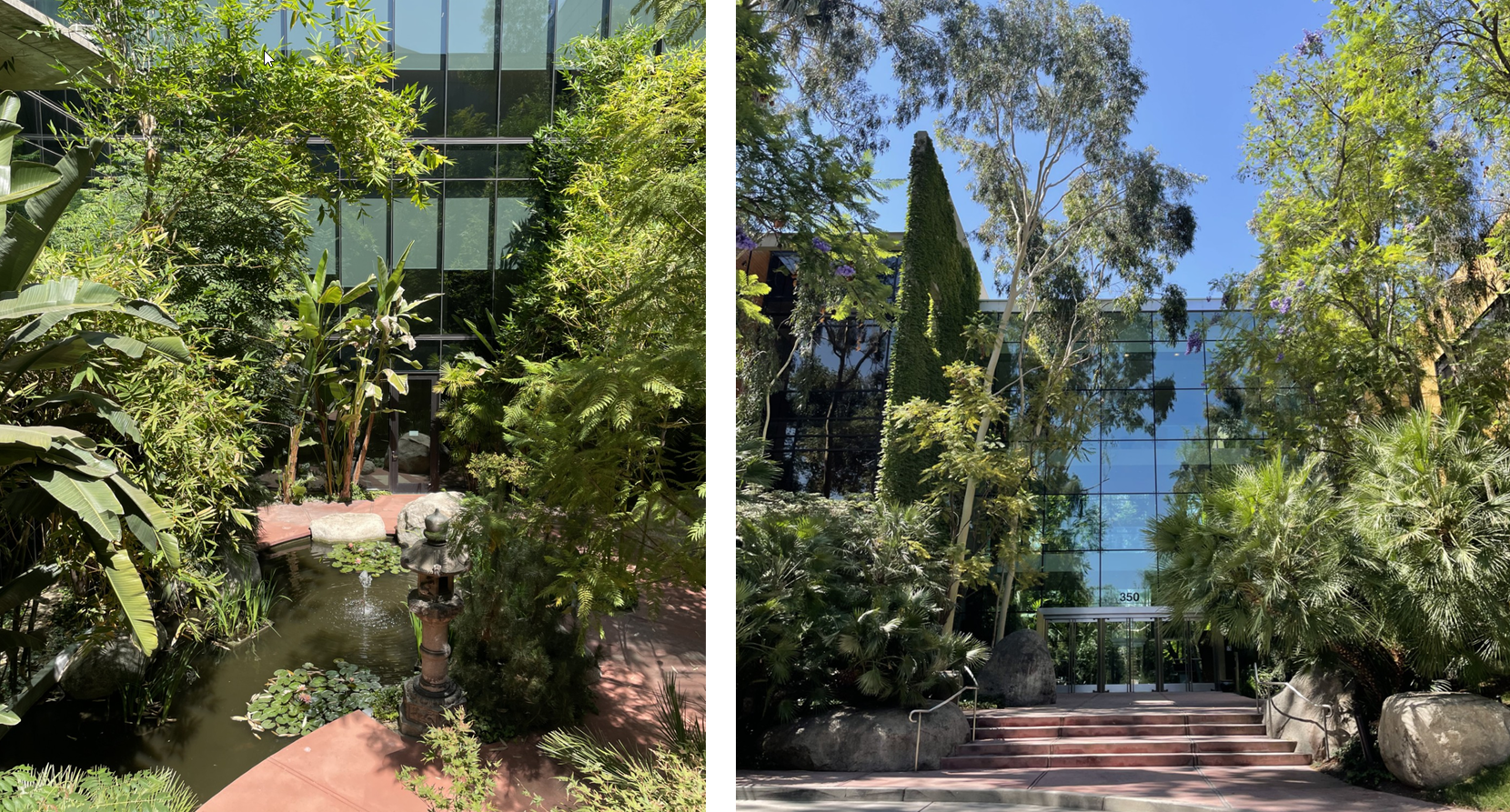
Esri’s Redlands, California Campus
Being an Esri intern has its perks. Beyond the work itself, Esri's Redlands campus is full of fun and beautiful places that can take you away from your desk. From koi ponds, shady trees, and so much greenery you might forget you’re in Southern California, interns get the full Esri experience. This also includes access to the gym, library, and cafe. While it’s a relatively large campus with over 2,000 employees, there’s always time for interns to connect with other interns and take part in a full calendar of activities:
- Daily workshops and presentations led by employees across the company
- The Intern Hackathon
- The Esri User Conference
- On-campus events, like the summer BBQ
The Esri Intern Hackathon has been my favorite activity by far. Interns from any background, at both the Redlands and the regional offices, are encouraged to participate. Those who do group up into teams of geographers, developers, entrepreneurs, and designers, and spend a few weeks planning their projects before the weekend competition begins.
I enjoyed working with my team to build a solution with a story while watching the development process unfold. Between the brain break activities and the yells of success echoing through the Esri cafe all weekend, I loved seeing what other teams came up with during the final presentations. It’s also a great opportunity to showcase your skills, since the teams who advance through the next two rounds get to present their projects to the entire company!

The 2026 Esri Intern Hackathon
Important skills
No matter which team you join, there are a few key strong soft skills that will carry you far.
- Communication. You'll often be working on projects with tight deadlines and multiple stakeholders. Rather than assuming everyone is on the same page, make sure to keep people in the loop.
- Problem-solving. When projects shift and priorities change, don’t wait for someone to hand you the answer, find them yourself instead. As you tackle more obstacles, you will become more adaptive and resourceful.
- Collaboration. Almost nothing gets built alone. You’ll often be looped in with different teams to get projects done. Contribute where you can and know when to ask questions instead of guessing.
- Time Management. With projects, meetings, and day-to-day tasks, your calendar fills up fast. Prioritize what deserves attention first while still allowing room to say “yes”.
- Getting Out of Your Comfort Zone. Take initiative in your success. Whether it's presenting in front of a room, pitching a new idea, or speaking up during a meeting, don’t be afraid of failure.
All of these soft skills complement one another. Communication fuels collaboration, collaboration helps solve problems, and the more you step out of your comfort zone, the easier it all becomes.
Tips for Success
You don’t have to wait for an internship to start building your GIS skills. When my university didn’t offer a course, I signed up for the certificate program. Don’t be afraid to build your own path. Take an Esri training course, explore ArcGIS Tutorials attend GIS Day events, join the Esri Young Professionals Network (YPN), attend Esri events such as conferences and summits, and network as much as you can.
When you land the role, learning doesn’t stop. Before your internship begins, you can start getting a feel for what your summer will look like by attending the monthly webinars put together by the University Student Programs team. Each webinar focuses on a different aspect of the internship, so you can feel prepared to walk in on your first day. Once you’re there, put your preparation to work. Ask questions early and often, and say yes to things outside of your role. Those who make the most of their time at Esri are the ones who stay curious and keep raising their hands.

The 2026 Esri User Conference and YPN Social
Advice for Future Interns
If you’re interested in applying for an internship at Esri, this is a competitive program, so be sure to set yourself up for success.
Regardless of your GIS skill level or professional experience, I encourage you to apply for this internship because it can segue into amazing new opportunities. I’ve covered a lot, but if I haven’t answered all of your questions, feel free to reach out to me via LinkedIn or email (ella.fitz@icloud.com).
GIS Career Pathways Blog Series to Explore