The present
Biodiversity is declining at an unprecedented rate due to the cumulative impacts of local and global stressors. The most severe drivers of biodiversity loss are rapid climate change, habitat degradation, and overexploitation, followed by biological invasions and pollution. The consequences of such anthropogenic drivers of change are so profound that can lead to a sixth mass extinction event. ‘Blue acceleration’ has set the ocean in the forefront of economic importance, industrializing and increasing the range of activities in the blue territory, thus potentially intensifying cumulative pressures on marine ecosystems. Climate change can often intensify the effects of other local human stressors compromising efforts to maintain ecosystems in a ‘safe operating space’.
The Barcelona Convention (BC) aims at biodiversity conservation in the Mediterranean Sea, including in its Annex II a list of threatened species that need protection. This study aimed to assess existing scientific effort and knowledge on the invertebrate species of BC Annex II. The findings revealed that despite increasing regional collaboration, most of the BC Annex II invertebrate species are understudied, with knowledge gaps compromising conservation efforts.
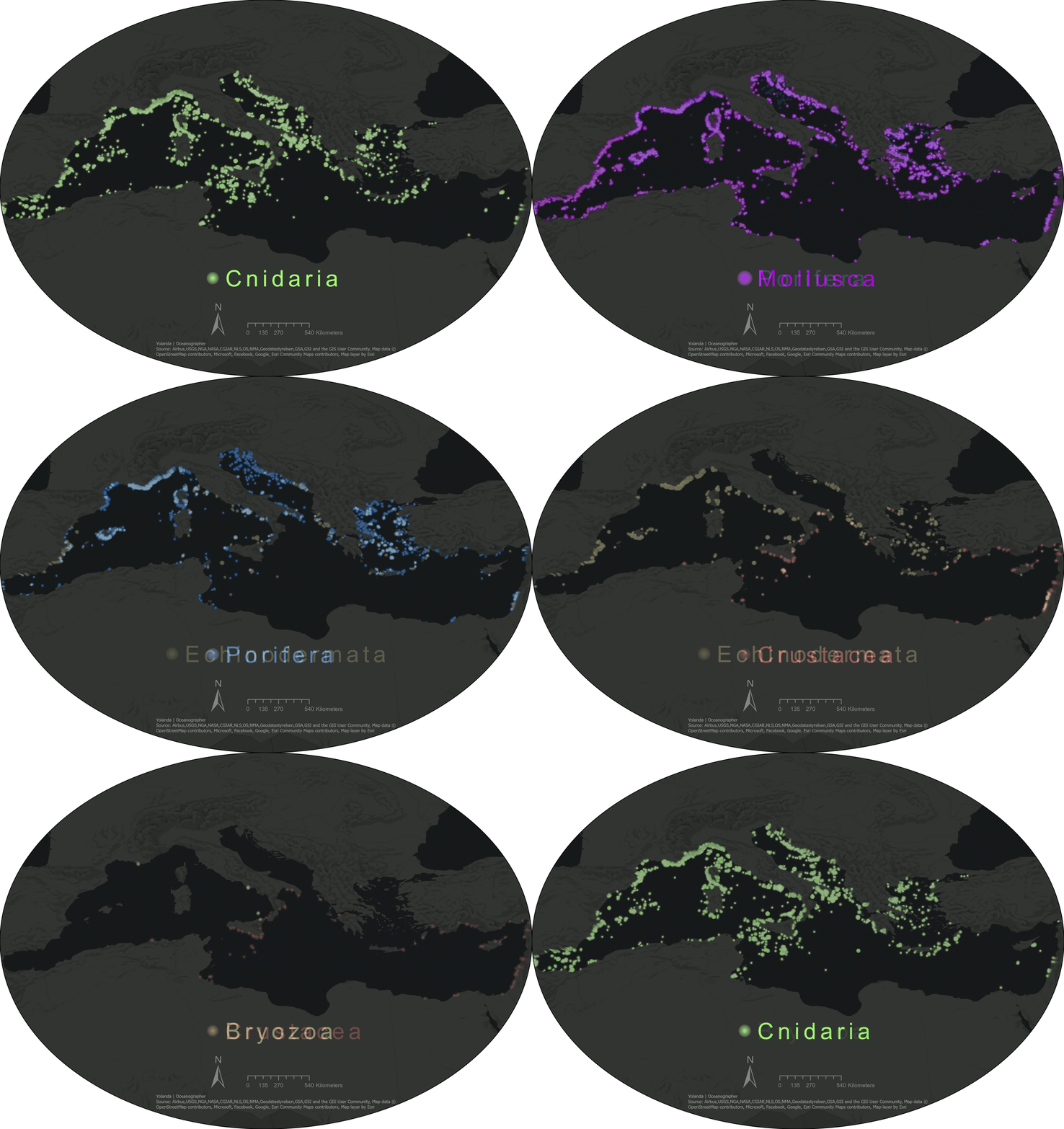
ArcGIS Pro software was utilized to visualize maps of species records obtained from the analyzed articles, organized by phylum (Cnidaria, Crustacea, Echinodermata, Mollusca, and Porifera), with distribution maps for each species included in the supplementary files. To explore whether records of BC Annex II species were primarily located in marine protected areas (MPAs), we spatially overlapped species' points and the polygons delineating Mediterranean MPAs. Additionally in combination with Kernel density estimations (KDE) were further employed to assess the spatial distribution of species records.
Finaly, apart from the strict form of the paper a .gif was created (ArcGIS Pro software and online gif maker https://ezgif.com/maker) for the distribution of the species.
The future
The EU Biodiversity Strategy for 2030 and the CBD Global Biodiversity Framework provide new opportunities for marine conservation in the Mediterranean but to achieve their goals, regional research prioritization through targeted funding is a prerequisite.
For more information please visit the scientific paper in this site: https://doi.org/10.1016/j.biocon.2024.110740
Figure 1. Reported records of the Barcelona Convention Annex II invertebrate species by phylum.
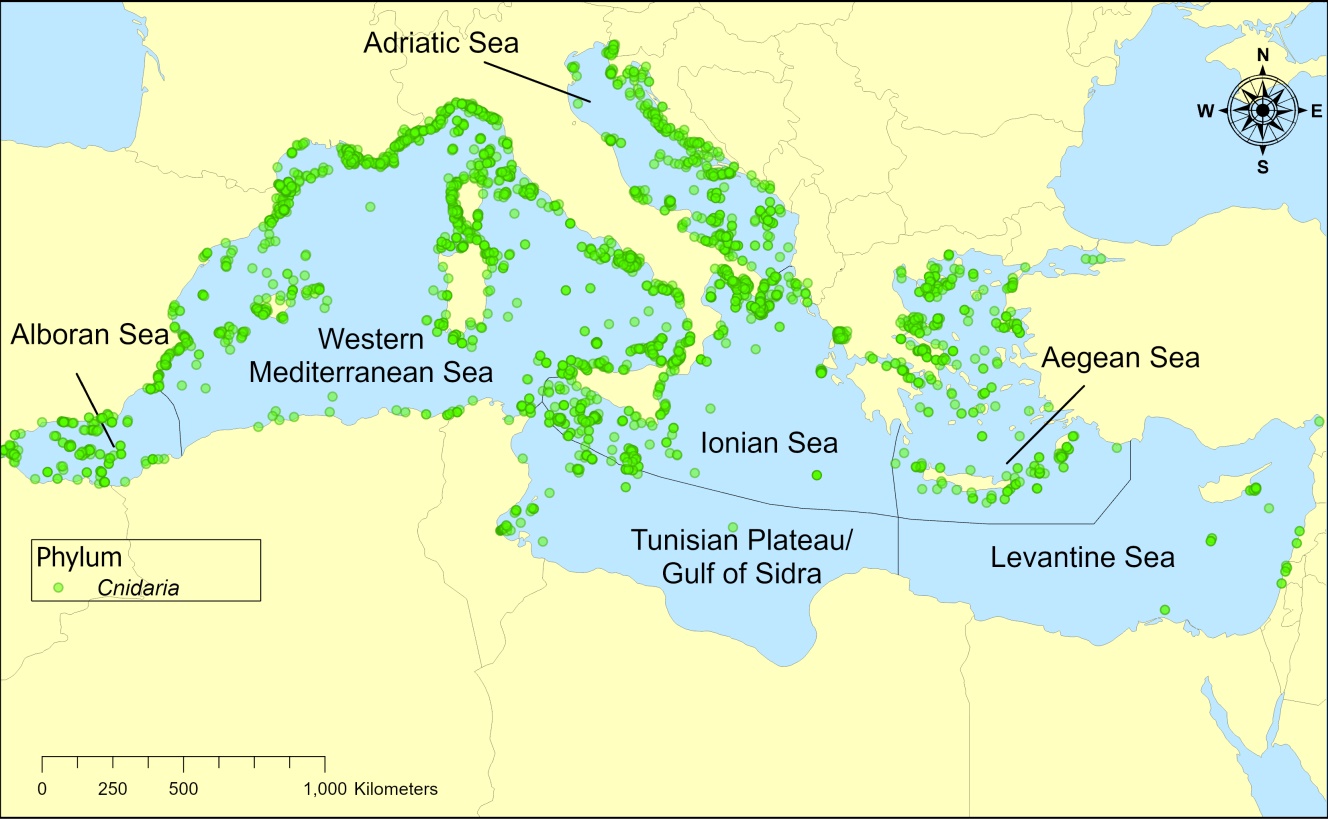
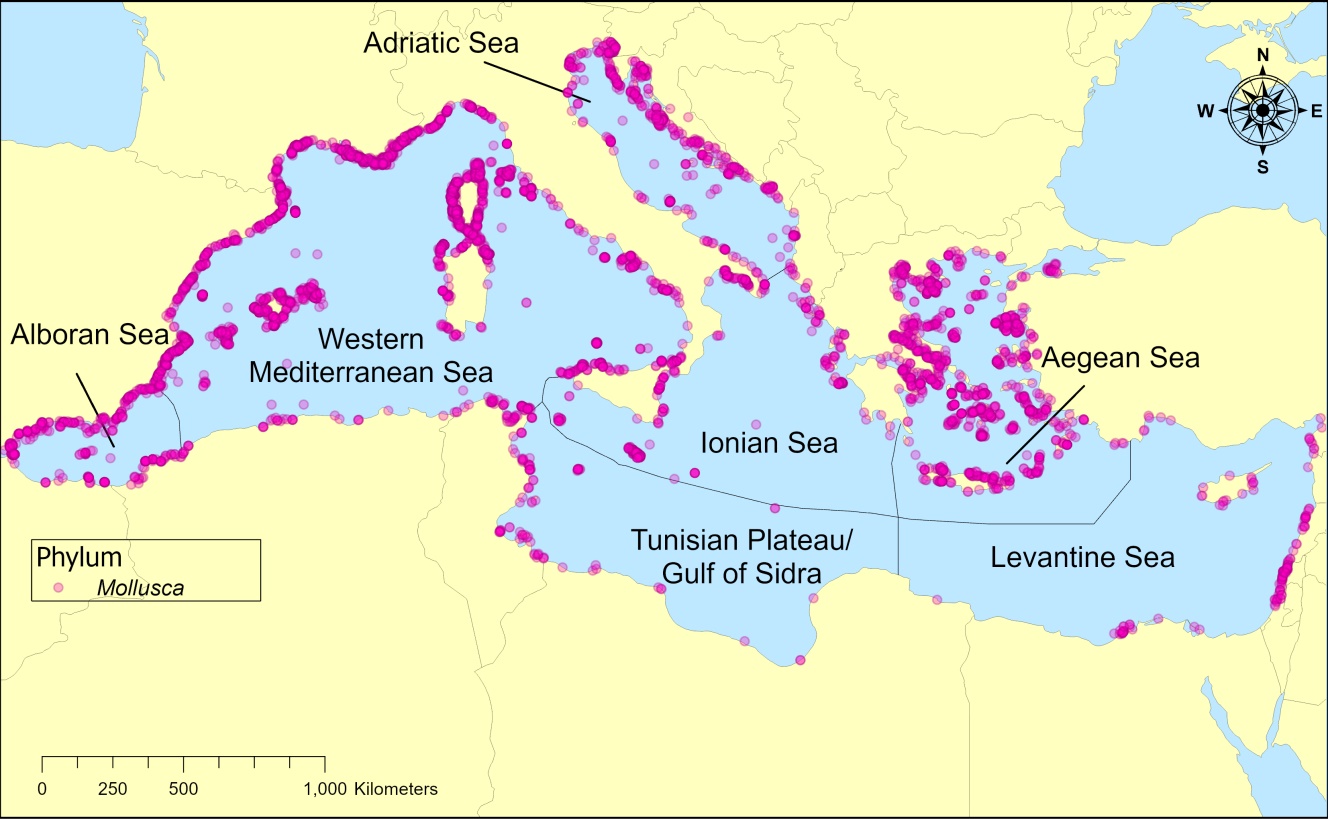
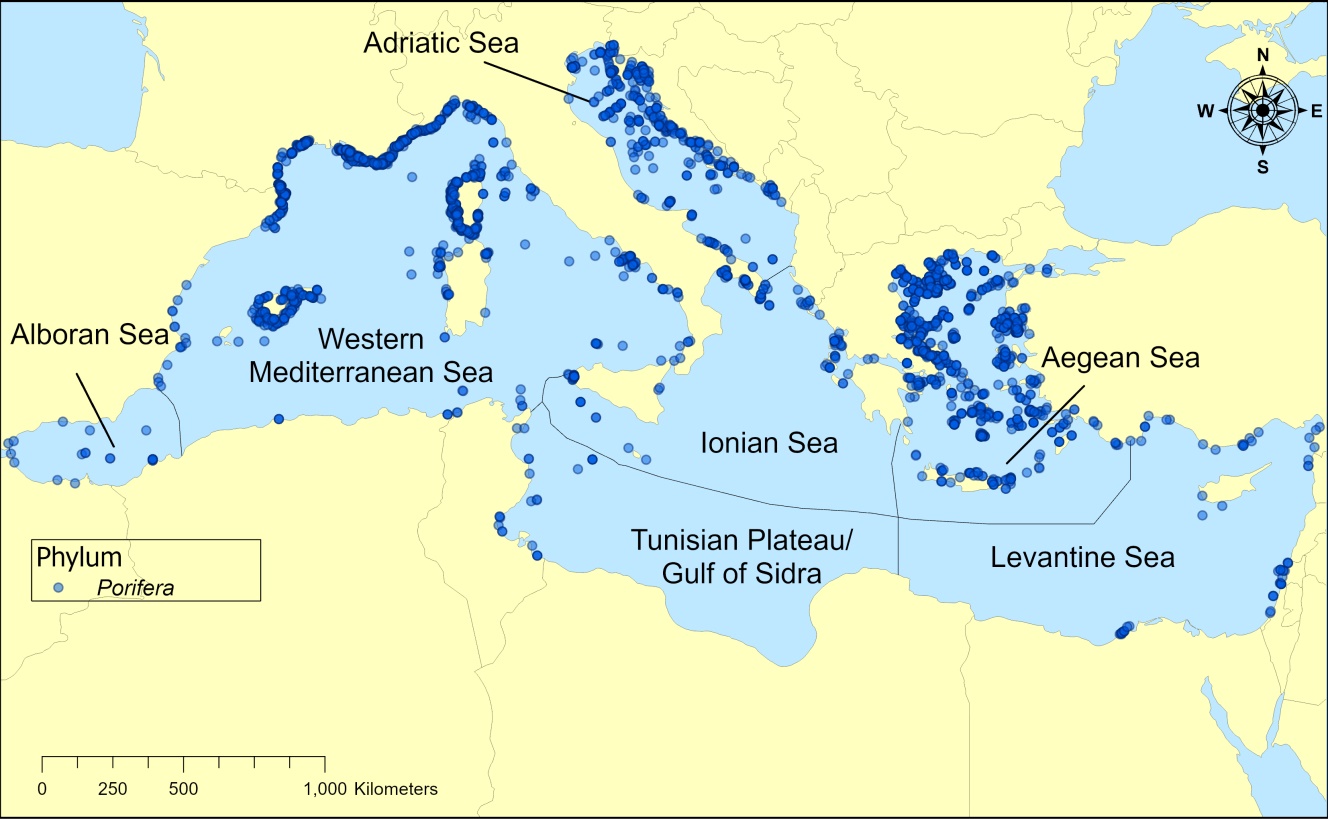
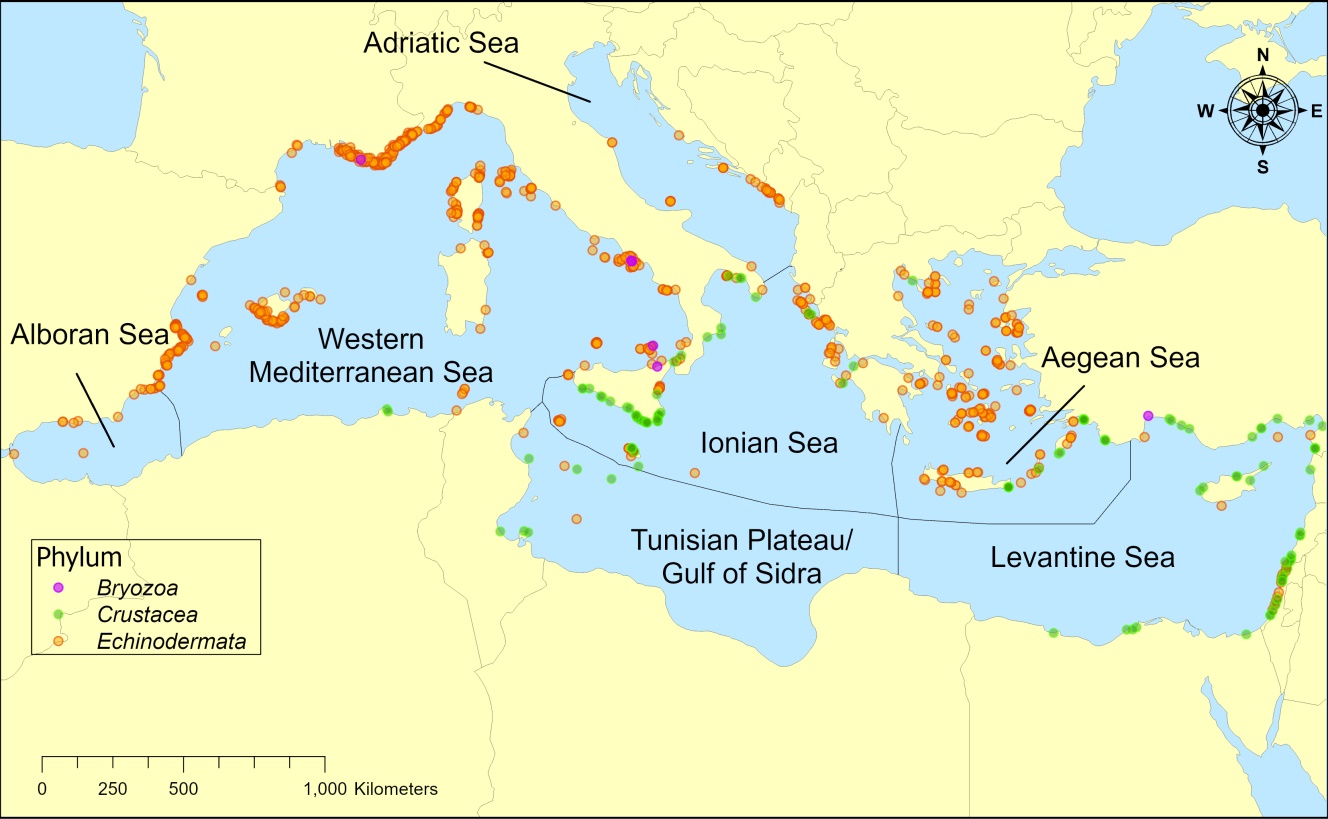
Figure 2. Kernel Density Estimation.
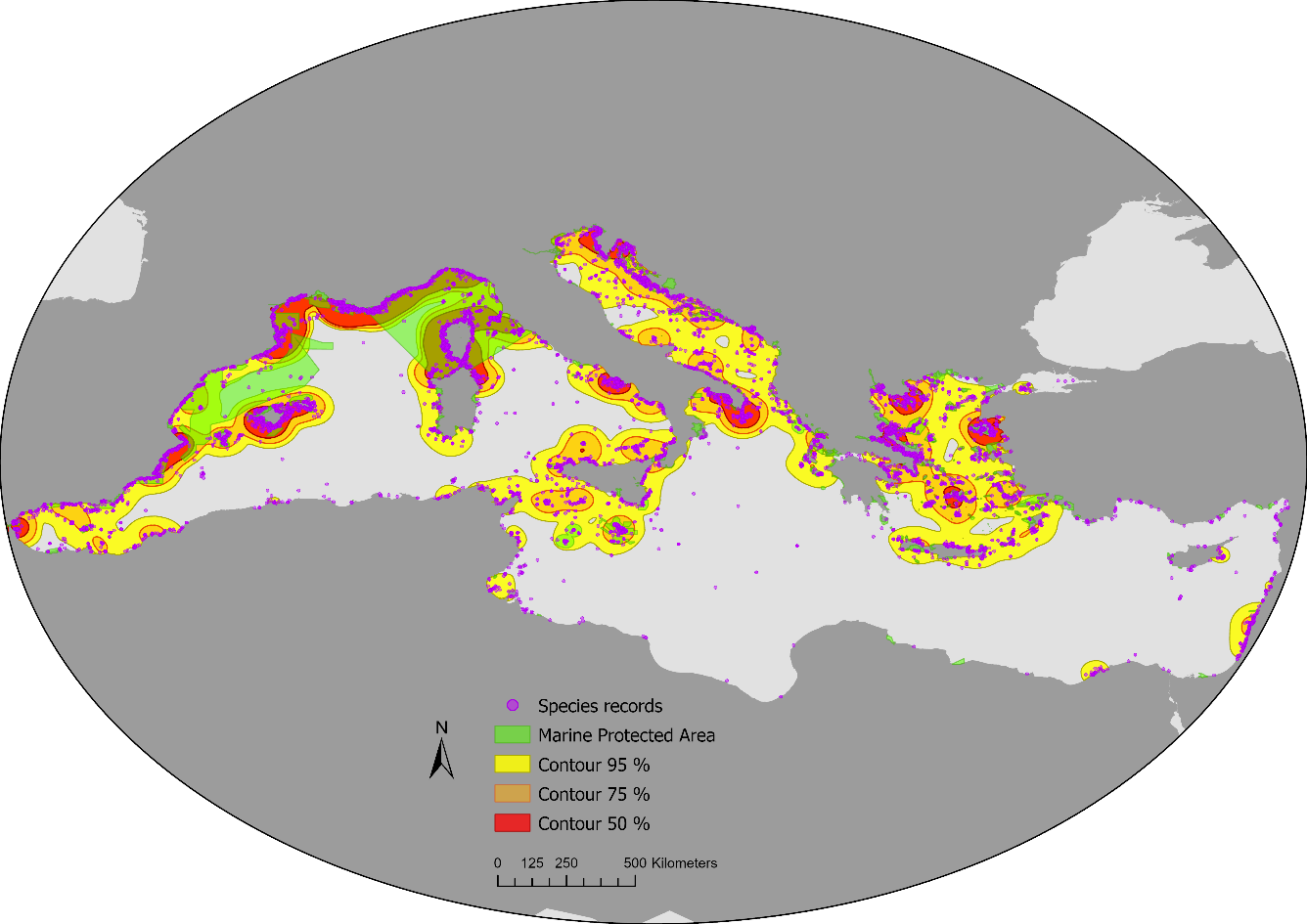
Figure 1. Reported records of the Barcelona Convention Annex II invertebrate species by phylum GIF.