Kind of a follow-up to this post
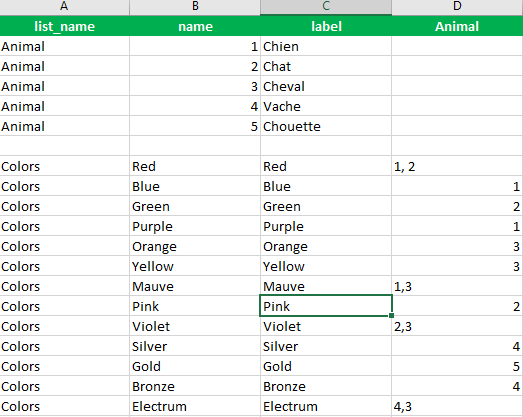
I have a list describing the contents of someone's closet. I'm taking inventory of this closet while I fill out this survey, but I really only care about what colors are represented in the assemblage. So I want to know what color shirts are in the closet, regardless of what style they are.
Example table (pivoted for readability)
| Item Type | Item Style | Colors possible in that Style |
| Shirt | Collared | Blue (Navy), Blue (Pale), Green, Red |
| | Henley | Blue (Pale), Grey, White |
| | T-Shirt | Green, Grey, Purple, Red |
| | Tank-top | Black, Blue (Navy), Grey, Green, Purple |
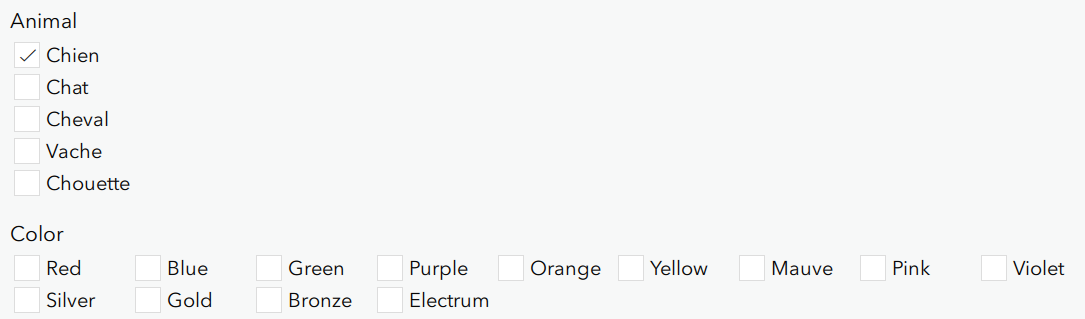
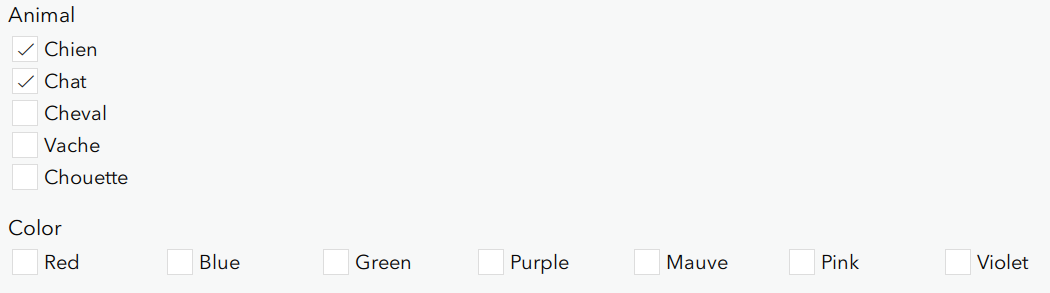
If someone selects a Collared shirt and Tank-top, the full set of choices will appear.
| Item Style | Colors possible |
| Collared, Tank-top | Blue (Navy), Black, Blue (Pale), Blue (Navy), Green, Grey, Red, Green, Purple |
(Survey123 puts the choices as A[0], B[0], A[1], B[1], etc...)
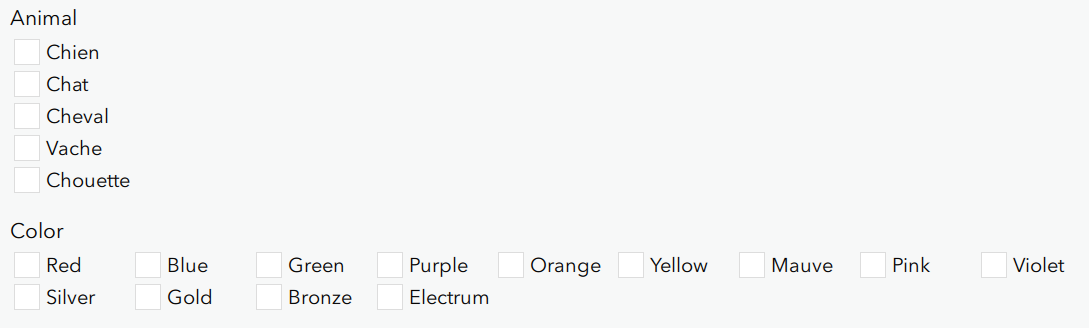
Since I only care about the color of his entire collection of shirts, how can I make a clean list of unique choices appear?
| Collared, Tank-top | Black, Blue (Navy), Blue (Pale), Green, Grey, Purple, Red |
(If this were really what the survey was, I would cascade in reverse, starting with colors, then going to Styles, but that's not possible with my actual dataset.)
Thanks!