For students and young professionals seeking to explore career paths and understand how GIS is applied across industry and science, the Esri User Conference (UC) in San Diego, California is a great place to start.
Esri UC is the largest GIS gathering in the world, bringing together over 20,000 geospatial professionals and enthusiasts from across the globe. It’s an entire week dedicated to sessions, demo presentations, technical workshops, and networking socials. It’s also a hub for connection and collaboration, where attendees can learn about new tools, technologies, applications, and discoveries.
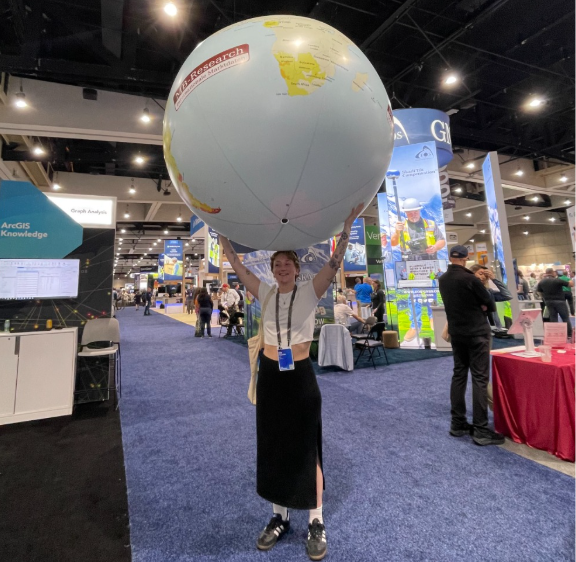
My name is Ella Fitzpatrick, and I attended my first Esri UC as a student in 2025. Not only was it my first time at an Esri event, but it was my first conference all together. I’d like to share a few tips and insights about navigating the Esri UC and how you can make the event your own.

My First Esri UC
At the time, I was midway through earning my Geographic Information Systems (GIS) certificate and still had a lot to learn. As an undergraduate public policy student at the University of California, Riverside, I was very interested in how GIS intersects with the policy decision, implementation, and evaluation process. I wanted to get outside of the classroom and plant my feet in a professional space where I could see my academic interests come to life, and the Esri UC was the perfect place to start.
I arrived full of nerves and was struck with a healthy case of imposter syndrome. My education had barely scratched the surface of GIS, and suddenly I was surrounded by people who had years of experience. Even before I stepped into the expo hall, doubt set in: how could I engage with people on a subject I’d only just started to grasp? It took a few conversations, but the panic started to fade. I realized that nobody was keeping the score of what I did and didn’t know because they all once stood exactly where I was.
After that, I found myself talking with people in the Map Gallery about which submissions they would vote for, asking questions during a technical workshop on GeoAI, approaching speakers after their sessions, and even participating in the 5k Fun Run/Walk.
Between two floors and an exposition hall the size of a football field, the air was buzzing with exciting conversations, and it was easy to feel like I needed to see and do everything. You probably won't make it to every booth and event, and you’ll even stumble into one that isn’t on your schedule. The goal is not to do it all, it’s to walk away with meaningful conversations and ideas that stick.
How to Come Prepared
Here’s what worked for me, and what I wish I’d known going into my first Esri UC.
Document Conference Goals. If you’ve been to a conference before, you might already be familiar with the layout: booths, stages, presentations, and many new faces. Regardless of whether you’re a seasoned conference goer or this is your first time, document your personal and professional goals before the conference starts.
Some goals might include networking with a certain number of people, raising questions during a session, consulting with experts in your field of interest, or even participating in a social event like the morning yoga 5K Fun Run.
Keep your goals in mind as you move through the week because it’s easy to get swept up in the action.
Solidify Your Elevator Pitch. An elevator pitch in your back pocket goes a long way. A brief introduction about who you are and why you’re there can spark a great conversation and make a solid first impression. It also takes a lot of pressure off when you’re not sure how to initiate conversation with someone new. Consider preparing a few questions in advance to help guide your conversation, such as:
- What got you interested in GIS?
- What’s been the highlight of the conference for you so far?
- What kind of work do you do, and how does GIS fit into it?
Optimize Your LinkedIn Profile. If you don’t already have a LinkedIn account, create one. The platform is a great place to highlight your achievements, build your personal brand, and stay in touch with your professional connections. Prepare to share your profile with others and craft a strong headline and bio, update your experience and skills, and include any GIS projects you’ve worked on. Pro tip: Make your phone background a QR code to your LinkedIn profile to quickly connect with others.
Get Your GIS Portfolio Ready. Instead of listing technical skills and projects on your resume, consider creating a GIS portfolio if you don’t already have one. A portfolio provides concrete evidence of your work and highlights your technical skills, problem-solving expertise, and overall experience.
Kicking Off the Conference
Before diving into sessions, kick off your week by attending the Plenary Session opened by Esri president Jack Dangermond. He shares his vision for the future of GIS and highlights how ArcGIS is advancing and guiding data-driven solutions to better our world.
With so many sessions running at once, choose how you want to prioritize your time and make room for flexibility. A detailed agenda is posted ahead of the event and attendees can download the Esri Events App to customize their experience. The app is a great resource to build a personal schedule, view room locations, and receive updates on upcoming events.
If you have a specific interest you'd like to explore, I suggest browsing the Esri Community page. Before the event, Esri contributors post industry specific guides that feature streamlined custom agendas. They are simple and relevant for those who want to explore the possibilities of GIS in their field.
What I realized very quickly is that you will not have time to explore everything. Just remember to pace yourself and take breaks between sessions and demos. You might also consider recharging with a prepared meal or snack offered in the Map Gallery and enjoying it on the balcony.
Esri Young Professionals Network (YPN)
There’s also no shortage of career opportunities and resources. Visit the Esri Young Professionals Network (YPN) booth in the expo hall to get plugged into the network and learn how to build your own brand and be your own advocate in the GIS community.
Here are the Esri YPN activities happening during the conference you may want to consider attending:
- Esri YPN: Career Clinic for Young Professionals
Wednesday, July 15, 2:30 pm -3:30 pm | SDCC, Room 28 E - YPN Social
Wednesday, July 15, 6:00 pm–9:00 pm
Hilton Bayfront, Indigo Foyer, Terrace and Pool - Esri YPN: The Power of Say Yes to Opportunities
Thursday, July 16, 10:00 AM – 11:00 AM | SDCC, 29 D - YPN Coffee Walk
Parfait Paris, 555 G Street, San Diego
Tuesday, July 14, 8:00 am - 9:00 am - Fireside Chats at YPN Booth
Expo Hall C, Opposite side of booths 232, 234, 236
You can get a better look at what’s to come at this year's Esri UC 2026 from a detailed guide put together by Esri’s YPN founder, Raquel Perez.

Making it Count Afterward
The last session you attend isn’t where the experience ends. After the conference, try to stay connected with the people you met. Consider doing a “post-conference recap” on your LinkedIn profile and tag some of those new connections. In this post, you can offer insights and reflections from your experience. Share a few photos using the hashtag #EsriUC2026 and highlight a session that stood out to you or an activity you enjoyed.
Registration
The Esri UC is very accessible for university students. With a discounted rate of $150, students can register to attend the full week. If your schedule isn’t flexible, a free one-day pass is available for students at the registration desk in the Expo Hall. You can get registration details on this webpage.
Since my first Esri UC, much has changed because this year I will be attending the conference as an Esri Intern! If you’d like to connect, find me at the YPN booth in the Expo Hall. In the meantime, feel free to leave a comment or reach out to me via LinkedIn if you have any questions.
I hope to see you there!
