How a student with no clear path found his place in GIS, and what got me there
For most of my undergraduate years, I felt like I was a step behind everyone else.
While classmates seemed to know where they were going, I did not. I had no clear path, no obvious calling, and a quiet, constant sense that other people had figured out something I had not. I was not failing, but I was not finding my place either. If you have ever sat in a lecture hall feeling like the one person still waiting for things to click, you know exactly the feeling I mean.
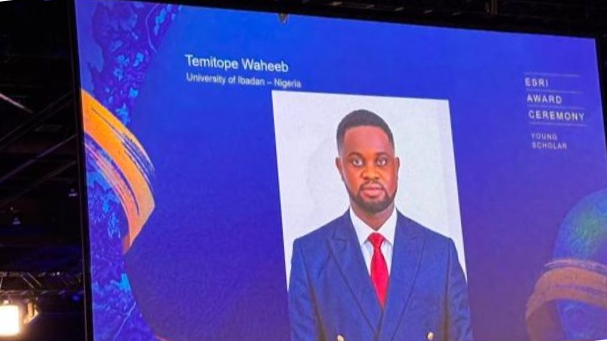
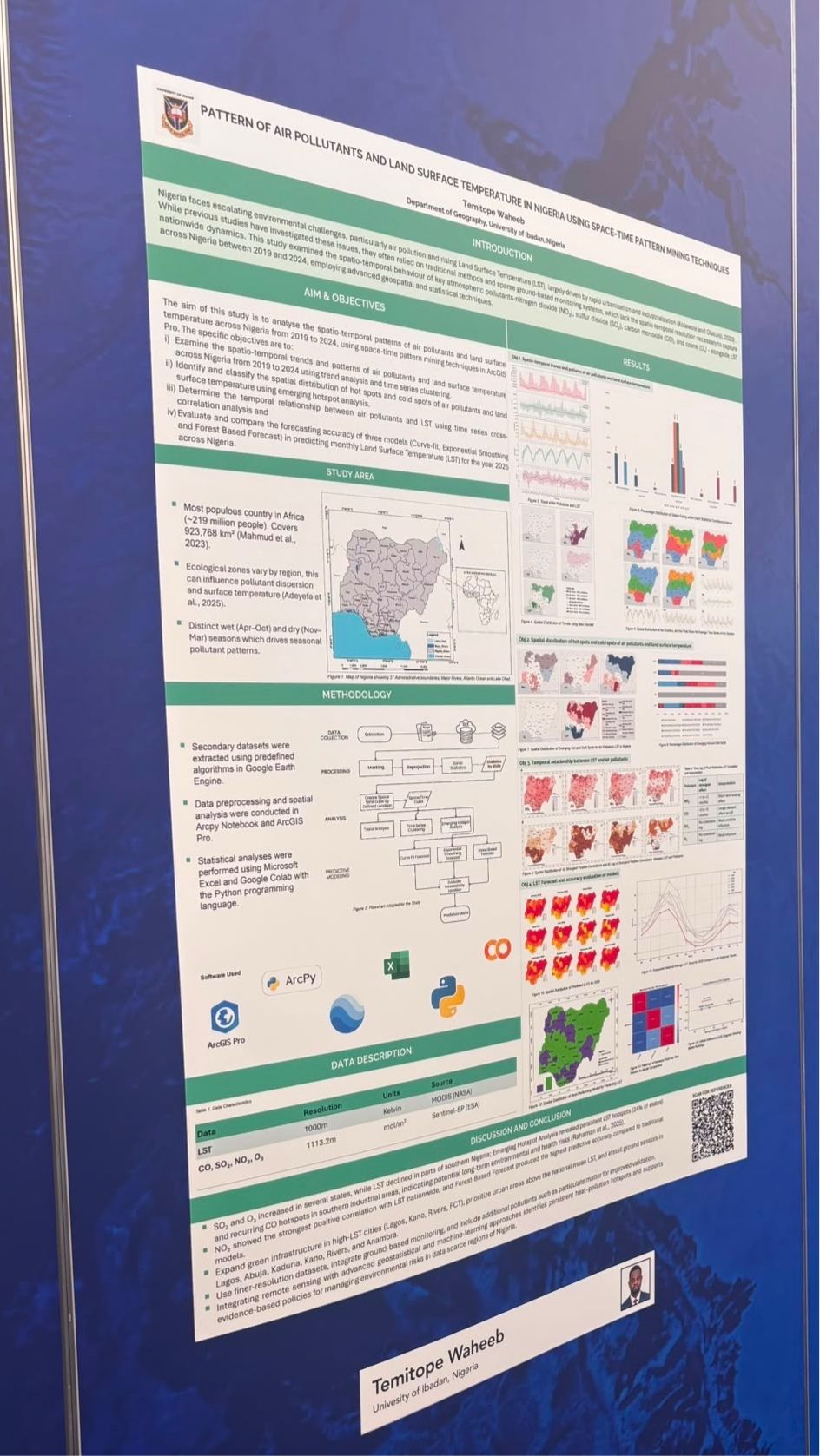
This year, I won the Esri Young Scholars Award for Nigeria, and my work was showcased in the map gallery at the Esri User Conference. I am writing this not to talk about the award, but about the distance between those two versions of me, the one who felt lost and the one whose map ended up on that wall. Because that distance is walkable, and I want to show you the path I actually took.
The problem was not ability. It was direction.
Looking back, the thing holding me back was not a lack of ability. It was a lack of direction. I was capable, but I was pointing that capability at nothing in particular, so it never gathered into momentum. Feeling behind is often not about being slower than others. It is about not yet having found the thing that makes your effort add up.
For me, that thing turned out to be GIS. The first time I understood that you could take data and place it on a map, and that the map could then answer a question you could not answer any other way, something settled in me. It did not feel like learning a new tool. It felt like finding the language I had been missing. For the first time, my curiosity had a direction to run in.
Finding the spark is not enough. You have to train.
Here is the part people skip when they tell these stories. The spark is real, but the spark is not the achievement. What came after the spark was work, deliberate and repeated.
I did not wait to feel ready. I trained. I learned on the job at GISKonsult, where real projects forced me to turn understanding into skill, because a client does not care how inspired you feel, only whether the map is right. I took courses on Coursera to build the fundamentals properly rather than in scattered pieces. And I went through the Massive Open Online Courses (MOOC) offered by Esri themselves, learning the software and the thinking from the people who built it.
None of that was glamorous. It was evenings, repetition, and a lot of getting things wrong before getting them right. But each course, each project, and each fixed mistake moved me a little further from the student who felt behind, and a little closer to being a GIS analyst who knew what he was doing. Training is how a spark becomes a skill.
The award was a result, not the goal.
By the time I entered for the Young Scholars Award, I was not chasing a prize. I was doing work I cared about, and the award was recognition of work that already existed. That distinction matters. I did not become good in order to win. I won because I had spent the time becoming good.
Seeing my work in the map gallery at the conference, among maps from people I had long admired, was surreal. But the real reward was quieter and came earlier: it was the moment I stopped feeling like I was behind, not because someone told me I had arrived, but because I finally knew what I was doing and why.
If you feel behind right now
If you are where I was, capable but without direction, feeling like everyone else is ahead, I want to leave you with the few things I wish someone had told me.
Feeling behind is usually a direction problem, not an ability problem. You may not be lost so much as unassigned, still looking for the thing that makes your effort compound.
When something clicks, do not just enjoy the feeling. Train on it. Learn on real work, take the courses, do the MOOCs, and let the excitement carry you into the unglamorous repetition that actually builds skill. The people who look effortless simply did this quietly for longer.
And stop measuring yourself against where others are. The only comparison that matters is with where you were. I did not overtake anyone. I just kept walking my own path until it led somewhere I was proud of.
I found my place in GIS. If you are still searching for yours, keep going. The step you feel behind by is smaller than it looks, and it closes with work, not with waiting.
Feel free to connect with me on LinkedIn, or comment any questions below.
