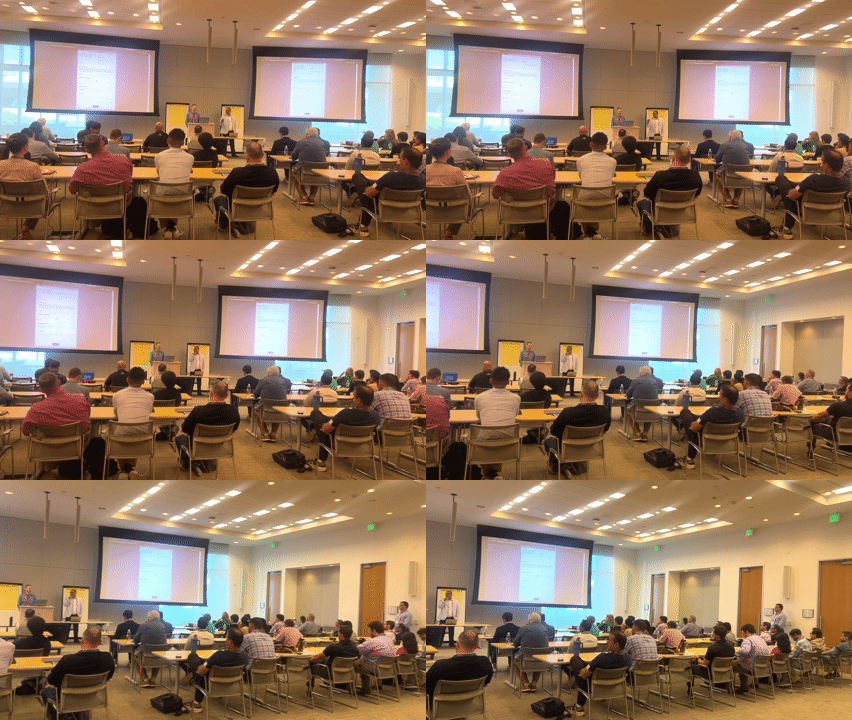
The 2025 Houston Oil & Gas Seminar kicked off at the Houston BP office on September 29, 2025, with a compelling focus on collaboration, innovation, and the transformative potential of geospatial technology in the energy sector. Hosted by the Esri Petroleum team, the event brought together leading GIS professionals to discuss the latest trends and solutions in data management, artificial intelligence (AI), field mobility, and imagery, highlighting the critical role these technologies play in shaping the future of field operations.
Welcoming Collaboration and Innovation
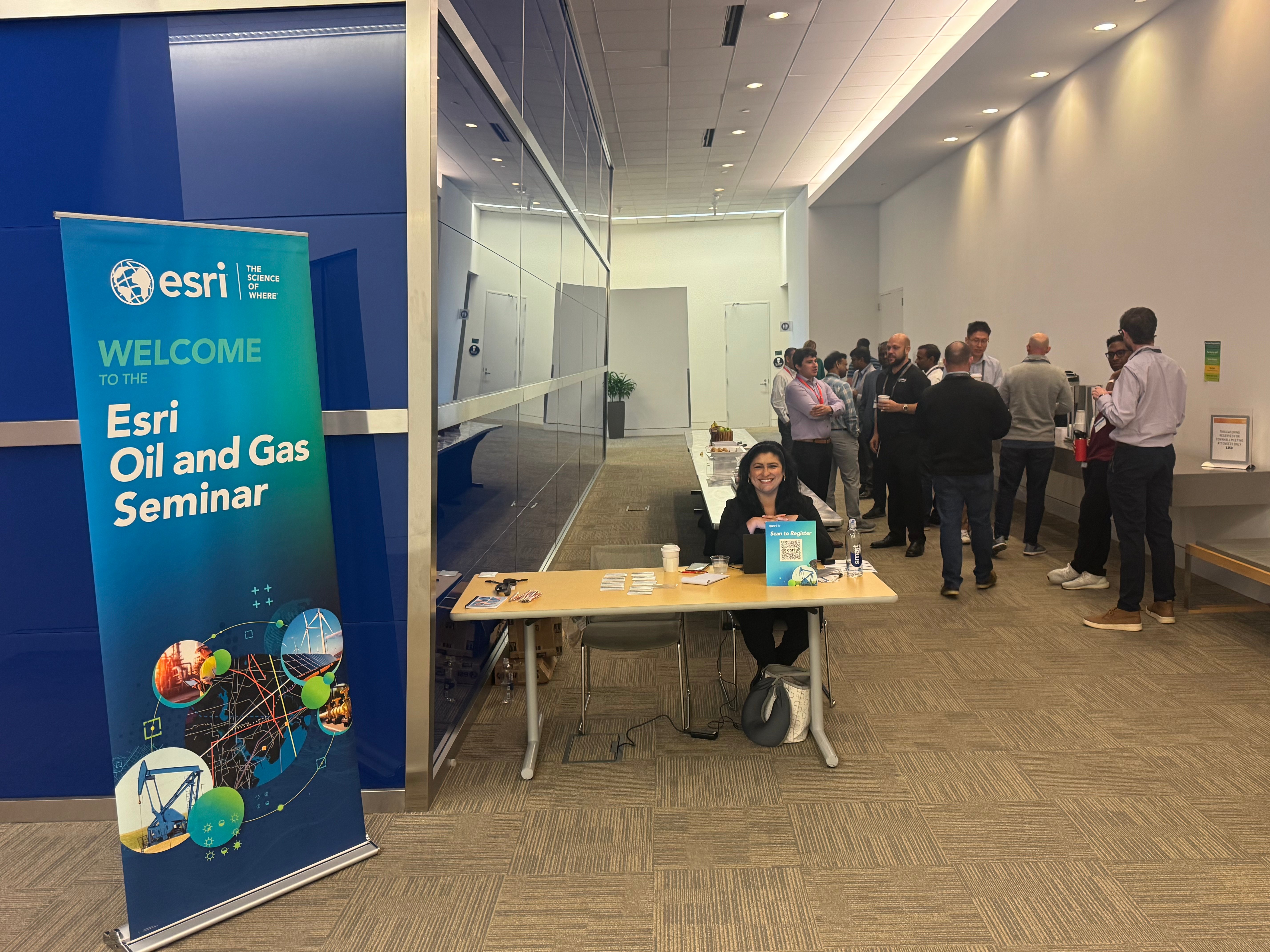
Sam Rosario set the tone for the seminar by emphasizing the importance of idea-sharing and building connections within the industry. The agenda was packed with sessions on topics like data management, AI, connected workforce solutions, and imagery management, all aimed at fostering networking and knowledge exchange among attendees.
Emerging Technology Trends in Oil and Gas
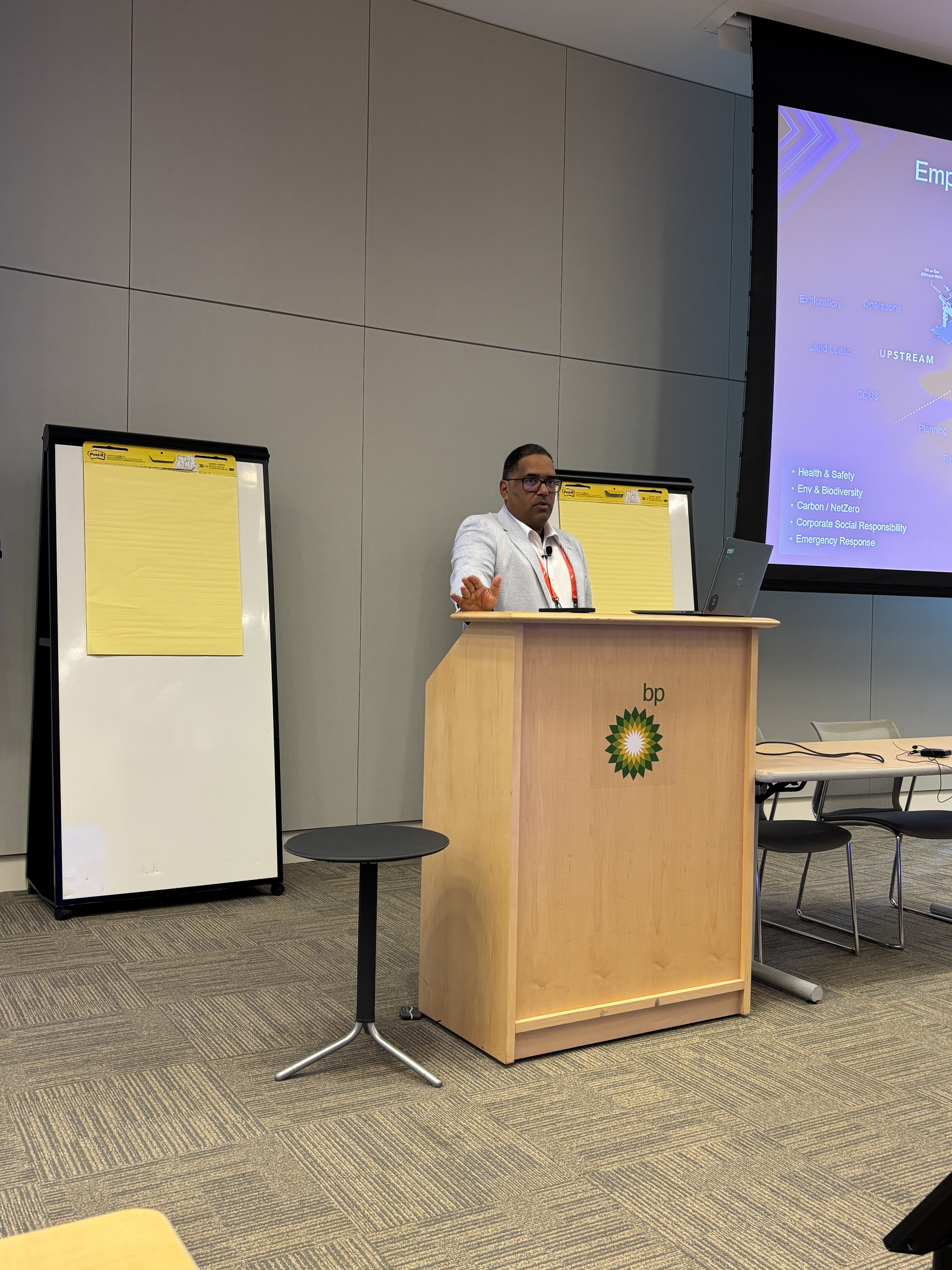
A major theme of the seminar was the rapid evolution of technology in the oil and gas industry. Sarah Gomez soon took the floor and outlined the growing importance of digital twins, real-time data, and big data analytics. Real-world case studies from companies such as Coterra Energy, OMV, and PureWest illustrated how Esri’s innovative technology is driving operational improvements and enabling smarter decision-making across the sector.
Digital Twins, Real-Time Data, and Big Data
The seminar explored Esri’s approach to digital twins—virtual representations of physical assets, and their integration with real-time data. Industry giants like Saudi Aramco and BP are already leveraging these capabilities to optimize decision-making and improve operational efficiency. The discussion also covered the challenges and opportunities associated with big data and AI, with insightful case studies from Fugro and other industry leaders.
Cloud, Field Mobility, and Digital Transformation
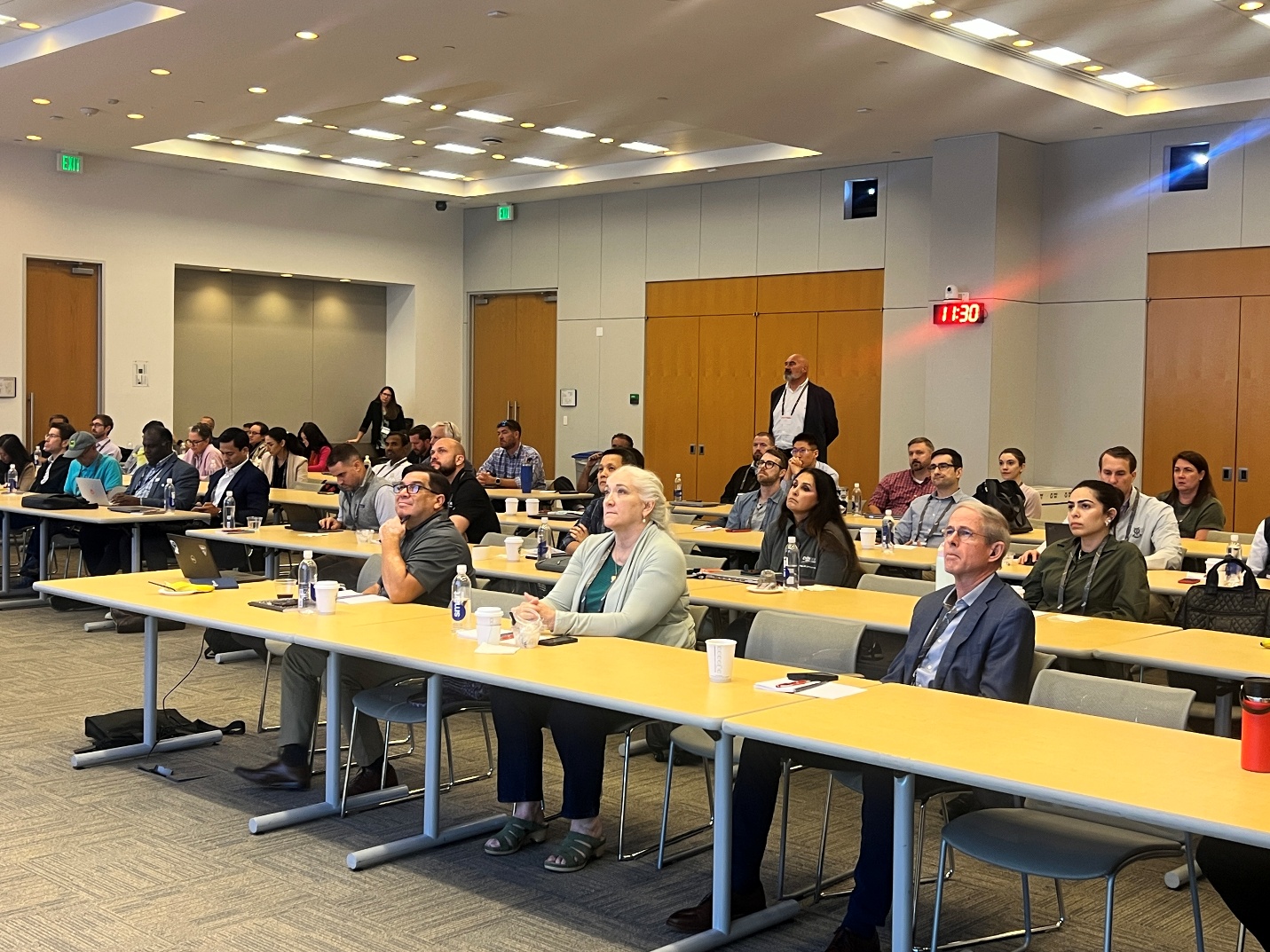
Cloud solutions and field mobility were highlighted as key enablers of modernization, particularly in legacy workflows. Examples from the US Forest Service and BPX demonstrated how digital transformation is enhancing operational efficiency and empowering field teams with the tools they need to succeed in an increasingly dynamic environment.
Imagery and Enterprise Systems
Managing imagery as a critical data asset emerged as another key topic. Presenters shared how companies like ConocoPhillips are using Esri’s tools to mitigate risks and maintain compliance, underscoring the importance of a well-architected enterprise system for managing vast amounts of imagery and geospatial data.
Deep Dive: Data Management with ArcGIS
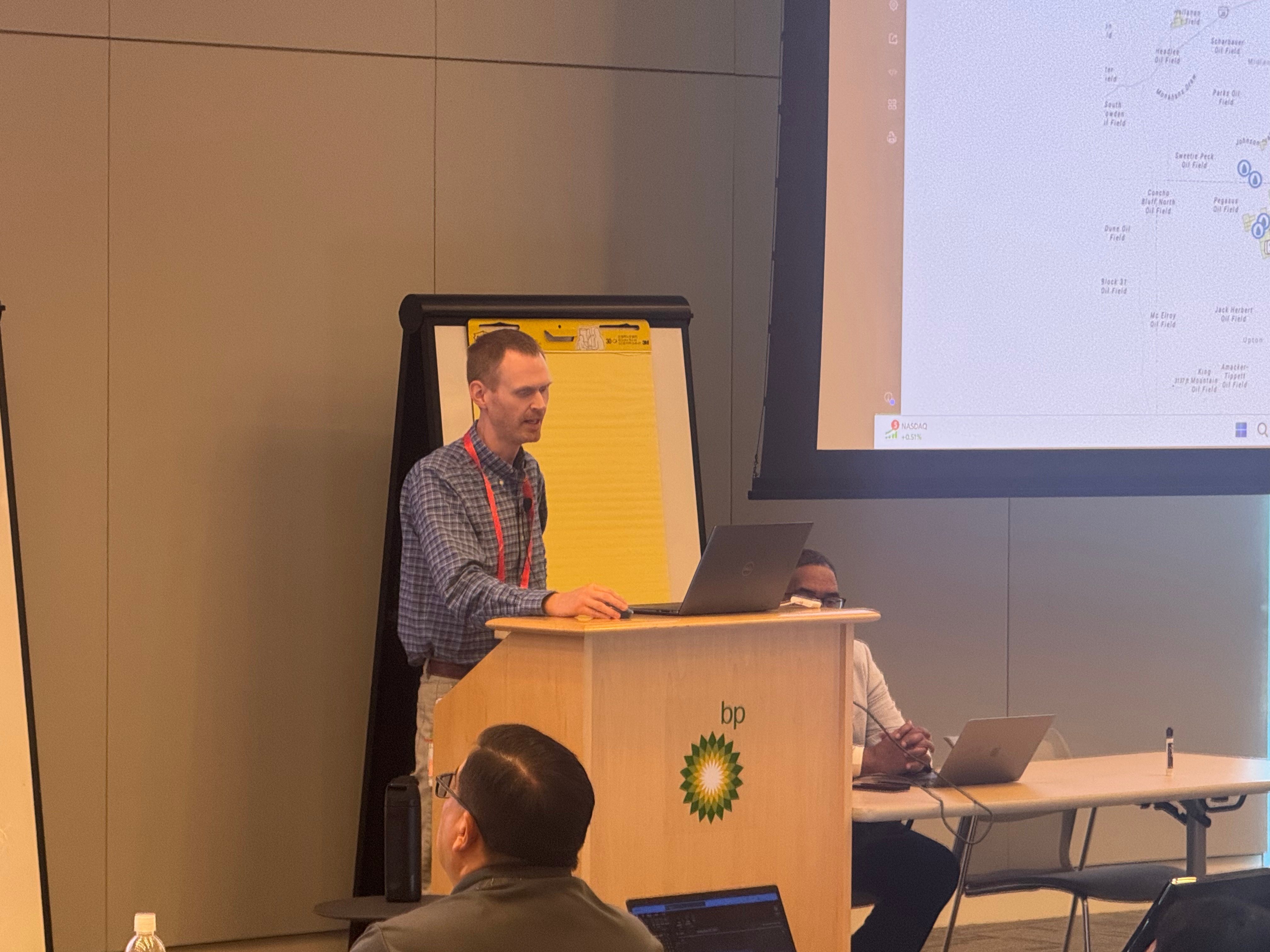
Justin Bires led a session that delved into the central role of location-based data in petroleum operations. The integration of ArcGIS with other enterprise systems was explored, along with powerful tools like ArcGIS Data Reviewer (for automated data quality checks), ArcGIS Solutions (pre-configured workflow templates), and ArcGIS Web Editor (advanced web-based editing).
Sarah also showcased ArcGIS Data Pipelines, a tool for building ETL (Extract, Transform, Load) workflows and integrating data from platforms like Databricks, which is crucial for creating a truly connected enterprise.
AI and GIS: The Next Frontier
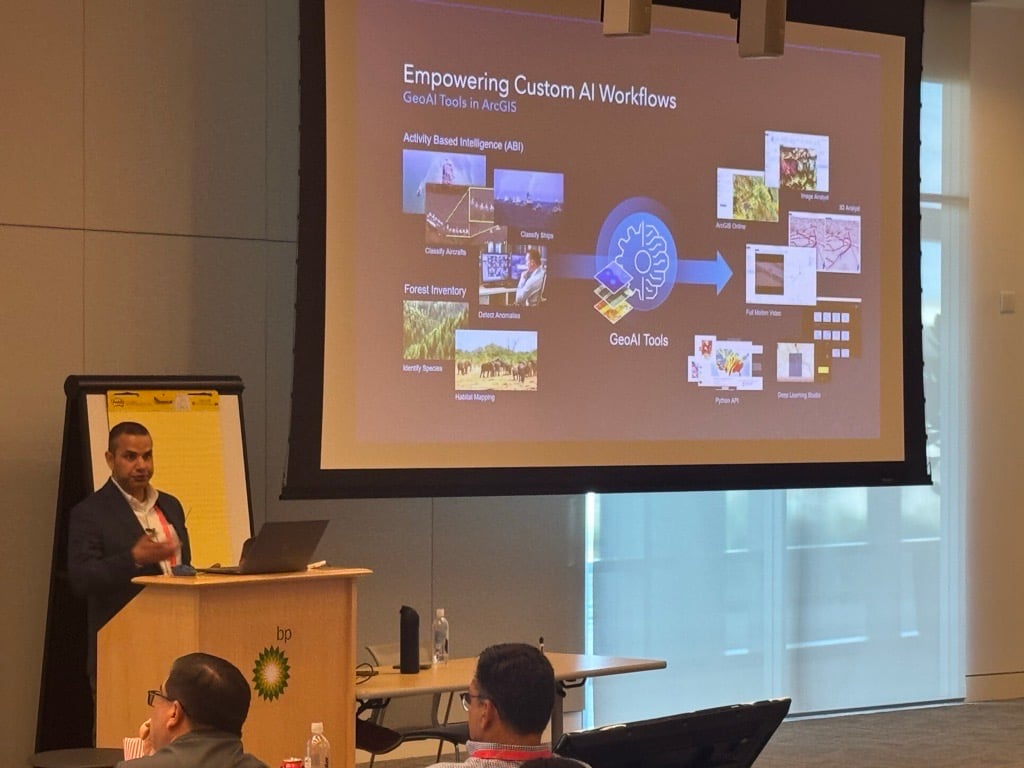
Another popular session, led by Scott Noulis, explored the intersection of AI and GIS. The benefits of this integration are vast, from real-time analytics and automation to making GIS more accessible to a broader audience. Key highlights included:
- The three pillars of AI in GIS: Geo AI, AI assistants, and the AI framework.
- Built-in AI assistants in tools like Survey123 and Business Analyst.
- Over 100 pre-trained Geo AI models in the Living Atlas for tasks like oil spill detection.
- The process of building custom Geo AI models, emphasizing the importance of data labeling and model training.
- The future of AI in GIS, with a focus on scalability, security, and transparency.
Field Mobility: Boosting Productivity, Efficiency, and Safety
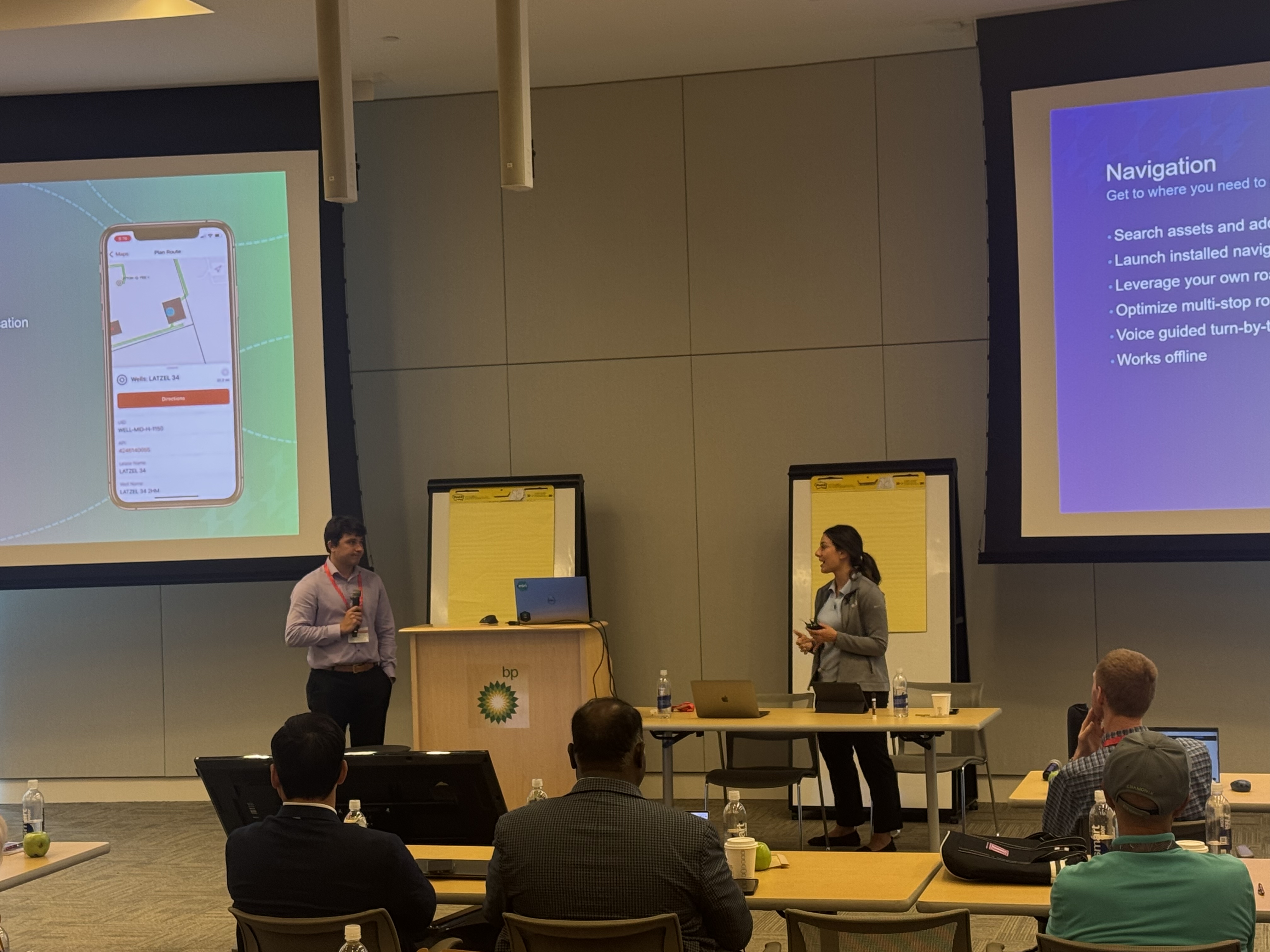
Field operations took center stage with practical demos of ArcGIS Field Maps, showcasing new features such as tasking capabilities, offline functionality, and geofencing. Sarah also shared compelling user stories, such as an air quality control team managing emission events, and introduced a demo site with over 100 GIS application examples to inspire teams across the industry.
Imagery Management and Digital Twins
The final session, led by Sumant Mallavaram, focused on the integration of imagery and digital twins. Highlights included:
- How imagery and vector data work together to provide actionable business insights.
- Use cases such as remote inspections, emergency response, and asset management.
- The digital twin maturity spectrum, from descriptive to autonomous systems.
- Industry collaboration on reality capture, as well as the integration of BIM and CAD models.
- The role of GeoAI in automating feature extraction from imagery, streamlining the process of data analysis and decision-making.
Conclusion
As the seminar came to a close, the overarching message was clear: embracing emerging technologies, fostering collaboration, and investing in digital transformation are essential to staying ahead in the rapidly evolving oil and gas industry. Esri’s suite of tools—ranging from ArcGIS Data Reviewer to AI-powered analytics—offers a solid foundation for organizations looking to innovate, optimize, and thrive in this dynamic landscape.
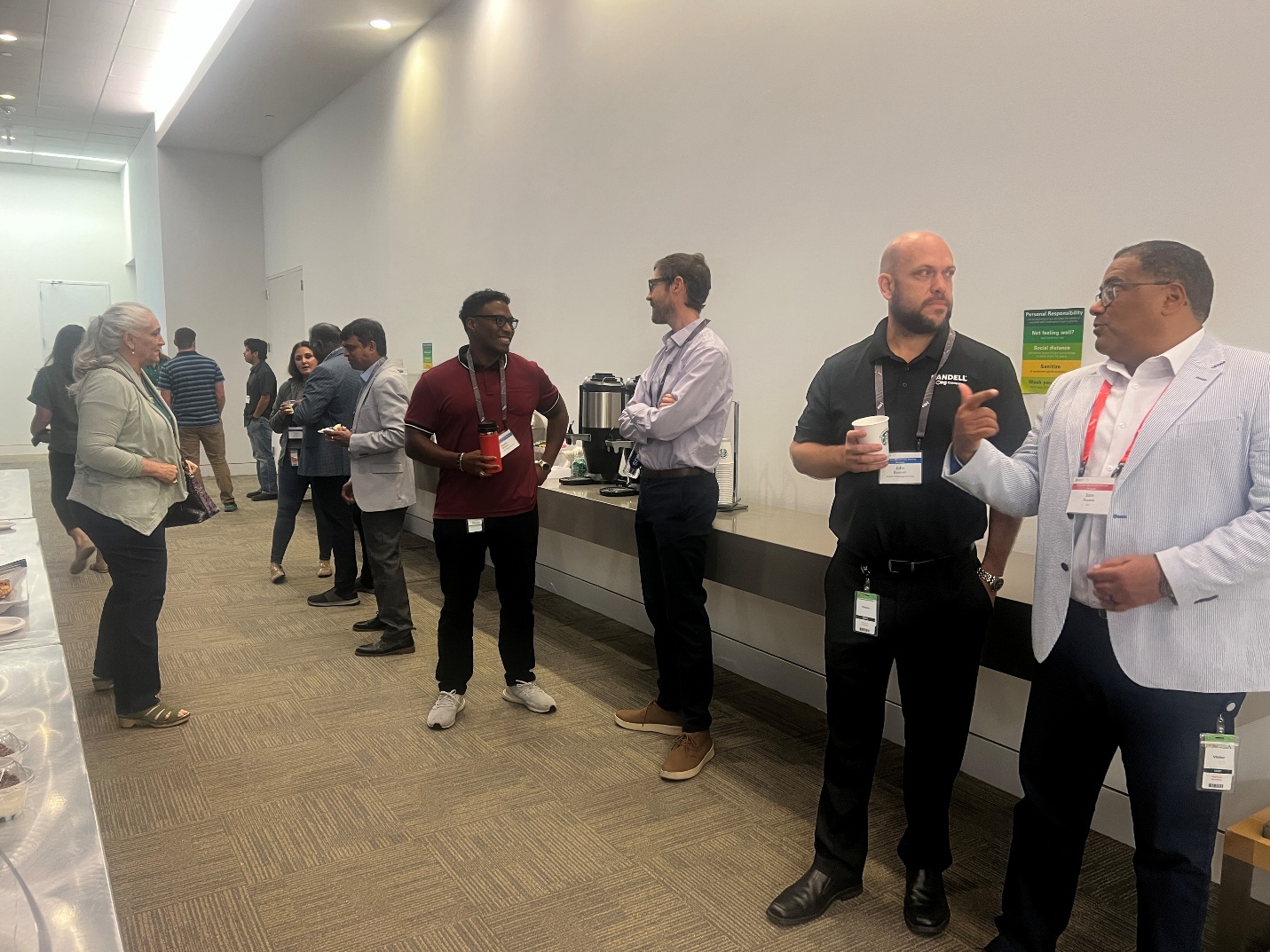
To wrap up the event, attendees enjoyed a fun social gathering at Watson’s House of Ales, where conversations flowed from industry topics to casual chat over food and drinks. We look forward to seeing you at the next seminar and encourage you to keep an eye on future events. For more details, visit Esri Petroleum Events.
