Understanding Cathodic Protection for GIS & IT Professionals
By Tom Coolidge and Tom DeWitte
In the United States there are 3.2 million miles of natural gas pipe and another 228,553 miles of hazardous liquid pipe in production as of December 31, 2024, according to the U.S. DOT PHMSA Annual reports. One million three hundred thirty-nine thousand six hundred and two miles of these pipe networks are cathodically protected steel. That works out to nearly 42% of America’s natural gas and hazardous liquid pipe systems are cathodically protected.
In addition to Cathodically protecting a large portion of our country’s infrastructure for transporting these commodities, it is also federally required. The regulatory requirement to cathodically protect metallic pipe has been in place for America’s pipe networks since 1971. Within the many federal regulations, are rules that require Cathodic Protection (CP) systems and their components to be mapped (CFR 192.491, CFR 195.589). Additionally, there are rules that require CP systems to be annually inspected (CFR 192.465, CFR 195.573).
Yet, most GIS and IT professionals who work at the organizations that maintain these pipe networks struggle to understand what CP is, and how it works.
The Voodoo They Do
If you have ever spent time talking to a CP professional, and asked them to explain what CP is, they will likely describe it as part science and part mystic art. They will talk about electromagnetic fields, current flowing through the soil, and electrons being sacrificed. You may leave that conversation more confused than when you started. So, let’s start with the basics.
CP: The Basics
Most people understand that if you put iron or steel in contact with moisture and oxygen, the metal will begin to rust or corrode. What most people do not understand is that this basic electro-chemical process can be slowed. The science behind slowing the corrosion of a metallic pipe is called Cathodic Protection.
Protecting the Pipe from Corrosion
There are several methods for protecting buried metallic pipes. One method is to apply a coating to the pipe, forming a barrier between the metal and the corrosion-causing mixture of water and air.

Pipe coatings are very common for natural gas and hazardous liquid carrying pipelines. But they are not perfect, as a single scratch through the coating layer diminishes the protection. Another method is to manipulate the same electro-chemical process that causes corrosion. By manipulating the electro-chemical process pipes can be protected from corrosion. Two common forms of CP are galvanic protection and impressed-current protection.
Galvanically Protected Pipe
We Need a Sacrifice
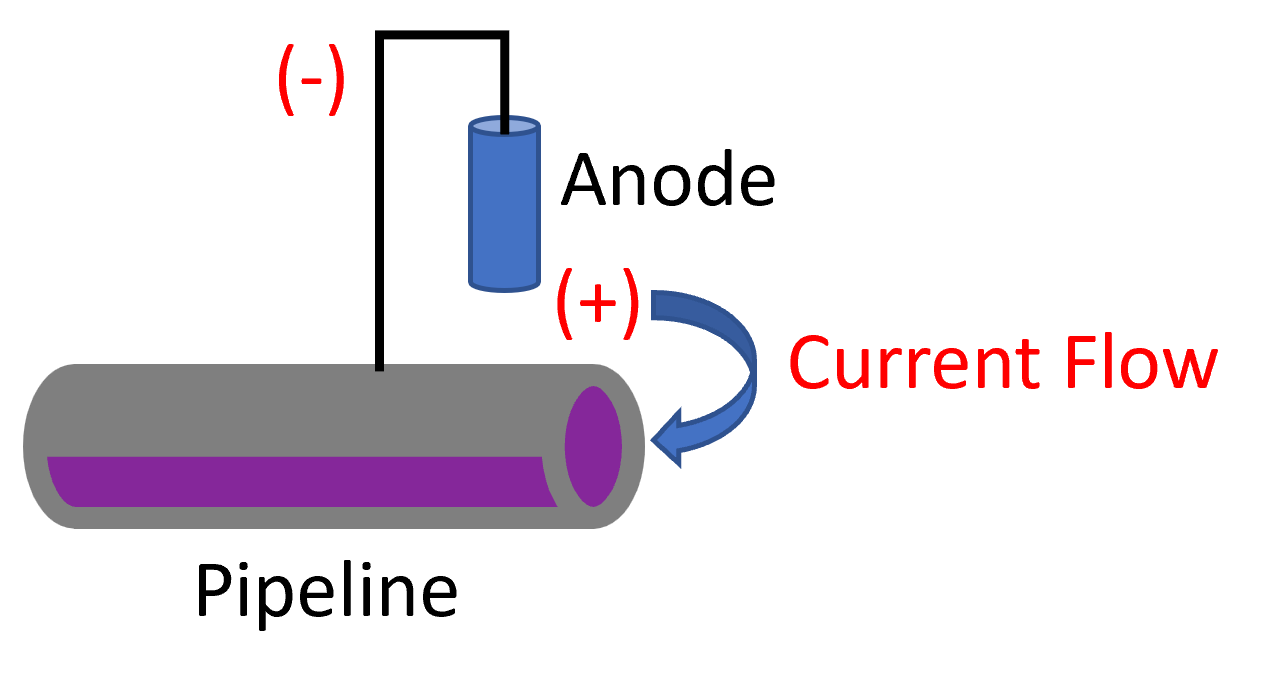
A galvanically-protected CP system is also called a passive-cathodic protection system. It is passive in that no external electrical energy is required. Galvanic protection works by connecting a more electrochemically active metal to the system than the pipe system which is being protected. This electrochemically active metal is simply a hunk of metal buried in the ground near the pipe system. This component is called an anode. Common anode materials include zinc, aluminum, and magnesium. In a galvanic protection system, the anode gives up electrons to the pipe system. This sacrifice of electrons results in the anode corroding rather than the pipe system.
Impressed Current Cathodic Protection
Charge It
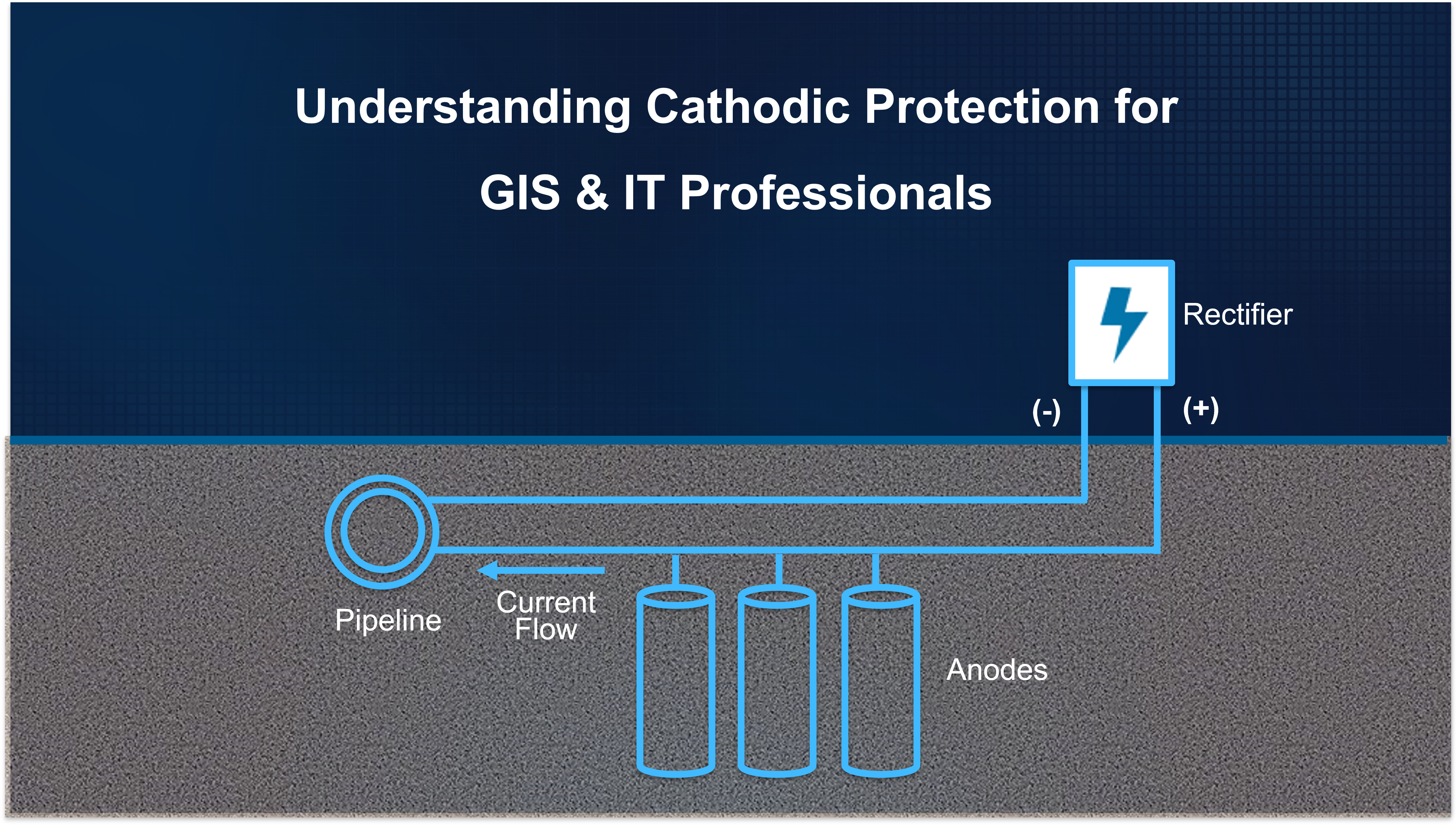
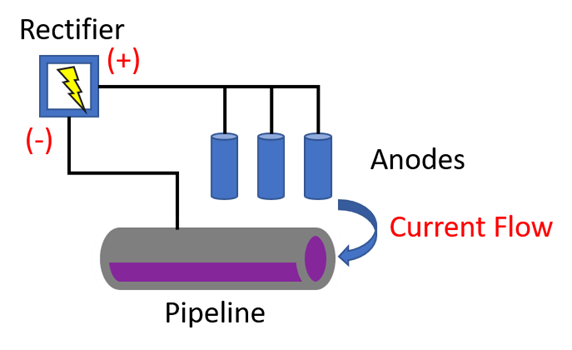
Impressed-current CP systems are typically used to protect large pipe systems such as transmission pipelines. The rectifier inserts direct current (DC) voltage into the CP system. A rectifier is a device, where AC electricity typically provided by the local electric utility system, is transformed into direct current. A cable connects the rectifier negative terminal to the pipe system. A rectifier cable connects the rectifier’s positive terminal to the anodes within the anode bed.
The Electric Circuit
The foundational concept to keep in mind when trying to understand CP is that the components are connected to form an electric circuit. If the circuit is broken, then the metallic pipe system components will lose their protection, and the rate of corrosion will accelerate. If not corrected, the pipe system components will weaken and eventually fail.
Soil Is a Conductor
With CP, it is important to remember that the soil between the anode and the metallic pipe acts as a conductor. The soil as a conductor of electricity completes the electric circuit, connecting the anode to the metallic pipe. The amount of moisture in the soil influences its conductivity. More moisture in the soil, increases the soil’s ability to conduct electricity.
Material Type Matters
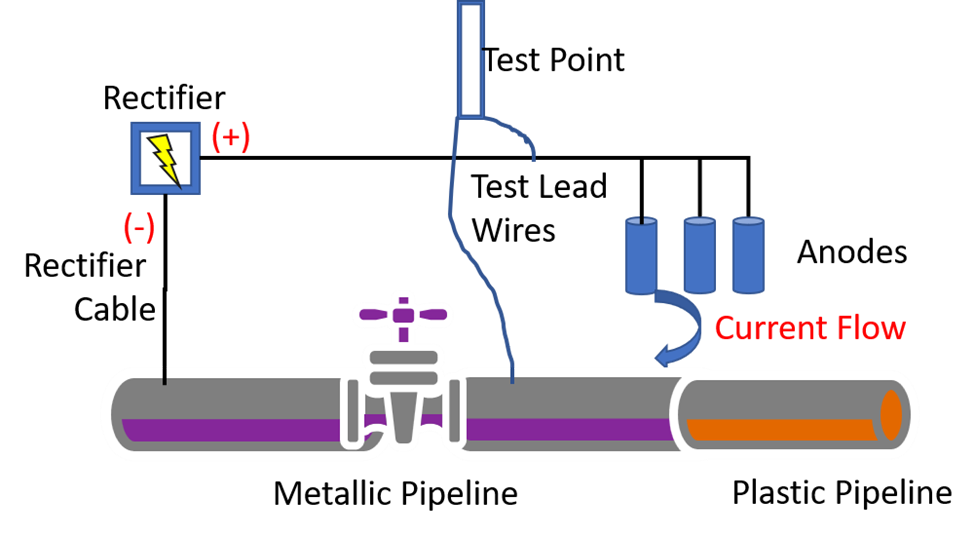
The materials used for pipe system components are critical to a CP system. Some materials such as polyethylene (Plastic PE) are non-conducting and act as insulators. These insulating materials break the electric circuit.
Cathodic Protection System with Insulating Plastic Pipe
In addition to plastic pipes and plastic components that act as insulators and break the electric circuit, metallic components can be manufactured so that they too can serve as insulating devices or junctions.
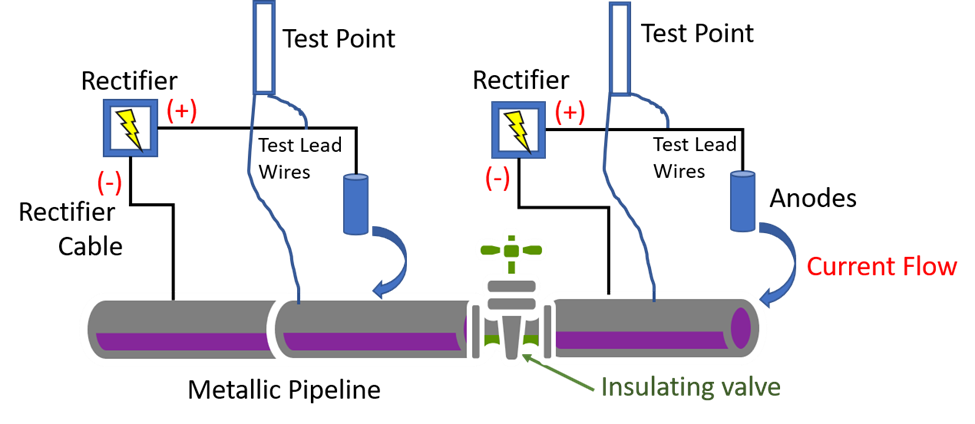
Cathodic Protection Systems Separated by an Insulating Valve
Managing Cathodic Protection Data with UPDM
Management of the CP components in a Geodatabase is not difficult. The anodes, rectifiers, test points, decouplers, and grounding points are modeled as point features. The test lead wires, bonding lines, linear anodes, AC mitigation wires, and rectifier cables are modeled as line features. Esri’s Utility and Pipeline Data Model (UPDM) provides a template data model for managing these CP components.
Where data management of the CP systems has historically become challenging is the definition and maintenance of the CP zone. Some organizations will also refer to this as the cathodic protection circuit. The CP zone is comprised of the pipeline, pipe devices, pipe junctions, CP devices, and CP lines, which together form an electric circuit.
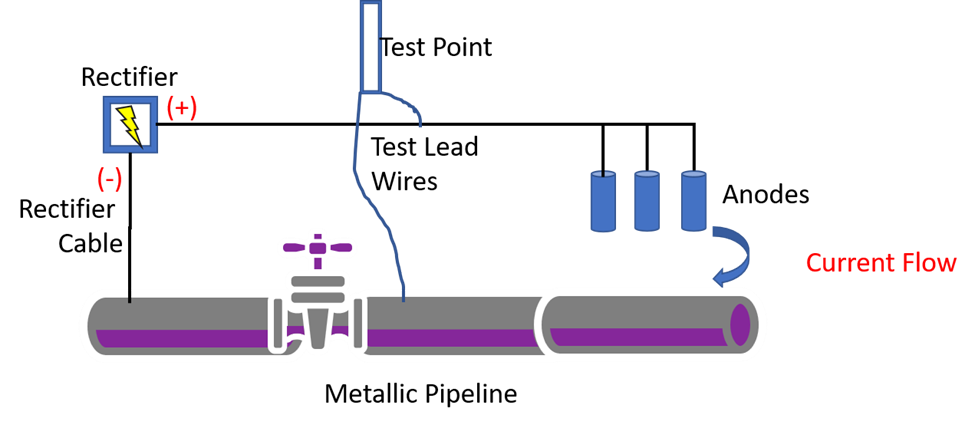
Cathodic Protection System
Here too UPDM provides a template configuration to simplify. Built into UPDM is a Utility Network configuration for modeling CP zones as subnetworks. This allows the circuit’s extent to be automatically generated and maintained by ArcGIS’s Utility Network capabilities.
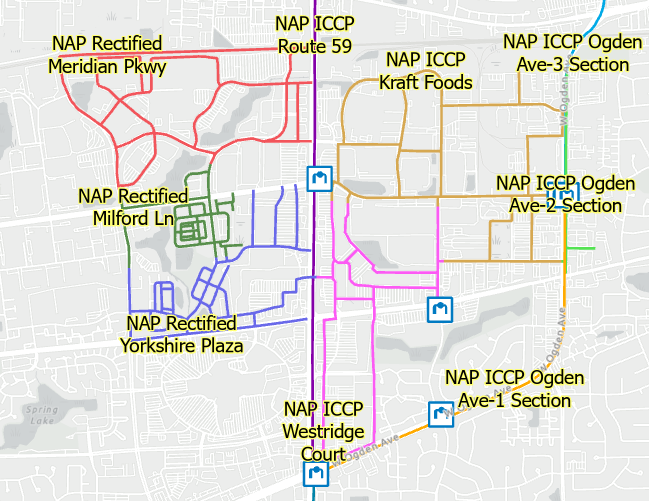
Cathodic Protection Zones
It’s Not Voodoo
U.S. Federal regulations require that the location of all components of a CP system be documented or mapped. Documenting the CP assets in a map provides the intuitive reference that CP departments across the industry have long relied on to understand these critical systems. With this basic understanding of CP, and leveraging the capabilities of ArcGIS, data management of CP can be demystified. What was once a mysterious technology can be a simple data management activity that enhances the usability of this information to end users.
PLEASE NOTE: The postings on this site are our own and don’t necessarily represent Esri’s position, strategies, or opinions.
