It can be both exciting and worrisome to start a journey in Geographic Information Systems (GIS). As technology changes quickly and the field of GIS applications continues to expand, professionals in this field often face a unique set of challenges. These challenges can also be chances for growth and new ideas.
I am Oluwaferanmi “Feranmi” Akinyemi, a second-year geography master’s student at Kent State University. I am also an ESRI YPN Content Ambassador and 2024 third quarter feature of Esri YPN Globie’s Corner. My research interests lie in incorporating GIS to uncover the intersection between climate change and public health. I am currently a public health intern at the Summit County Public Health, gaining hands on experience necessary to achieve my future aspirations.
In this article I’ll share four common challenges faced by GIS professionals, and practical strategies to navigate them effectively.
Challenge 1: Selling The Value of GIS to the Leadership of a Company
Leadership can be hard to persuade of the value of GIS, especially if they don't know what it can do. Authorities might not understand the strategic worth and possible return on investment (ROI) of GIS investments. The benefits of GIS are not always clear at first glance, unlike other business investments. A lot of money must be spent up front on technology, data, and training for GIS projects, therefore, GIS can often viewed solely for its cost instead of a strategic tool by the Leadership of a company. They might be unaware of how GIS can provide valuable insights that drive decision-making, optimize operations, and enhance strategic planning.
To sell the value of GIS to your leadership, here are some strategies to consider.
- Strategic Alignment: The first strategy is to make sure that GIS projects are in line with the organization's mission and key goals. You need to be able to show how GIS can help the company reach its main goals; like growing or influencing the market, making customers happy, or running the business more efficiently. I’ll break this down as we proceed.
- Build a Business Case: Once you've made sure that GIS projects are in line with your organization's goals, you need to make a clear and convincing business case that shows how GIS can help you save money, make better decisions, and work more efficiently. Try to back up your claims with numbers, as this would make the company's leadership easily understand to what extent GIS would help the company advance.
- Focus on ROI: Show previous examples and case studies from the company where there was successful GIS implementation to draw attention to the return on investment (ROI). Show specific projects where GIS led to measured gains in productivity, lowered costs, or increased income. It's much easier for your leaders to understand the process and results if you give them specific examples from the same business.
- Showcase Success Stories: Show your leaders how GIS has transformed things by providing case studies and examples of its successful use in your company or another with a similar mission and goal. Draw attention to specific projects where GIS made a big difference and break down how it was used, how it worked, and what the outcome was. Take advantage of the visualization capacity of GIS, using maps, dashboards, and images to tell compelling stories about how GIS has been used to solve real-world problems. Visualization tools can make complex data more accessible and persuasive to non-technical stakeholders.
- Pilot Projects: Implement small-scale pilot projects to showcase the potential of GIS. Use these projects to gather data and present measurable outcomes to your leadership. A successful pilot can serve as a proof of concept and build confidence in larger GIS initiatives, so it is important to demonstrate how the success of pilot projects can be scaled to larger initiatives, providing even greater benefits to the organization.
- Engage Stakeholders: Involve key stakeholders in the process by inviting them to GIS demonstrations and training sessions. Make sure that presentations and demonstrations are tailored to the needs and interests of each stakeholder. You could also hold Q&A meetings and interactive workshops where stakeholders can see GIS in action and ask questions. It can be very convincing to show them how GIS can meet their unique needs.
Challenge 2: Managing A One-Person GIS Department
If you're the only GIS expert in your company, you may feel overwhelmed by all the different tasks and hats you have to wear. A lot of the time, data gathering, analysis, system maintenance, and user help are all done by one person in a GIS department. This might cause lengthy hours and stress, especially when many tasks or urgent requests arise. The stress of having to get things done without help can wear you down mentally and physically, which can hurt your health and productivity.
Listed are some things to do to effectively manage a one-person GIS department, however, I recommend reading Molly’s blog post for more information.
- Communication across your organization: Maintain effective communication with your colleagues about the implementation of GIS across the organization. Talk to them about what you can achieve with GIS and how you can incorporate it into ongoing and future projects to make them more effective. You can accomplish this by using resources such as the GIS newsletter, GIS lunch and learn sessions, or office hours.
- Set priorities for your tasks: Create a method for setting priorities to help you handle your work well. Pay attention to projects and tasks that will have a big effect and fit with the organization's goals. Keep track of your jobs and due dates with project management tools. It will help if you can break up big chores into smaller, more manageable pieces and give yourself reasonable due dates. To stay focused and get things done, use methods like the Pomodoro Technique. When you can, delegating can free up your time so you can work on more important and smart tasks.
- Use tech to your advantage: Use software and tools for automation to make jobs that you do over and over easier and more efficient. Use scripts and tools to make routine jobs like data analysis and processing easier to do. It's possible to do less work by hand with tools like Python and ModelBuilder in ArcGIS. You can also use AI and Google to your advantage.
- Network and Collaborate: Build a network of GIS professionals through online communities and local user groups. Seek advice and share knowledge to overcome challenges and gain new insights. Collaboration can provide support and reduce the feeling of isolation. Join professional groups and associations like Esri YPN, URISA, GISCI, AAG , ASPRS, or local GIS user groups to meet other people in the field and get access to tools. You can also look for mentors in the GIS community who can help you with your career and give you support.
- Professional Development: Continuously invest in your professional development to expand your skill set and stay current with industry trends. Identify key abilities that can help you be more productive and efficient, like project management, programming, or data analysis. Esri Academy and Esri MOOC has a lot of free courses to do on your own time, this will help you do better in your job.
Challenge 3: Building A Strong Personal GIS Brand
You can stand out in the vast field of GIS by finding your niche and building a strong personal brand. This will help your career progress. You should choose a specific area of GIS that you are really interested in and good at, then do these two things:
- Make a portfolio: Make a website to show off your work, you could do this using Wix. Case studies, project results, and other examples of how your GIS tools have helped your business should be included. It's okay to start small. You don't need a polished portfolio to start, and it will evolve as you progress in your career. Don't let getting the perfect portfolio stop you from getting something out there. Here is an example.
- Share Your Knowledge: Write blog posts, papers, or video lessons about the things you know a lot about. By sharing what you know, you can become a thought leader in your field.
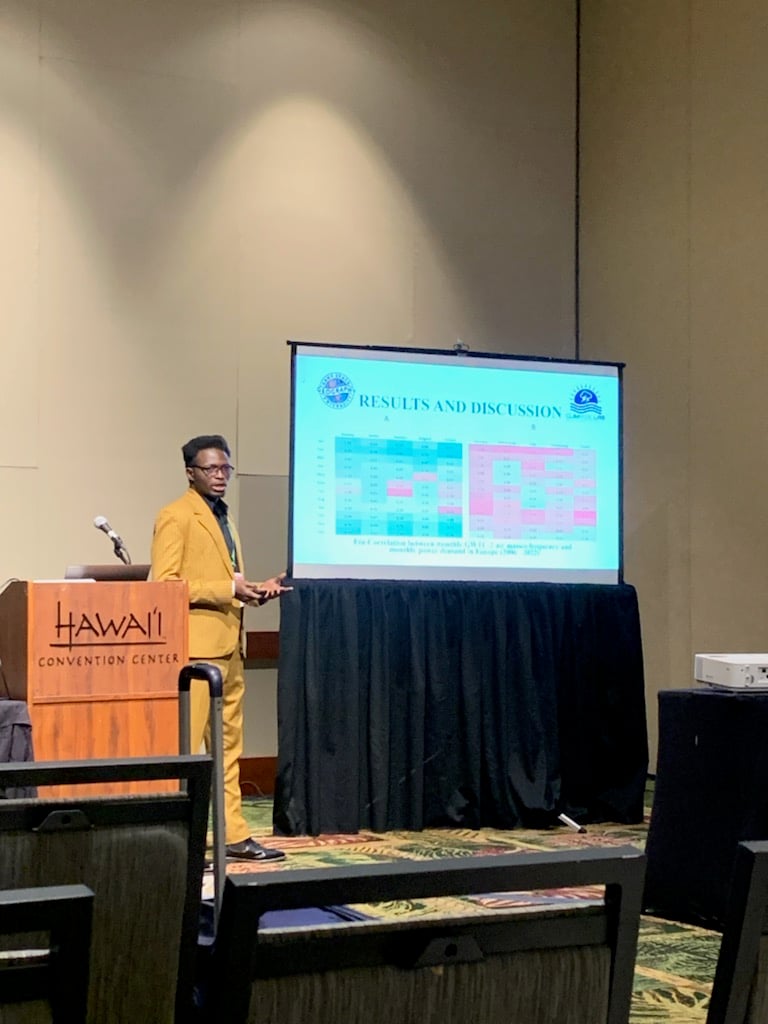
You could share your work or material on LinkedIn, Facebook, Medium, or Esri Community and connect with other professionals that way. For example, I used LinkedIn as a way to share and document my experience as an AAG Student Assistant in Honolulu, Hawaii in April 2024. From doing that, I received a lot of engagement from peers across the globe and further opened networking opportunities. - Become a YPN Ambassador: Become a YPN Ambassador to enhance your online visibility and build your brand. This platform allows you to connect with other GIS professionals and enthusiasts, allowing you to share experiences, collaborate, ask questions, and receive assistance in challenging situations. You can also earn the YPN Ambassador badge and hopefully become a YPN Content Ambassador like me. Becoming a YPN Content Ambassador led to my selection for a feature in the Esri YPN quarterly newsletter, significantly enhancing my visibility and brand within the GIS community.
- Submit Abstracts: Submit abstracts to present your research at conferences, either in the form of a poster presentation or an oral presentation. This will give you the opportunity to reach a wider audience, gain visibility, and connect with other GIS professionals globally. It also gives you the opportunity to learn new skills and develop in the field, putting you ahead of the competition in GIS.
Challenge 4: Build Your GIS Support System
For career growth, it's important to build a professional network, especially in specialized fields like GIS. People who are shy or quiet may find this especially hard because they don't like meeting new people. There are, however, effective ways to connect with others without getting overwhelmed.
- Start with Online Communities: The first easy thing to do is to join online groups and forums. You can start by checking out GIS Stack Exchange, Reddit (for example, r/gis), LinkedIn and Facebook groups (for example, Esri Community). Following that, join discussions by reading through threads and eventually adding to the conversation by asking questions or sharing your thoughts. People will start to notice you, and you can also connect with other users. Follow GIS experts and influencers. Follow them on LinkedIn, Twitter, and blogs to stay up to date and talk to other people. In the same way, you can tag them in your social media post.
- Attend Virtual Events: Participate in webinars and virtual conferences. For instance, Esri's online events and lectures are useful and offer chances to meet new people. Take part in chats and Q&As at these events to get to know the speakers and other people there. You can network in a more casual, online setting at virtual GIS meetups, among other places.
- Leverage Social Media: You can connect with GIS professionals on LinkedIn and join groups that are important to your work. Take part in the map challenge and share your projects and ideas to get more people to see them. Join GIS-related Twitter talks (like #GISchat) to connect with other people in the field. You could also start your own blog and share your GIS projects, lessons, and thoughts there. This can help you become a thought leader and bring in people who share your views.
- Small In-Person Groups: Join a local GIS user group or meetup in your area. Do GIS-related volunteer work in your area, like community mapping projects, which create a space for natural, purposeful contact. These smaller events can be less intimidating and more personal, and they can also help you connect with others. You can meet people with similar interests in a structured setting by going to GIS workshops and training sessions.
- Attend Conferences: Attending conferences is another sure way to build a strong GIS support system. Some conferences are relatively small, like GIS Pro, Esri Federal GIS, and Esri Developer Summit. Other conferences are bigger such as the just concluded Esri User Conference, AAG, and AGU. Personally, when I attended AAG Annual Meeting, I grew my network and built my professional contacts and support system that I can tap into.

I hope these strategies help you navigate your GIS career challenges. I’d love to hear your thoughts and experiences on this topic. How have you overcome similar challenges in your career? Share your ideas and suggestions in the comments below. You can also shoot me an email at oakinyem@kent.edu and connect with me on LinkedIn.