GeoAI in Action: Why Young Professionals Should Embrace Artificial Intelligence in GIS
__________________________________________________________________________________________________
ABOUT ME:
Hello! I'm Deepthi Rayapureddy, a postgraduate student and Esri YPN Member passionate about geospatial analytics, risk modeling, and sustainable agriculture. My journey with GeoAI began during my master’s program, where I explored how Artificial Intelligence could be applied to GIS challenges such as crop monitoring, disaster risk mapping, and land cover classification. Through this journey, I realized that GeoAI is not just a technical trend—it’s a career pathway for the next generation of GIS professionals.
__________________________________________________________________________________________________
INTRODUCTION: GIS in the Age of AI
Every day, we generate enormous amounts of spatial data through satellites, drones, IoT sensors, and mobile devices. This data helps us understand our world in unprecedented ways—but its sheer volume, variety, and velocity make it increasingly difficult to analyze using only traditional GIS methods.
This is where GeoAI comes in. By combining the spatial analysis strengths of GIS with the predictive power of Artificial Intelligence (AI) and Machine Learning (ML), GeoAI allows us to extract insights that were once unimaginable. Instead of manually interpreting thousands of satellite images, we can now train models to classify land cover in minutes. Instead of reacting to natural disasters after they happen, we can use predictive models to forecast risks and reduce impacts.
What makes GeoAI especially exciting is that it’s not just about technology—it’s about expanding the role of GIS professionals. We are no longer just mapmakers or analysts; with GeoAI, we become innovators, problem-solvers, and leaders shaping smarter and more sustainable futures.
For young professionals, learning GeoAI is more than just keeping pace with industry trends—it’s about future-proofing careers and gaining the ability to contribute to some of the most pressing challenges of our time, from climate resilience and food security to sustainable urban development.
__________________________________________________________________________________________________
Why GeoAI Matters for Young Professionals??
GeoAI is already changing the landscape of geospatial careers. Here are three reasons why it’s critical for young professionals to learn it:
High Market Demand
Organizations across industries want professionals who can merge spatial thinking with AI/ML. Career roles such as Geospatial Data Scientist, GIS Developer, and Remote Sensing Analyst are increasingly AI-driven.
Real-World Applications
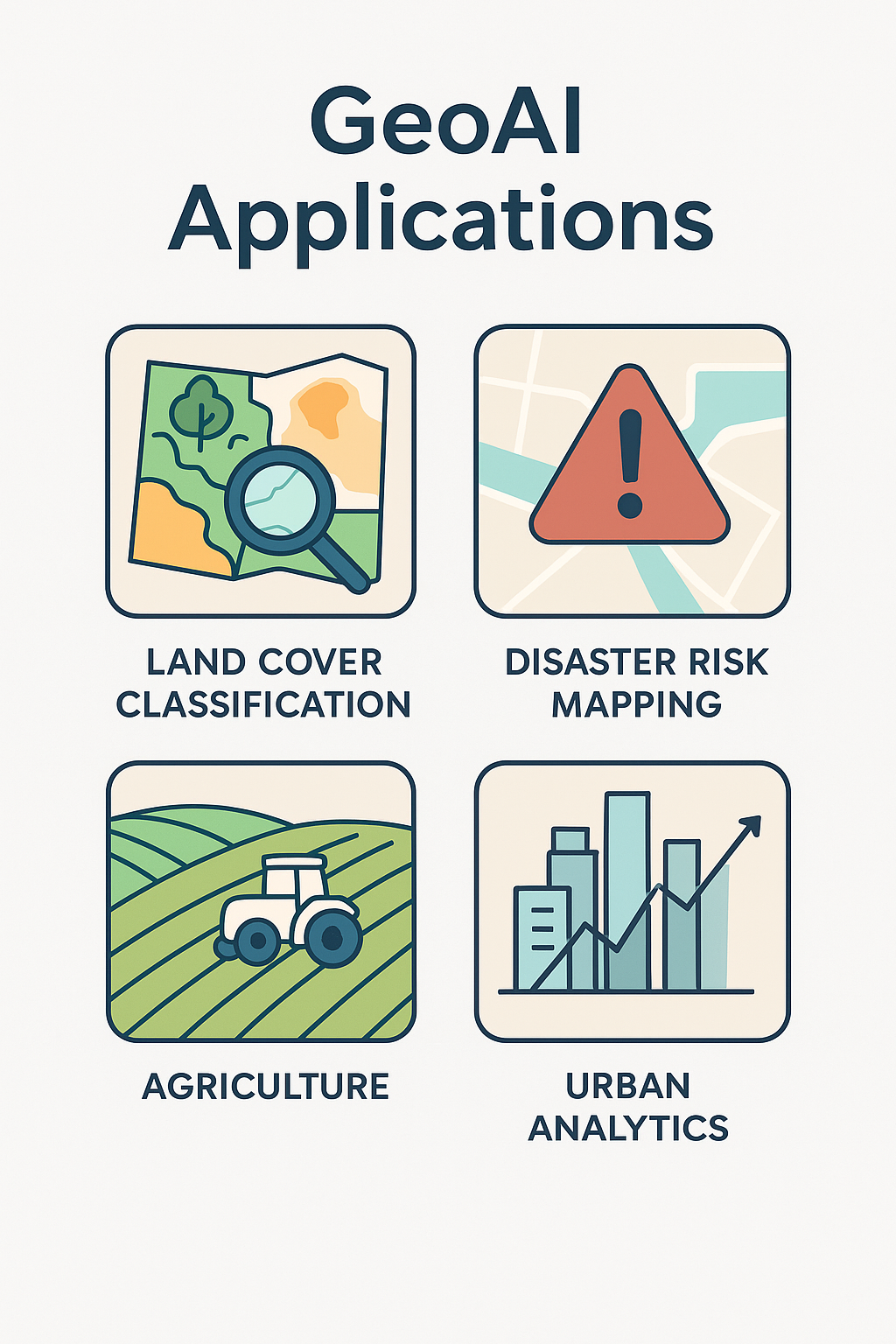
GeoAI enables breakthroughs such as:
Land Cover Classification – Automating large-scale satellite image interpretation.
Disaster Risk Mapping – Predicting floods, wildfires, and landslides using ML models.
Precision Agriculture – Detecting crop stress and improving yield forecasts.
Urban Analytics – Supporting smart city planning with AI-powered object detection.
Future-Proofing Careers
AI is shaping decision-making across the globe. Young professionals who embrace GeoAI early will be at the forefront of solving climate, agricultural, and urban challenges.
__________________________________________________________________________________________________
My Journey with GeoAI: Learning Resources That Helped
When I started exploring GeoAI, the learning curve felt overwhelming. But step by step, I found resources that made it achievable:
Python Programming – My first step was learning Python. Libraries like scikit-learn, TensorFlow, and PyTorch introduced me to machine learning basics.
ArcGIS Deep Learning Tools – Esri’s Deep Learning with ArcGIS and ArcGIS Notebooks helped me experiment with real-world geospatial workflows.
Esri Academy & MOOCs – Esri Academy courses gave me structured GeoAI training, while Coursera courses helped me dive deeper into AI.
Community Learning – The Esri YPN blogs , LinkedIn groups, and Esri Community discussions exposed me to peers and mentors sharing their own GeoAI journeys.
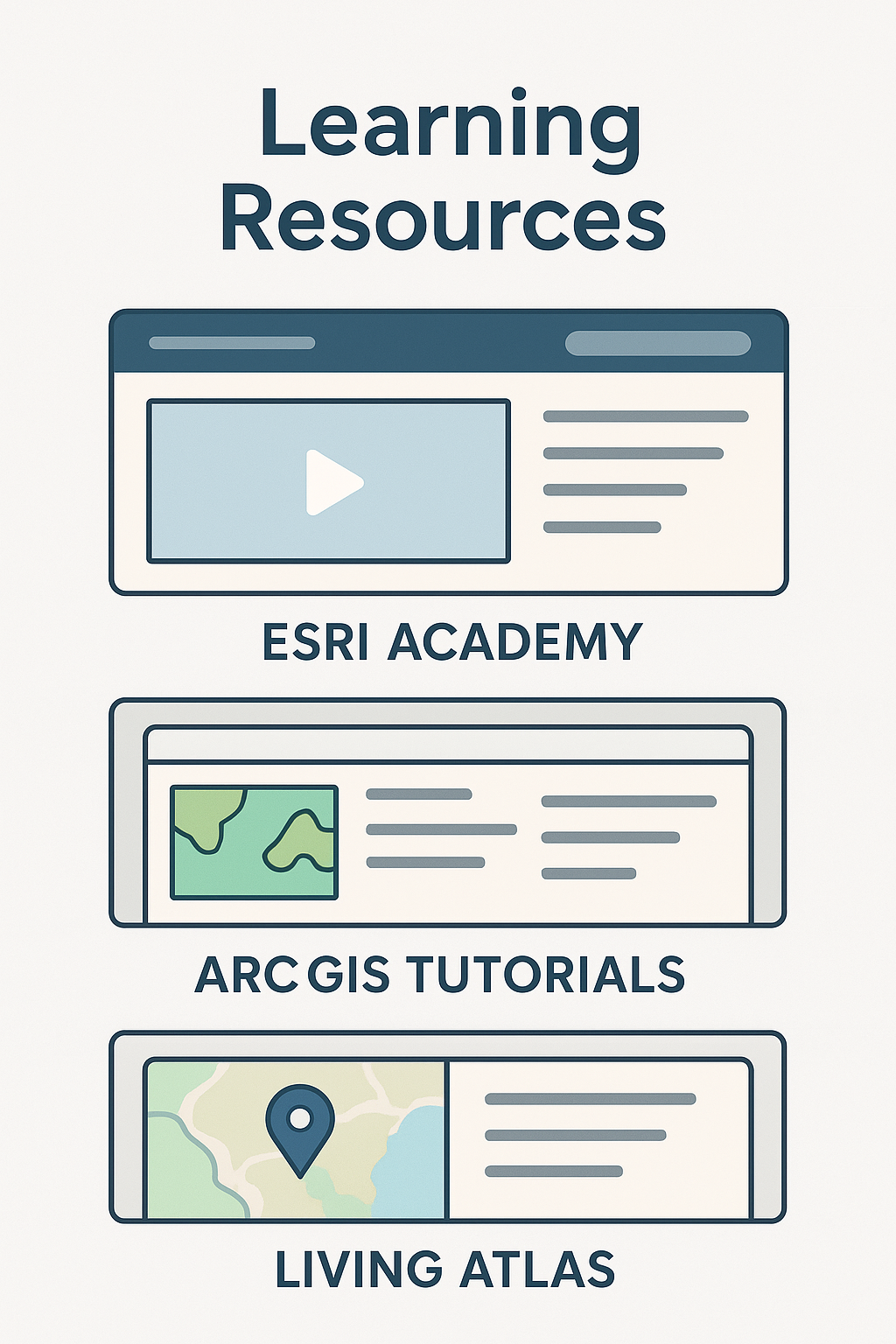
These resources taught me that GeoAI is best learned by combining theory with practical, hands-on projects.
__________________________________________________________________________________________________
Getting Started with GeoAI
If you’re curious to try GeoAI, here are some excellent starting points:
With these resources, you can move from experimenting with small projects to solving complex geospatial problems using AI.
__________________________________________________________________________________________________
Career Roadmap: How to Grow with GeoAI
Here’s a roadmap that I’ve followed—and recommend—for YPN members starting out:
Build a Foundation – Learn Python and GIS APIs.
Experiment – Try ML on small datasets (e.g., land cover classification).
Integrate – Use ArcGIS Pro, ArcGIS API for Python, or ArcGIS Notebooks with AI frameworks.
Showcase – Share your projects on GitHub, LinkedIn, or Esri Community.
Lead – Present at YPN events or write about your experiences to inspire others.
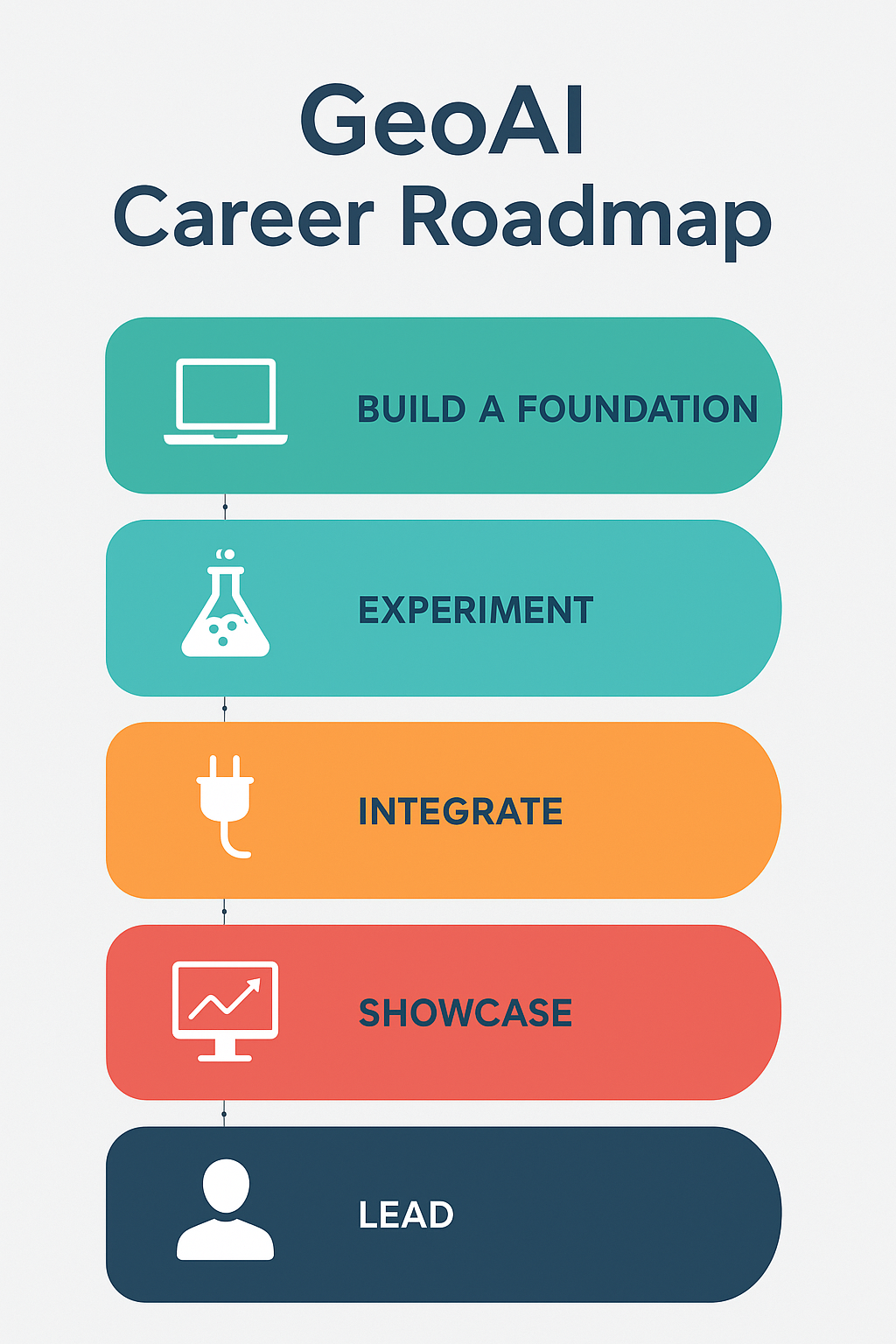
This roadmap not only strengthens technical skills but also builds visibility and credibility in the geospatial field.
__________________________________________________________________________________________________
CONCLUSION: Shaping Future with GeoAI
GeoAI is transforming GIS into a powerful driver of innovation. Whether it’s tackling climate change, strengthening food security, or building smarter cities, GeoAI empowers young professionals to create meaningful impact.
For YPN members, learning GeoAI is not just a career upgrade—it’s an opportunity to shape the future of the geospatial industry. Start small, keep learning, and remember: the skills you develop today can help solve the global challenges of tomorrow.
__________________________________________________________________________________________________