It is bittersweet to say that my internship at Esri has ended. I wrapped it up a couple of weeks ago, but the lessons and experiences are still fresh in my mind. The past 12 weeks were filled with challenges, growth, and experiences I will never forget. If you have not read my first blog post, Halfway Through My Esri Internship: A Journey of Growth, Learning, and Passion, I encourage you to check it out for the first part of my journey. My name is Steven Castaneda, and I worked as a Technical Support Analyst Intern with a background in cybersecurity. This post shares the second half of my journey, including the projects I worked on, the people I met, and the moments that will stay with me long after the internship ended.
This experience was not just an internship. It was a humbling journey that pushed me outside my comfort zone and showed me how much can be gained when you approach every opportunity with an open mind. From the very start, my focus was not on the spotlight or recognition. My goal was to learn as much as possible, contribute to the team, and put myself in a position to one day earn a full-time role. I wanted to grow into the kind of leader who gives back what they have learned.
As I stepped into the second half of my internship, I felt the same mix of excitement and nervous energy I had on day one. I continued meeting fresh faces, collaborating with fellow interns from across the country, and finding new ways to grow in the world of GIS. I still did not know exactly how these final weeks would shape me, but I was ready to work hard, stay curious, and say yes to opportunities even when they were uncomfortable.
Presentations with Purpose
One of the defining moments of the second half of my internship was the personal presentations we were required to give in Technical Support. The only guideline was simple: present on anything we wanted, whether it was something we love or something we find fascinating.
At first, I struggled to choose a topic. But with the help of my group lead and mentor, I decided to make it meaningful. I remembered something said during orientation:
“Esri is all about the mission. We focus on how we can help in certain situations and how Esri products can support real-world events. It is more about impact, even though it is a business company that needs to make revenue, but with a mission focus, everything else comes after.”
That message stayed with me. I wanted my presentations to be authentic, rooted in my personal life experiences.
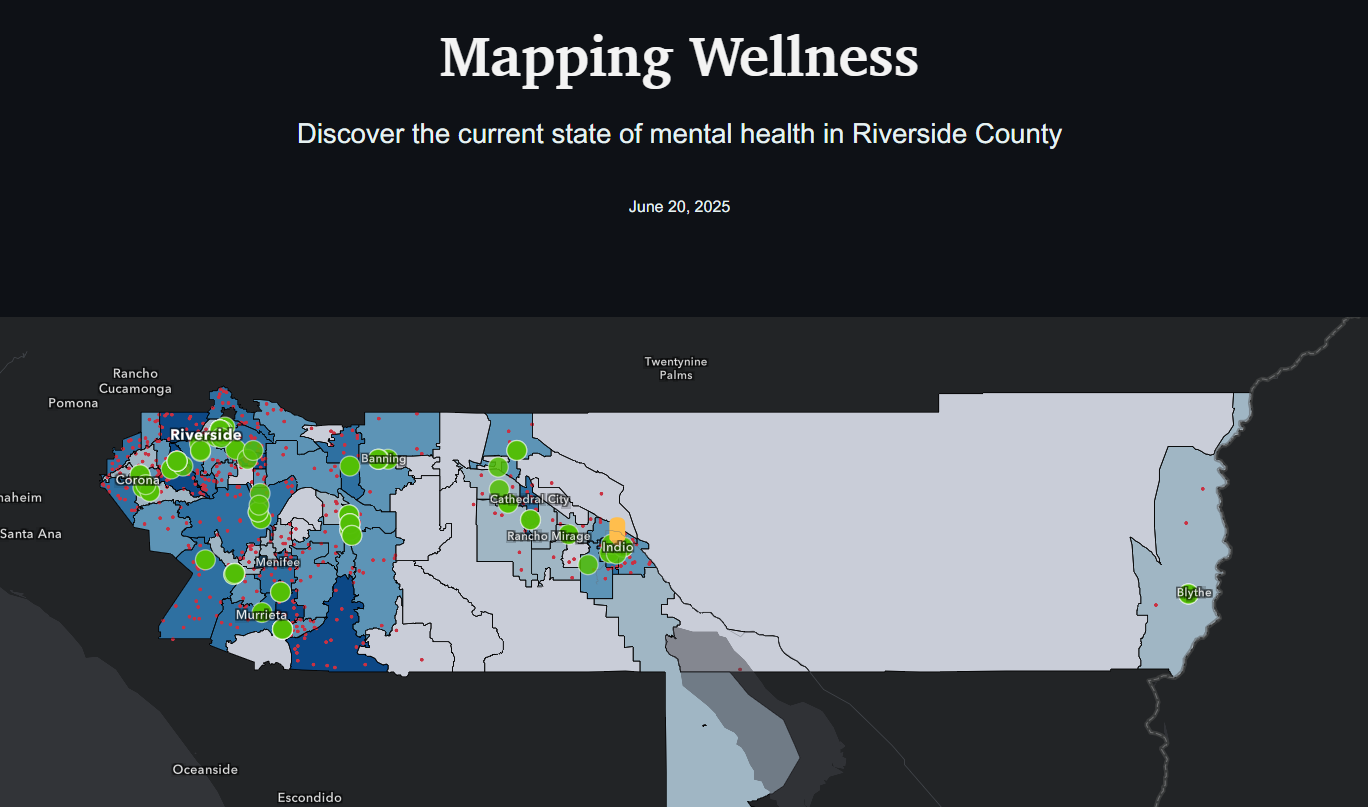
One presentation was ArcGIS Online:
Mapping Mental Health Wellness in Riverside County.
My personal struggles with mental health served as inspiration for this project. Over the years, I sought several types of help but was not aware of how many resources exist. I wanted to create a map that could make those services easier to find and encourage people to seek the help they need.
 Another presentation was ArcGIS Enterprise:
Best Security Practices in Enterprise, was where I connected my cybersecurity background with GIS. Because security is often overlooked until after a problem arises, my goal was to highlight the importance of prevention and give users clear, practical steps they could take to protect their systems before issues occurred.
As part of my final group project, my team and I worked on analyzing Ford’s EV Battery Supply Chain. We mapped the sourcing, coordination, and transportation of EV battery materials, focusing on Lithium Iron Phosphate (LFP) batteries and comparing CO₂ emissions from pre-2026 to post-2026 projections. We used ArcGIS Network Analyst in ArcGIS Pro to map transportation routes by truck, vessel, and train, then used ArcGIS Experience Builder to create interactive visualizations of the maps and graphs. We also used ArcGIS Knowledge to manage and connect our data. While we discovered that emissions were only reduced slightly, it was clear that there is still room for improvement. This project gave me a broader view of how GIS supports industries far beyond what I had worked in before, and I approached it with a willingness to learn, even though it was a new topic for me.
The most personal presentation I gave was ArcGIS Pro: Foster Care Placement Gaps.
This project was deeply personal because I was in the foster care system for a time and experienced the challenges of finding a safe, stable home. When I was aging out, there were very few resources to guide me toward independence. Even my foster parent did not know what options existed to prepare me for life in the real world. The only plan that seemed clear was to return to my family, regardless of whether it was the best situation. That experience stayed with me, and it made me realize how critical it is to have the right support, guidance, and opportunities in place for foster youth before they age out. My goal with this project was to highlight where foster home shortages exist in California, especially in Los Angeles and San Bernardino Counties, so agencies, policymakers, and communities can better target their resources.
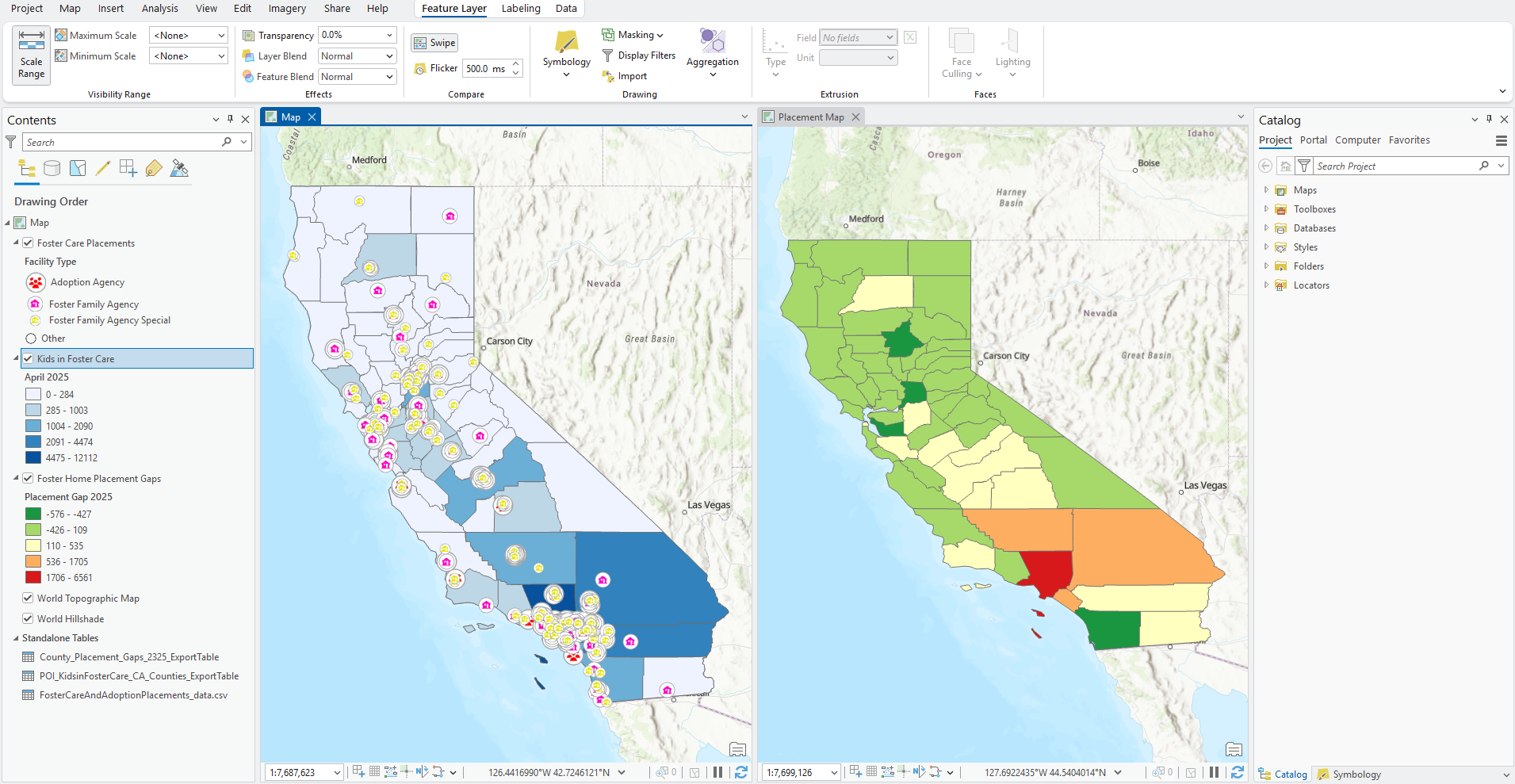
It was meant to be part of my presentation in Technical Support, but I didn't plan on using it in the Hackathon until our handpicked team met for the first time. We were tasked with coming up with a project idea, and they asked me, "What can we use in GIS for an app?" "Got any ideas, Steven?" I shared my Foster Care Placement Gaps project and the story behind it. That conversation became the spark for what would turn into one of the most impactful moments of my internship.
Esri Intern Hackathon 2025
With the Foster Care Placement Gaps map as our starting point, our team began brainstorming ways to turn it into a functional app that could be used in the real world.
That idea became HopeMapper, an application designed to help caseworkers find local foster homes for kids, reducing disruptive moves by using geocoding and ArcGIS Dashboards. We also envisioned expanding its capabilities to connect youth with scholarships, trade school programs, counseling, food and clothing resources, and volunteer opportunities, while giving foster parents access to counseling, after-school programs, and community support.
Our team brought together many different skills: me as the Geographer and GIS specialist, the entrepreneur, the designer, and the developers. We collaborated as equals, making decisions together and ensuring every aspect of the project fit seamlessly. The developers and designer worked closely to align the app’s visual design with its algorithm, testing features to ensure everything functioned as intended. I focused on integrating exact location data from CSV files and making sure the map design matched the overall app style. The entrepreneur conducted research to strengthen our concept, asking thoughtful questions about how we could make the biggest impact in our presentation.
 The Average GISers
 Presenting for the Semi-Finals
 Placement Map DashboardOne of the features we were most excited about was the matching algorithm and filtering system we developed. It allowed kids being matched with a home to receive not just a single match, but a list of multiple homes, each with a score showing how well the child’s needs aligned with that home’s capabilities. It gave case workers options and flexibility, helping ensure the best possible placements.
By the end, we had more than just a working prototype. We had built something that reflected our combined skills and shared purpose. We were taken aback when our project was declared the winner. It was not about recognition but about knowing we had created something with the potential to truly help others.
I hope that this app concept can be expanded upon and made into a functional solution, as it has the potential to support youth development throughout the country. With the right support, HopeMapper has the potential to become something much bigger than we originally imagined and a tool that could make a lasting impact for thousands of children and families.
I am deeply thankful for the opportunity to work with such an inspiring team on this project. Each member brought creativity, passion, and dedication that pushed our idea further than I ever could have imagined on my own. It was truly an honor to collaborate with them, and I will always carry the lessons and memories from this experience with me.
 Presenting at the Semi-Finals
 Esri's Hackathon Winners!
Growth, Grit, and Gratitude
In the second half of my internship, I embraced every challenge, even the ones that made me uncomfortable. Being the oldest intern could have been a setback, but I refused to let it hold me back. I worked hard to improve, stayed curious, and made sure to put a face to my name.
I want to give a huge thank you to all the group leads, senior managers, unit managers, and even directors at Esri who took time out of their busy schedules to meet with me, share their knowledge, and offer insight into what they look for in a potential candidate to join their departments. Thank you to the HR team for making this internship such a rewarding experience, from organizing interactive events to creating opportunities for us to connect with other interns. And a special thank you to the entire Technical Support department for the valuable feedback, advice, and encouragement you gave us. You welcomed us like part of the team from day one, and the knowledge you shared about what makes a great analyst will stay with me throughout my career.
 With my Mentor Kay
 With Raquel
 With Rosemary
 My last Meet Up Mondays
I also want to thank my fellow Technical Support interns. I genuinely appreciated every moment with you, from our coffee breaks and lunch conversations to collaborating on tasks and finding ways to lift each other up when the day felt heavy. We built more than just a working relationship; we built a family. Your encouragement, humor, and shared determination made each day better, and I want you to know it was an honor to work alongside such talented, driven individuals. You are all superstars in the making, and I have no doubt you will do amazing things in your careers.
 Technical Support Crew
To future interns who may read this, do not take a single moment of this experience for granted. Go all in. You are getting paid to learn, so soak up every bit of knowledge you can. Say yes to projects that scare you a little. Network outside of your department and learn from people in every corner of the company. Esri is full of opportunities to grow, but you must be willing to reach for them. The more you put into this experience, the more it will give back to you in skills, in relationships, and in perspective.
As I look back on this journey, I see not just what I did, but how it has changed me. I have seen firsthand that Esri develops leaders, and my hope is to one day step into that role, continuing to create solutions that make an impact and give back the lessons I have learned.
This internship was more than a steppingstone. It was a turning point. I leave with new skills, valuable relationships, and a clearer vision for my future.
Thank you to my mentor, teammates, and everyone at Esri who made this summer an unforgettable chapter in my life.
If you would like to connect with me, you can find me on LinkedIn. To learn more about internships and early career opportunities at Esri, visit Esri Internship.