- Home
- :
- All Communities
- :
- User Groups
- :
- Conservation GIS
- :
- Documents
- :
- Maria Eva Sison Budong, Philippines
- Subscribe to RSS Feed
- Mark as New
- Mark as Read
- Bookmark
- Subscribe
- Printer Friendly Page
Maria Eva Sison Budong, Philippines
Maria Eva Sison Budong, Philippines
Ms Maria Eva Sison Budong, Philippine Association for Intercultural Development, Inc. (PAFID)
xIndigenous Knowledge xTribal Sovereignty xForest xInventory xMonitoring xClimate Change xBiodiversity x2013Talk x2013Scholar xTalk2013 xScholar2013 xPhilippines xAsia
2013 Conference Paper:
"The Carbon Sequestration Study of Ikalahan Ancestral Domain in Imugan Ikalahan"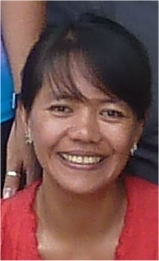
Presenter(s): *Maria Eva Sison Budong, Philippine Association for Intercultural Development, Inc., Philippines
Ikalahan literally means from the forest/trees (kalahan).
Imugan is a barangay found in the town of Sta Fe in Nueva
Vizcaya. Encompassing a total of 38,000 hectares, the Ikalahan Ancestral Domain straddles two mountain ranges: Cordillera and Caraballo Mountains, (the great barriers against strong typhoon to populated Central Cagayan Valley. With 14,730 hectares of Forest Reserve, Ikalahan supports farming communities in the outlaying town below.
Since 1994 Ikalahan people of Imugan have been maintaining a database of their forest tree resources for effective forest tree utilization. They established blocks using forest species composition and thickness as criteria and each were treated as management unit. Each block has at least 4 plots measuring 50 x 50 meters. This sample plots are distributed randomly inside the blocks in a way that every part is well represented. Their data includes name of tree species, the number, measurements in diameter at breast height and the health and condition of the tree. This data is updated every three years and the growth of the tree is computed. Dead trees are recorded and new trees that reached 30 cm diameters are included. These data, composing of lists of tree species name, number, measurement, health and condition and the location (longitude and latitude) of the sample plots are to be presented in a map. The project will connect the biodiversity/health of the forest and its capacity to sequester carbon and help clean air. It will also show the role of the forest in water recharge and other benefits like wildlife sanctuary.
The main objective of the project is to present the data of the inventory in a creative way in a map to show relationships and interconnection of ecosystems and the benefits derived from conserving the forests.
The methods would be on focus group discussions, sketching in 3-dimensional model, inventory, GPS data capture, and GIS application.
2013 Scholar Profile:
email address(es): evadoyak at yahoo.com.ph
title or role in the organization: Cartographer
Organization name: Philippine Association for Intercultural Development, Inc. (PAFID)
Organization full street address (in your local format): #16 Don Domingo Maddela, Bayombong, Nueva Vizcaya
Organization full mailing address, if different:
Country: Philippines
Work phone with country and area code:
Work fax with country and area code:
Main email: www.pafid.org.ph
Organization Web site URL if any: www.pafid.org.ph
describe the work that your current organization does: PAFID is a social development organization that works closely with indigenous communities secure their lands and waters and obtain access and control in the management of their resources. PAFID has been advocating sustainable management and has been instrumental in securing titles of many ancestral domains by providing technical support in boundary delineation and mapping.
Vision: PAFID is a social development organization which has been assisting Philippine indigenous communities secure or recover traditional lands and waters since 1967. It forms institutional partnerships with indigenous communities to secure legal ownership over ancestral domains and to shape Government policy over indigenous peoples’ issues. PAFID works exclusively with the indigenous peoples’ sector, specifically upon written or signed requests for assistance from indigenous communities or their representatives. PAFID envisions Indigenous Communities as responsible stewards of their resources. As communities and individuals they posses rights and responsibilities over the natural environment, cultural integrity, educational and health systems that embody their indigenous knowledge and mores, employ socially and ecologically sound methods of managing and utilizing their natural resources for their own and national benefit for both present and future generations.
Mission: To work with Indigenous Communities in obtaining access to and control of their natural environment and in sustainably protecting, managing, utilizing and developing these as a means towards self-respect, self-sufficiency and a stable natural environment.
The global challenge on climate change has brought PAFID to international platform. PAFID, thru its Executive Director, has been consistently sitting down with Conference of Parties (COP) gatherings of the Convention on Biological Diversity (CBD) – an internationally binding treaty with the main goals of conservation, sustainable use and fair and equitable sharing of benefits of biological diversity. This body recognizes the undisputable efforts of the poor nations of the world in the protection and sustainable management of the forest resources and more specifically in the Philippines, the indispensable role of the Indigenous Peoples through the use of traditional governance in managing forests. International institutions like the World Bank, Center for International Forestry Research (CIFOR) and Global Biodiversity Outlook (2010) has released statements, a product of their many years of studies, recognizing the reality that the remaining high biodiversity forests are mostly found in indigenous peoples’ territories.
PAFID has been in the forefront in initiating a National Pilot Program of the Department of Environment and Natural Resources (DENR) – government agency responsible for governing and supervising the exploration, development, utilization, and conservation of the Philippines's natural resources – on biodiversity conservation documentation, promotion and registration to international bodies to ensure its protection. PAFID has so far helped registered two indigenous community conserved areas (ICCA) in international ICCA registry. In all the above mentioned undertakings GIS is indispensable! Without GIS there is no other better way these communities can show to the whole world they are very instrumental in making the world still going round.
role in the organization: I serve as a mapping technician in my organization. I join actual tree inventories, actual ICCA delineation and actual 3-dimentional map construction and landcover coding. I’ve been in PAFID since 2007 but I initially served as documentor. I have been involved in projects like producing landuse maps, landcover maps, mining overlays versus ancestral territories and national parks, watershed maps, simple analysis maps derived from DEM like elevation, slope, and contour maps. I also spend most of my times digitizing topographic maps since it is one of our most usable of officially recognized map in my country. Working with maps especially involving warring indigenous communities is sometimes dangerous though. Tribal wars are still practiced especially in the Cordillera Region of the Philippines. I have been involved in a boundary dispute dialogue using 3-dimentional model as tool. Evidences like Memorandum of Agreement (MOA) signed by both communities long time ago without the benefit of mapping tech came alive with the use of 3-d model. I later converted the whole thing into a vector file usable in their succeeding dialogues.
: Prior to PAFID, I have been working with a church-based organization that also works with indigenous peoples in the Northern Philippines. I handled sustainable agriculture program and we specialized in collecting, preserving, reproducing and conserving Philippine indigenous rice varieties. We advocated against the use of chemicals in agriculture and the then controversial Genetically-Modified Organisms (GMO) specifically the distribution of Bt-corn variety. We rallied, in alliance with PAFID, against large scale mining operations and big dam constructions. That’s where I met PAFID.
I came from a town called Kasibu in Nueva Vizcaya in the Northern Philippines. Kasibu’s Eastern side is presently being mined (Gold and Copper) via Financial and Technical Assistance Agreement (FTAA #1) concluded between Philippine government and Western Mining Corporation (Canadian Mining Company); In the southern part of my town has an approved exploration permit for mining. In the north is an on-going open pit large scale mining operation for Gold and Molybdenum. I have been, in one way or another, part of the campaign against the destruction of our agricultural lands. Kasibu is the citrus bowl of the Philippines and a rice and vegetable rich town as well. The most gratifying moment in my mapping history work was when I was able to print a map used in the actual dialogue and advocacy in my own home town.
what is the most unique and the most challenging about the conservation/GIS work that you do: Presently we are trying to show through GIS the level of forest biodiversity of a certain indigenous community. The challenge that faces us is how to show the data on flora diversity in maps. We are only able to show so far the transect lines and blocks and plots we created by showing the “biodiversity” aspect is still not discovered.
-
 Anonymous User