- Home
- :
- All Communities
- :
- User Groups
- :
- Conservation GIS
- :
- Documents
- :
- María Eugenia Iezzi, Argentina
- Subscribe to RSS Feed
- Mark as New
- Mark as Read
- Bookmark
- Subscribe
- Printer Friendly Page
María Eugenia Iezzi, Argentina
María Eugenia Iezzi, Argentina
Navigation: 2015 Scholar Project 2015Conference ReferenceProject CommunitiesPage ConservationGIS Scgis.org
María Eugenia Iezzi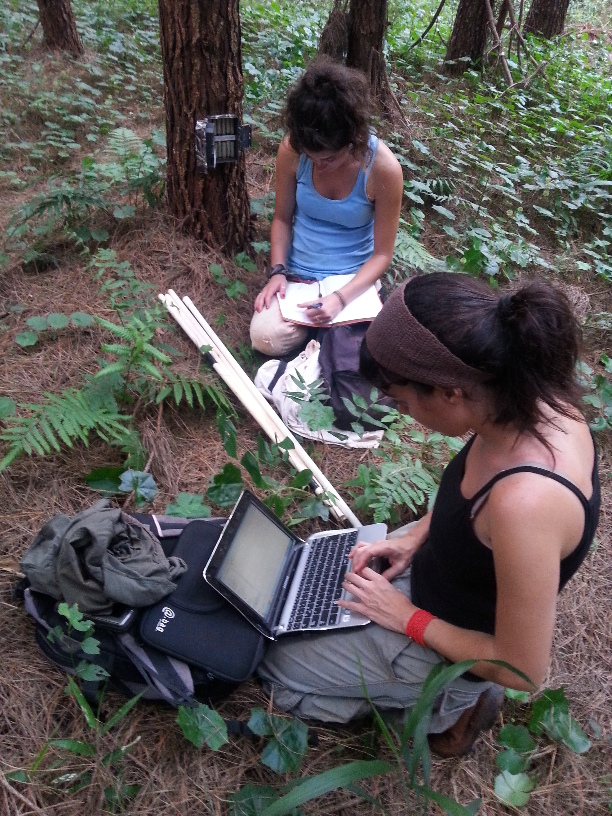
2019 Status: Current Email
Postdoctoral position at the Instituto de Biología Subtropical (IBS), with a fellowship from the National Council of Science and Technology of Argentina (CONICET).
Active member of the Asociación Civil Centro de Investigaciones del Bosque Atlántico (CeIBA).
"I am an ecologist interested in quantifying the impacts of anthropogenic factors on big vertebrates. I am interested in contributing to the coexistence of productive activities with biodiversity conservation. My research focuses on the effects of the native environments replacement by productive land-uses and the forest management on mammal assemblages. My current postdoctoral project aims to identify key conservation areas and improve the Atlantic Forest connectivity for medium to large-sized mammals that are sensitive to landscape transformation. My doctoral thesis aimed to study how the spatial configuration and management of tree plantations affect the diversity and composition of medium and large terrestrial mammal assemblages of three ecoregions in northeast Argentina: the Atlantic Forest, an ecoregion originally represented by a continuous subtropical forest; the Southern Cone Mesopotamian Savanna and the Iberá Marshes, ecoregions dominated by grasslands. I am also a member of the “Proyecto Yaguareté” (https://proyectoyaguarete.com.ar/) where I participate in research on the conservation and monitoring of jaguars (panthera onca) and other felids populations in the Atlantic Forest. With my work, I aim to generate recommendations for the management of productive landscapes that promote biodiversity conservation.
My scientific skills and interests range from landscape ecology, community ecology, population ecology, species-landscape interactions, spatial models, geographic information systems applied to ecology, and conservation biology.
ResearchGate Profile PhD from Instituto de Biología Subtropical (UNaM-CONICET) · Grupo de Ecología y Conservación de Mamíferos, Puerto Iguazu, Argentina
Curriculum Vitae: Becaria postdoctoral, Instituto de Biología Subtropical (IBS)
CONICET Profile: "My postdoctoral project has as main objective to identify the key conservation areas and improve the connectivity of the Atlantic Forest for medium and large mammals that are sensitive to landscape transformation. I specialize in landscape ecology, community ecology, population ecology, and in the realization of spatially explicit models. I have experience in sampling with trap cameras and in landscape-scale analysis using Geographic Information Systems (GIS)."
2015 Conference Paper: "Effects of Forest Plantations on Mammals in the Atlantic Forest"
Presenter: María Eugenia Iezzi, Argentina, Centro de Investigaciones del Bosque Atlántico (CeIBA); Instituto de Biología Subtropical (IBS)
Mammals are sensitive to environmental transformations, and the productive landscapes can affect them. We evaluated the effects of different components of the forest-plantation landscape on the mammal community in Misiones, Argentina. Using GIS, we deployed 120 camera trap stations active for 53 days on average, randomly located in a grid of 2x2 km, distributed in three treatments: 44 in continuous forest, 43 in fragments of native forest within the plantation landscape and 33 in pine plantations. We compared the richness and diversity of mammal community between treatments, and we used a principal components analysis (PCA) to sort the stations according to their species composition. At each station we measured structural complexity of vegetation, distance to a continuous native forest block, percentage of native forest in a ratio of 2 km, and “cost of access” (which indirectly measures the poaching pressure). The last 3 variables were generated with GIS tools. We used GLM to study the effect of these variables in the assembly of mammals. The richness and diversity were the highest in the continuous forest and the lowest in forest plantations. The variables that affected the composition of the assembly were the cost of access (poaching pressure), the structure of the vegetation and the distance to the continuous native forest block. These results allow us to make recommendations to improve the management of forest plantations and to reduce their impacts on mammal community.
2015 Profile: Email: [email protected]
*-Organization name: Asociación civil Centro de Investigaciones del Bosque Atlántico (CeIBA, civil association Research Centre of the Atlantic Forest). Instituto de Biología Subtropical, nodo Puerto Iguazú (IBS, Subtropical Biology Institute, Puerto Iguazú node) of the National University of Misiones (NU of Misiones) and the National Research Council of Argentina (CONICET).
*-Organization full street address (in your local format): Bertoni 85, C.P. 3370, Puerto Iguazú, Misiones.
*-Country: Argentina
*-Main email: [email protected]
2015 Scholar Introduction Video:
Please describe your conservation work: I am a 26 years old Argentinian biologist and I am a doctoral student. I am just starting my career as a researcher and I am very interested in focalize my actual and future work in biodiversity conservation projects. I want to participate in the SCGIS training program to develop more skills and abilities to solve questions of my doctoral project and other projects that I hope to develop in the future. I would like to apply my thesis results in management programs that will contribute in biodiversity conservation in productive areas. The organizations where I belong, the CeIBA and the IBS are located in a strategic and one of the most biodiverse areas of Argentina, where conservation and research activities are new and very necessary. As new organizations, they are growing fast and we count with many students and new training needs. I am specializing on landscape ecology in productive areas and ecology of mammals´ communities, working with camera-traps. I would like to specialize in GIS also, what I consider is an elemental tool for develop of my work. With my work I´m evaluating the effect of the forest plantation configuration and the different landscape elements in the mammal assemblage. At the end, I hope to generate management recommendations to improve productive systems to be less harmful to biodiversity. For the future, I´m interested in contribute in animal conservation in my country. With my project, I expect not only to generate information for improving landscape management while contributing with mammal conservation, but also to learn more about conservation practices and how to be involved in the conservation policies of this region. My plan for the future is to continue with the research career generating knowledge that could be applied to conservation strategies. SCGIS program will be an excellent opportunity to training me in how to apply GIS skills in conservation practices and to strength the capacity of my work team in its biodiversity conservation actions.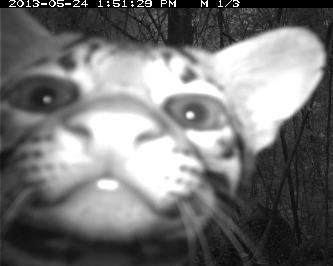
 My work aims to evaluate the effect of different elements and configurations of the landscape on the diversity of mammals. Most of the landscape variables that may affect the composition of the native mammal community and species distribution and density need to be measured with a GIS project because they can´t be taken with field work. Particularly, in my doctoral thesis, I hypothesized about the effect of the sized of the corridors and native forest fragments, the distance to the continuous native forest block, the distance to rivers, the percentage of native forest around each station, the accessibility to each place, etc. on the mammal assembly. My goal with GIS use is to learn how to measure all this important variables and acquire expertise on analyzing landscape data to solve scientific and management questions. My project is aimed at generating knowledge and produce recommendations on how to improve landscape and plantation management to help the conservation of local mammals. I will develop models to predictive maps of probability of occurrence of some species and I will simulate scenarios of potential management actions at the landscape level (e.g. to increase the density of forest strips between pine plantations) and quantify how these actions affect the overall use of the landscape for each species. I would like to learn more about how to generate different maps which can express most of my future results.

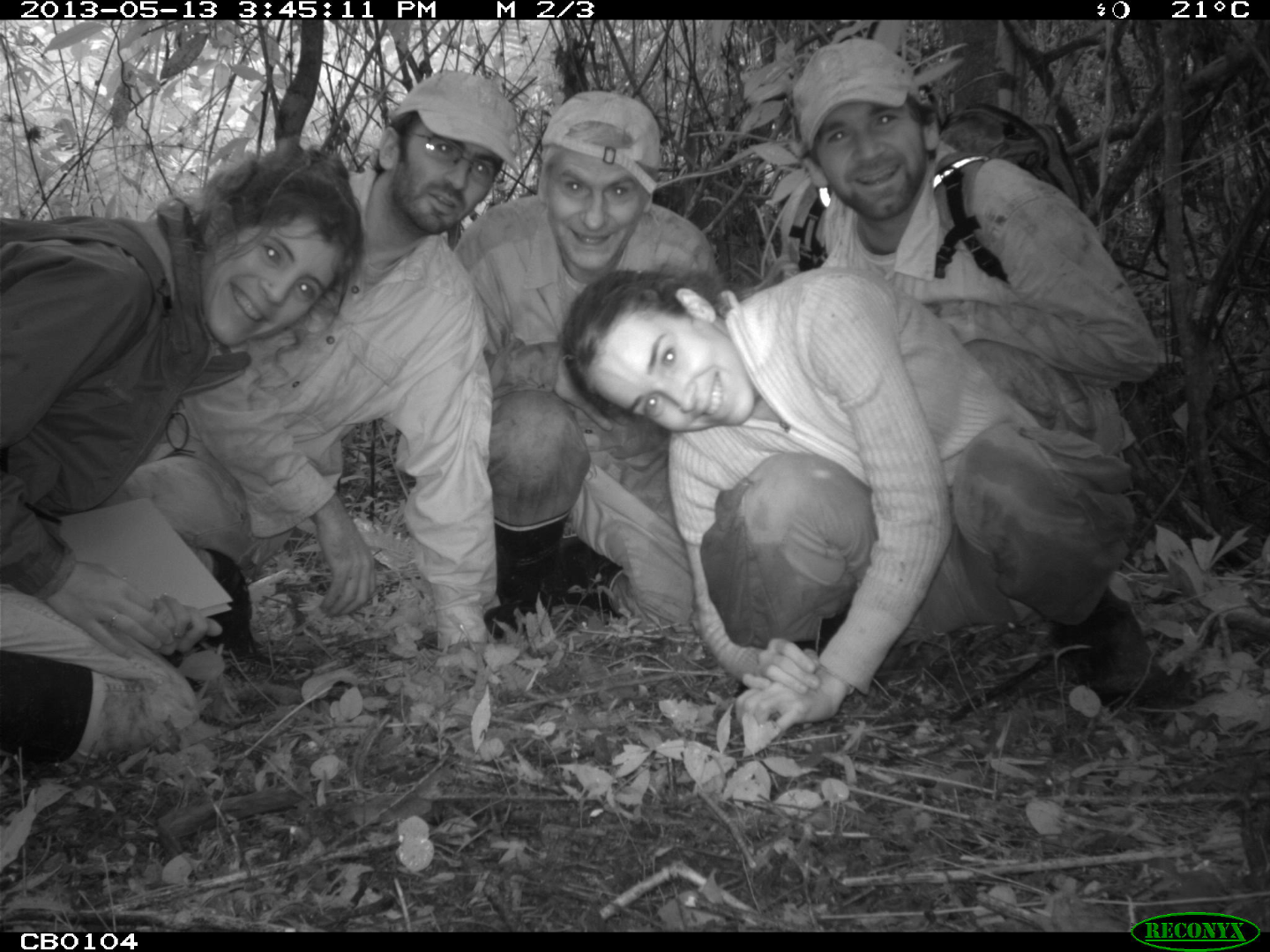 Please describe the work that your current organization does: CeIBA is a NGO created inyear 2005 for a group of biologists of differentdisciplines. These people have worked in the region for many years and decided to found the NGO with the main goal of creating an Institute that includes and gives the entire scientist the academic umbrella to develop studies related to conservation of biodiversity in Northeastern Argentina. As the result, in 2009 the IBS was consolidated with the NU of Misiones which helps just with rent facilities. During 2013, the Institute achieved to have a double dependence (NU of Misiones-CONICET), that allowed us extend the IBS budget for maintenance and improvements on facilities. When the NGO started, there were few biologists but now we are like 40 people with new projects, most of us with CONICET salaries or scholarships. The Institute doesn’t have money to develop member’s projects, so each group has to look for the financial support. There are many projects that received money from public entities like the National government (from the Agriculture, Livestock and Fishing Department) and from CONICET, but some projects needed to look for money from international Foundations or don´t have money at all and use their salary or scholarship to face their project costs. The members or groups of the CeIBA (and IBS) are developing different projects that include the study of ecology, ecophysiology, taxonomy, genetics, etnobiology and conservation of mammals, birds, reptiles, plants, arthropods, among others. Most of the group’s activities are carried out in the Atlantic Forest of Misiones province, not only in the protected areas but also in productive areas, working with big forest companies and small farmers. Particularly, my work team develops projects about ecology of populations and conservation of large sized mammals as jaguars and giant anteaters, ecology of communities of medium to large sized mammals and rodents and primates´ behavior. We generate baseline information and management tools that are used in the local community, forest enterprises and protected areas with the main objective of conserving biodiversity in the region. Some projects, like mine, are developing in other sites of Northeastern Argentina too and need to have associations with other organizations. For example, my project develops in the Atlantic Forest of Misiones province and in the grasslands of Corrientes province. As I work in public and private protected areas and in forest plantations, I needed to generate relationships with many local organizations and enterprises, like the National Parks government, province government, others NGO, etc.


Please describe your personal role in the organization: I´m a member of the CeIBA and IBS since 2013 when I came to Puerto Iguazú, Misiones to develop my doctoral thesis. I belong to a big group (about to 15 members) that is specialized on mammals’ ecology and conservation in Northeastern Argentina, and also part of the “Proyecto Yaguarete” of Misiones. When I arrived to Misiones, I joined a small work team that focuses their work on research and biodiversity conservation of terrestrial medium to large sized mammals in subtropical and productive areas of Argentina. With them I have started the project that would be my doctoral thesis. I have been involved since its beginnings in the development of this project and in April, 2014 I received a doctoral scholarship from the CONICET to pursue my doctoral studies at the University of Buenos Aires, Argentina. Although my principal work is to develop my doctoral thesis, I have participated voluntary in CeIBA activities since I arrived. In “Proyecto Yaguareté” I collaborate in research and conservation activities for Yaguars (panthera onca) and Puma (puma concolor) in the Atlantic Forest of Misiones as capture with foot snare traps, camera traps installation for density estimates and data analysis. Also, I usually help to administrative activities in the NGO and in some particularly events like courses organization, scientific divulgation, etc.

(Study area map of the northern province of Misiones, Argentina, with the location of 120 camera-trap stations separated in three treatments. The green areas correspond to native forest, the violet ones to forest plantations and the white ones to other land uses. )
Please describe what is the most unique and the most challenging about theconservation/GIS work that you do:
The places where I work are biodiversity hotspots that contain endemic and endangered species and have suffered strong habitat destruction. The forest industry has converted several million hectares of Atlantic Forest and native grasslands into pine and Eucalyptus plantations in Argentina, but little is known on the effects of these plantations on biodiversity. Therefore, my work aims to evaluate the effect of different elements and configurations of the forest plantation landscape on the diversity of mammals. I am focusing the study on the mammals because several species are endangered, participate in key ecological processes and are sensitive to landscape transformation. The conservation of the native forests and its biodiversity depends on how the productive lands and the native forests are managed. Hence, what motivate me to develop this project is the final result, not only the academic result. I expect to generate recommendations for local timber companies, local producers and decision makers on how to improve landscape and plantation management to help the conservation of local mammals. Suggestions and recommendations that will come out of this project will also contribute to the improvement of conservation plans, legislation and to the development of regional FSC standards. I believe that the real conservation projects (or the really useful ones) are the ones which focalize in trying to conserve biodiversity in productive areas or in places with human conflicts are present. It is not enough to study biodiversity in protected areas. As human population is growing up, it is necessary to make this growing compatible with wildlife conservation. In my opinion, these kinds of works are more difficult because you need to create relationships with many institutions, companies, producers and local people, that it´s a hard work which needs a lot of dedication. Generate changes in productive systems or in the way that people thinks it´s, for me, a real challenge. At the end of my project, I hope not only to conclude the principal thesis aims, but also to generate a real change in the production system in the region, that would be more friendly with biodiversity conservation.
Live Map Application created by Ms. Iezzi during the 2015 UC Davis-SCGIS Web GIS Training Program.
"My map shows the medium to large sized mammals richness (number of species) per station calculated with rarefaction curves, in three different landscape components of the North of Misiones Province, Argentina. Each station consisted in one camera-trap that was active for 53 days in average."
xBiodiversity xMammal xCamera Trap xLandscape xForest xCorridor xModel x2015Scholar x2015Talk xTalk xScholar xWomen xLatinx xArgentina xLatinAmerica
-
 Anonymous User