Economic Mobility refers to the ability of individuals or families to improve their economic states over time. It often reflects how easily someone can move up (or down) the economic ladder and is often influenced by a range of factors.
A study conducted by Opportunity Insights, a research team at Harvard University, and in collaboration with the U.S. Census Bureau, laid out findings that highlights the changes in economic opportunity for individuals born between 1978 and 1992 and how community-level changes impacted those trends in mobility. This research can be explored in more depth via the Opportunity Atlas.
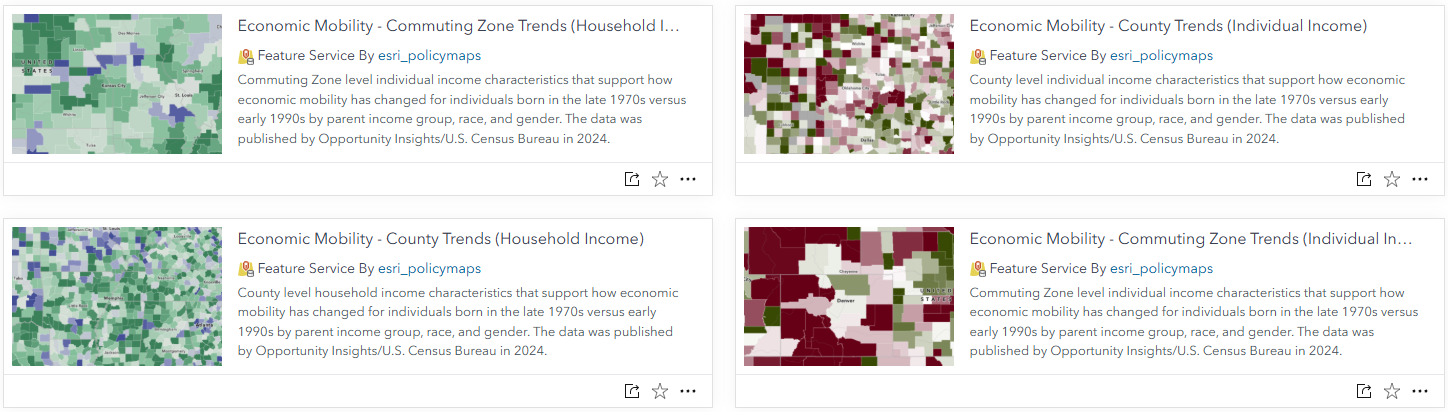
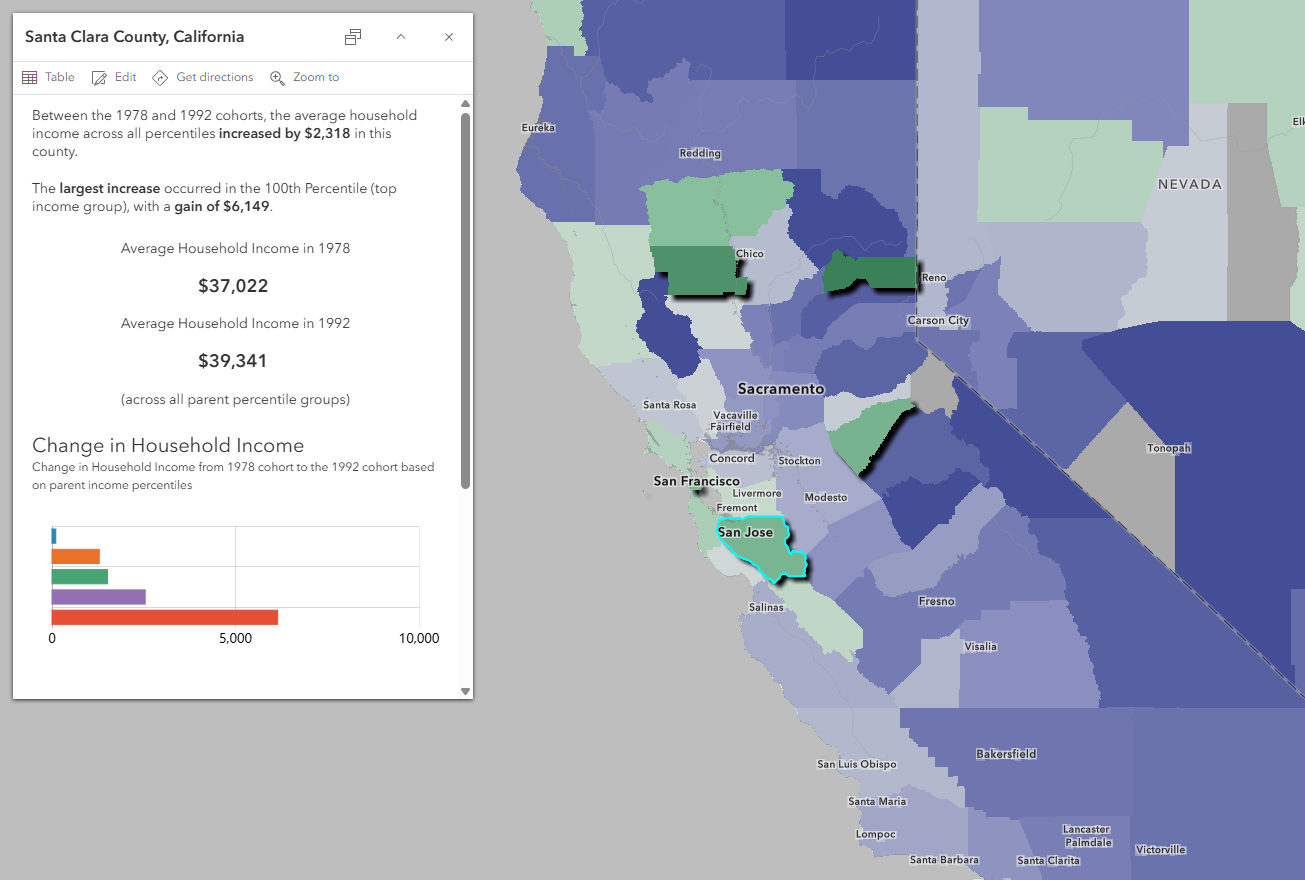
These layers and maps are now available in ArcGIS Living Atlas for the GIS community to explore and leverage for other mapping efforts. There are four main feature layers that highlight both household and individual income at the county geography level and the commuting zone geography level. These layers include more than 270 attributes each, that cover either household income or individual income earned by an individual measured at age 27, and can be further broken down by race, gender, and parent income percentile group.
For more information about these layesr, maps, and apps, visit this blog by @LauraPhoebus.
